
Water parameters
Temperature22–28°C
pH6–7.5
General hardness (GH)2–12 dGH
Recommended range
Overview
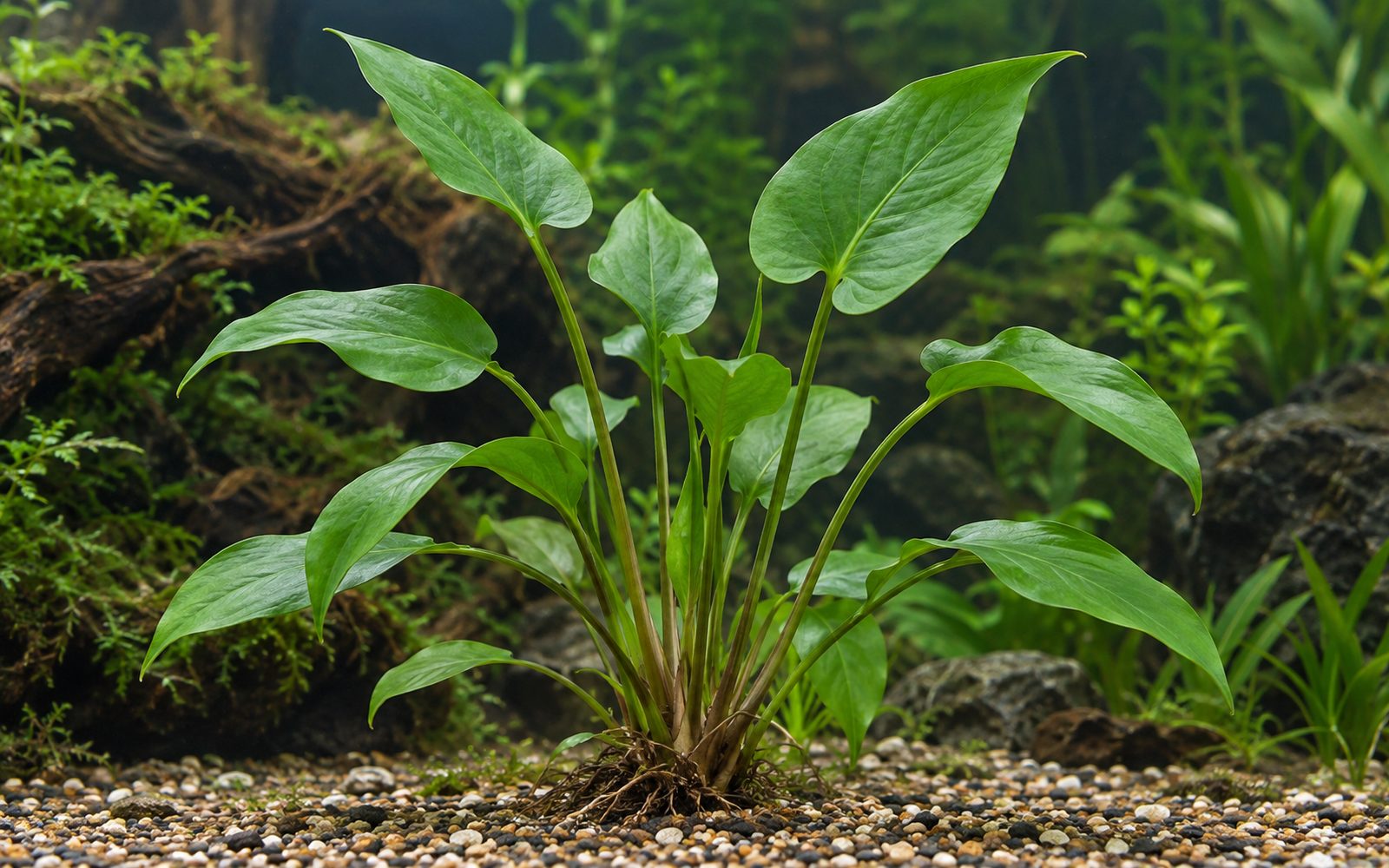
Cryptocoryne pontederiifolia is a species from Sumatra that is easily told apart from other crypts by the shape of its leaves. The leaf blade is broad, heart-shaped at the base and plain green; it is carried on long, thin stalks. Its height ranges from 15 to 30 cm. Its calm green color creates a restful in-between tone among brown and red plants.
Planting and Placement
It is planted with the roots buried and the crown left exposed. It grows much better with a nutrient-rich substrate or root tabs. It is used in the midground, alone or in groups of 2–3 plants; leave empty space next to it so it can spread.
Care and Fertilization
- Light: Low to medium.
- CO₂: Not required.
- Fertilizer: A root tab every 2–3 months.
- It multiplies slowly through underground runners; daughter plants can be separated once they have a few leaves. It may still lose some leaves after sudden water changes.
Propagation
This section has not been written yet. How is it propagated?
Be the first to write it
Common Problems
This section has not been written yet. Problems such as melting, yellowing and algae, and how to fix them.
Be the first to write it
Hobbyist notes
Things you won't find in books, learned by trial and error. The most helpful ones are on top.
No notes yet. If you have experience with this species, leave the first note.
Was this page helpful?
Change history and contributors
- Page created · October 16, 2026