
Water parameters
Temperature22–28°C
pH6.5–8
General hardness (GH)5–20 dGH
Recommended range
Overview
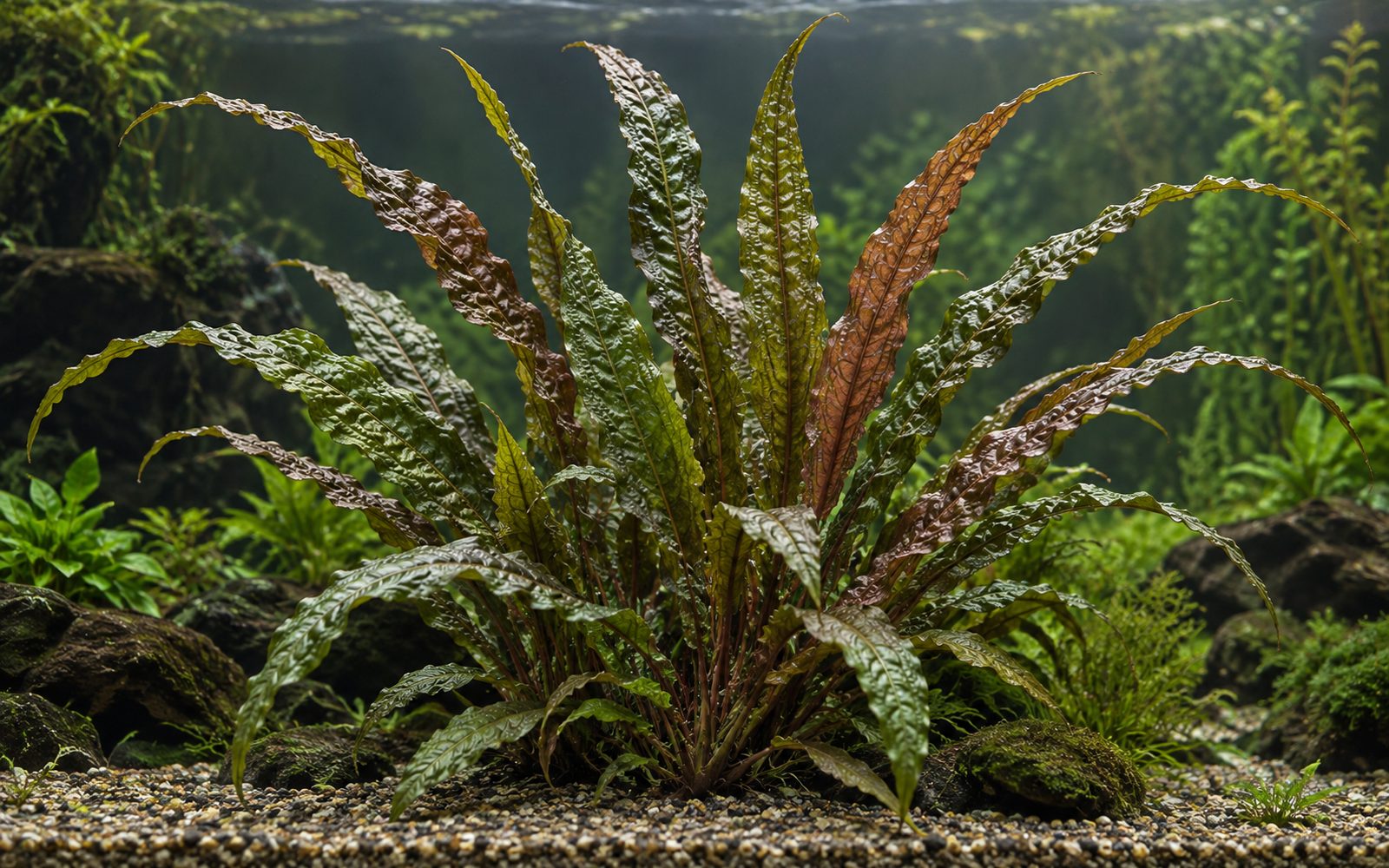
Cryptocoryne usteriana is a large crypt from the limestone rivers of the Philippines. Its long, ribbon-shaped leaves have a distinctly puckered (hammered-looking) surface; their color ranges from green to reddish-brown tones. In the aquarium it can grow to 40–60 cm. It is confused with the very similar C. aponogetifolia; the two species are distinguished mainly by the structure of their flowers.
Planting and Placement
It is planted in the background of aquariums at least 50 cm tall. Its roots are strong and deep; it wants a substrate at least 6 cm thick, fed with root tabs. The crown must stay exposed.
Care and Fertilization
- Light: Medium.
- CO₂: Not required, but it speeds up growth.
- Water: Likes hard, calcium-rich water; in very soft water the leaves may deteriorate.
- Fertilizer: A root tab once a month or once every two months.
- Because it grows slowly and its leaves are long-lived, algae can build up on old leaves; cut these at the base.
Propagation
This section has not been written yet. How is it propagated?
Be the first to write it
Common Problems
This section has not been written yet. Problems such as melting, yellowing and algae, and how to fix them.
Be the first to write it
Hobbyist notes
Things you won't find in books, learned by trial and error. The most helpful ones are on top.
No notes yet. If you have experience with this species, leave the first note.
Was this page helpful?
Change history and contributors
- Page created · October 16, 2026