
Water parameters
Overview
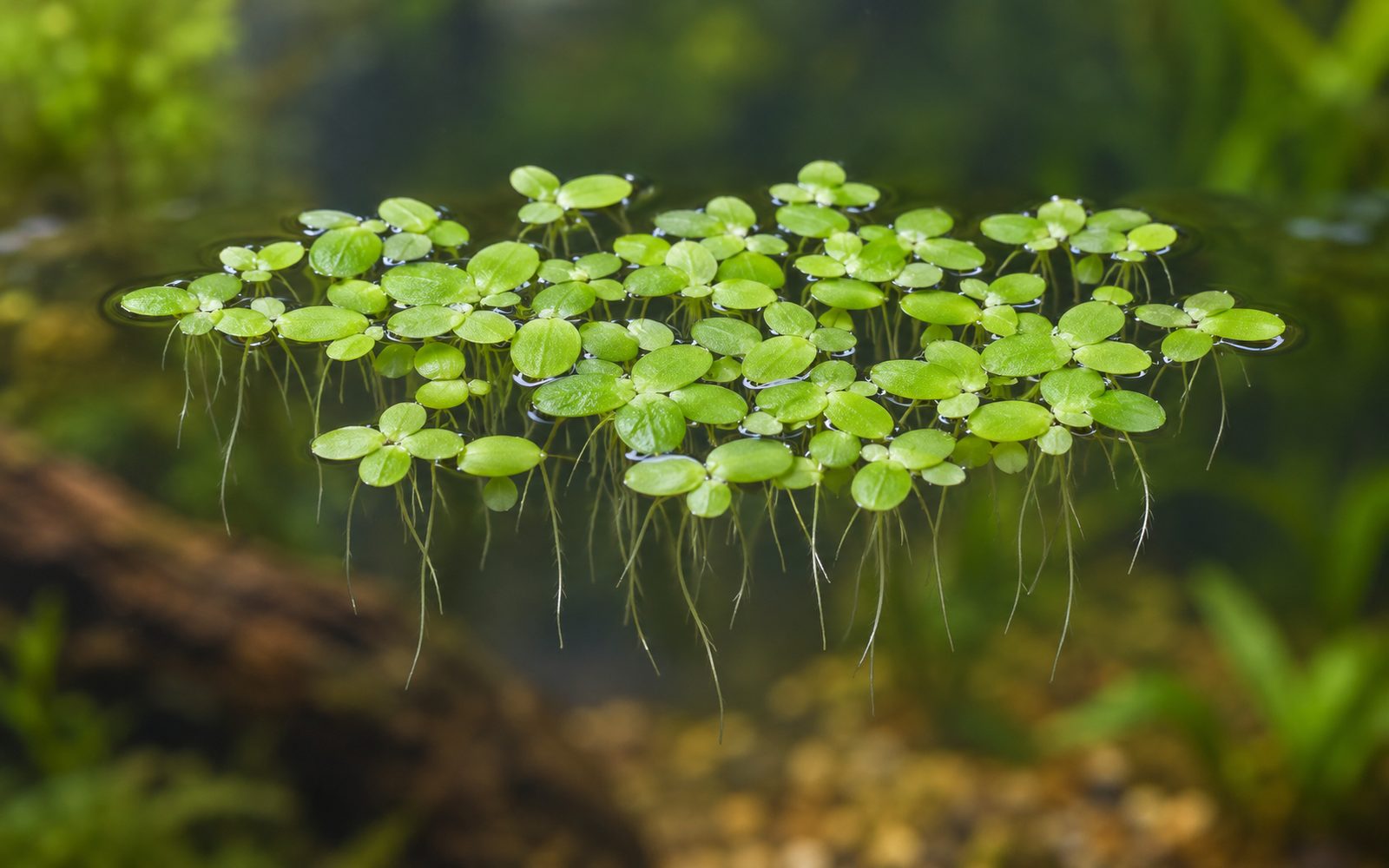
Duckweed is one of the smallest flowering plants in the world. Each plant consists of an oval, flat, leaf-like body 2–4 mm long and a single fine root hanging below it. It also occurs naturally in the lakes, ponds and ditches of Türkiye. Under suitable conditions it can double its numbers in a few days.
Invasive warning: For aquarists, duckweed is often an unwanted guest. It gets into the aquarium as a single leaf stuck to another plant's leaf or to a net, soon covers the whole surface and is very hard to remove completely. Once the surface is covered, light is cut off from the plants below. If you are going to add it deliberately, decide with this in mind; never throw the excess into natural waters or down the sink, put it in the trash. In Europe its close relative from the Americas, Lemna minuta, is spreading as an invasive species.
Planting and Placement
It is not planted; it is placed on the surface. To keep it in a particular area only, it can be confined with a floating ring.
Care and Fertilization
- Light: Moderate.
- CO₂: Not required.
- Uses: It can be grown in a separate container as fresh food for goldfish, some African cichlids and plant-eating fish. Because it quickly uses up nitrate and phosphate, some aquarists use it as a nutrient "filter".
- Control: Skim it from the surface with a fine net once or twice a week; do not let it cover more than half of the surface.
Propagation
It reproduces as new leaves bud from the edge of the mother leaf and separate. Nothing needs to be done to propagate it; the real job is limiting its numbers.
Common Problems
- Being unable to get rid of it: regular skimming with a net, setting the filter outlet so that it ripples the surface, and fish that eat it, such as goldfish, reduce its numbers; eliminating it completely usually means cleaning the surface again and again.
- Clogging the filter and equipment: it can collect in surface skimmers and the filter intake; clean them regularly.
- Yellowing: nutrients have run out; usually not a problem, it declines on its own.
Hobbyist notes
Things you won't find in books, learned by trial and error. The most helpful ones are on top.
Change history and contributors
- Page created · October 16, 2026