
Water parameters
Overview
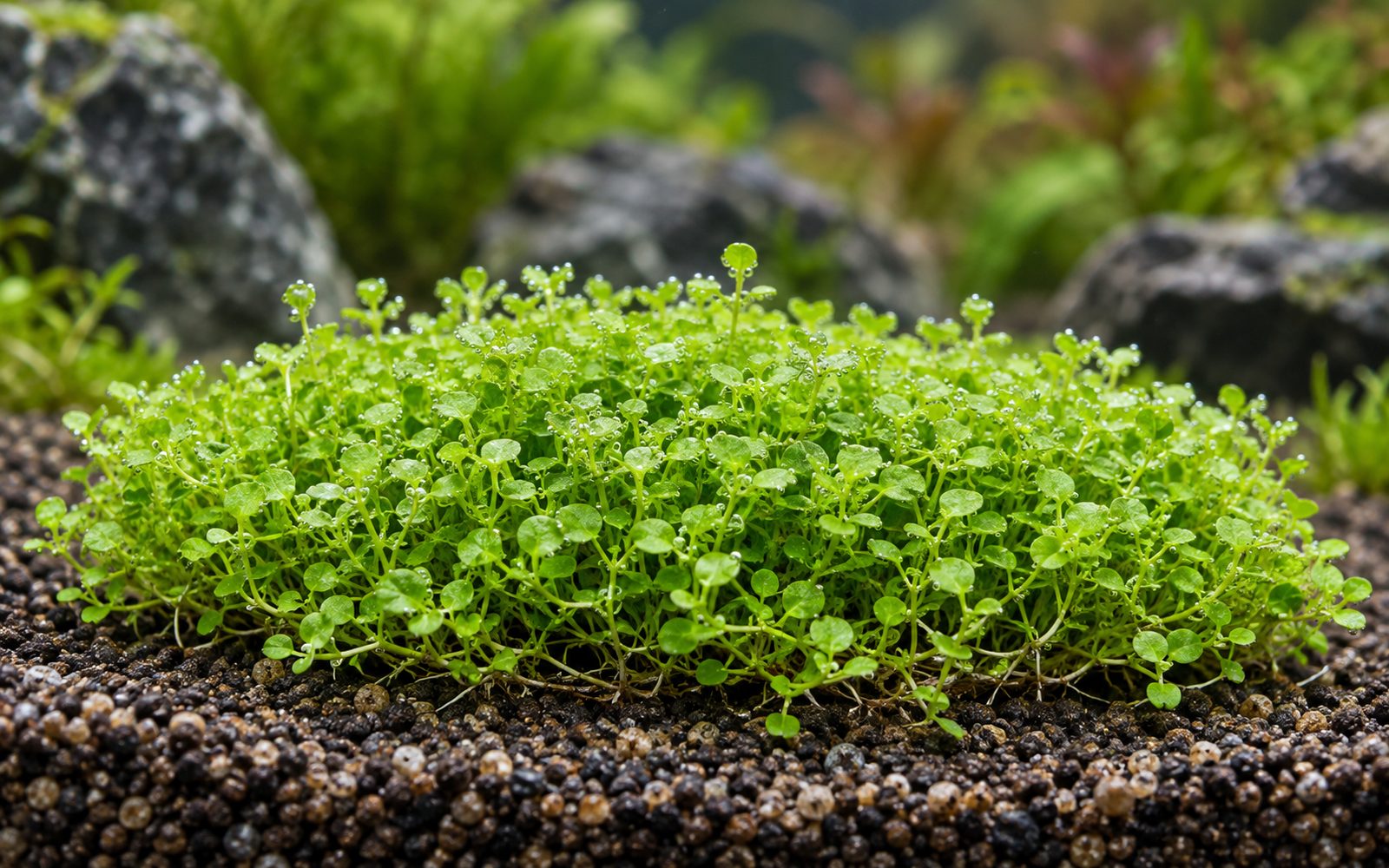
HC Cuba is a form of Hemianthus callitrichoides collected in Cuba and introduced to the aquarium hobby. Its leaves are only 1–2 mm across; on the substrate it forms a dense, glossy green carpet 2–3 cm high, like velvet. It is considered an icon of nature aquarium (aquascape) layouts.
It is as demanding as it is beautiful: it needs strong light, regular CO₂, a fine-grained, nutrient-rich substrate and clean, soft water. In an aquarium without CO₂ it usually fades away within a few weeks. Once the carpet has closed, oxygen bubbles collect on its leaves under strong light, creating a very impressive sight.
Planting and Placement
- Divide the plant from the nursery pot, together with its roots, into pieces smaller than 1 cm.
- Push the pieces into a fine-grained active substrate with tweezers, 1–2 cm apart; roots cannot take hold in coarse substrate.
- The "dry start" method is often used to prevent floating and speed up rooting: the aquarium is kept moist and covered without filling it with water for 3–6 weeks; it is filled once the plant has rooted and spread.
Care and Fertilization
- Light: High; under insufficient light the stems stretch upward and the carpet puffs up and loosens.
- CO₂: Required; regular, stable CO₂ is essential.
- Fertilizer: Active substrate and regular liquid fertilizer; iron and nitrogen deficiency yellow the leaves right away.
- Trimming: Once the carpet exceeds 3 cm, trim it from the top. Regular thinning is needed, because the lower layers of a carpet that gets too thick receive no light and can rot.
Propagation
It spreads on its own by rooting from the nodes of its creeping stems. Healthy pieces cut from the carpet are planted elsewhere to cover new areas.
Common Problems
- Pieces floating up: weak rooting or coarse substrate. A dry start and fine substrate largely solve this problem.
- Carpet lifting: a thickening carpet puffs up and detaches from the substrate; trim and thin it regularly.
- Yellowing and melting: a drop in CO₂, a nutrient deficiency or sudden changes.
- Algae in the carpet: appears when the photoperiod is long while the carpet has not yet closed; in the first months limit the light to 6–7 hours a day and use algae-eating shrimp.
Hobbyist notes
Things you won't find in books, learned by trial and error. The most helpful ones are on top.
Change history and contributors
- Page created · October 16, 2026