
Water parameters
Temperature20–28°C
pH5.5–7
General hardness (GH)2–10 dGH
Recommended range
Overview
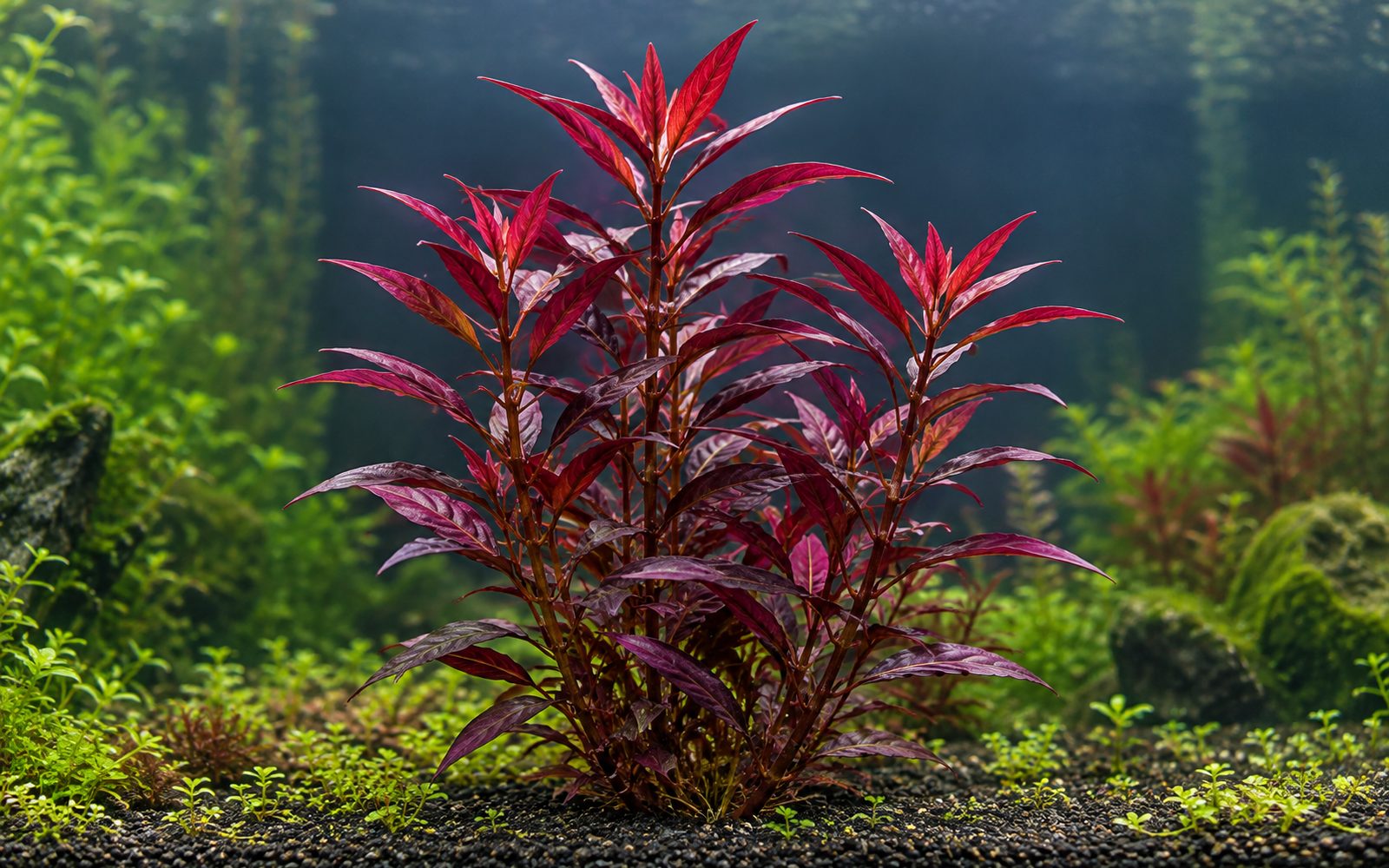
Ludwigia glandulosa is a ludwigia with elongated, lance-shaped leaves from the swamps of the southeastern United States. In strong light the leaves deepen from dark red to purple-burgundy, and the plant becomes one of the darkest-colored stem plants in the aquarium. It grows more slowly than other ludwigias, which makes it a color focal point that does not need frequent trimming. In the trade it is often sold as 'Peruensis'. It survives in medium light, but its color turns brownish green.
Planting and Placement
- Stems are planted singly or in twos or threes, 3 cm apart and 3–4 cm deep.
- In the midground or background it creates a strong color contrast in front of or next to light green plants.
- Choose a spot that light reaches directly.
Care and Fertilization
- Light: High; the dark color only develops in strong light.
- CO₂: Not required, but beneficial.
- Fertilizer: Iron and potassium supplementation; root tabs support growth.
- Trimming: Because it grows slowly, it is rarely needed; tops cut from the top are replanted.
Propagation
This section has not been written yet. How is it propagated?
Be the first to write it
Common Problems
This section has not been written yet. Problems such as melting, yellowing and algae, and how to fix them.
Be the first to write it
Hobbyist notes
Things you won't find in books, learned by trial and error. The most helpful ones are on top.
No notes yet. If you have experience with this species, leave the first note.
Was this page helpful?
Change history and contributors
- Page created · October 16, 2026