
Water parameters
Temperature22–30°C
pH6–7.5
General hardness (GH)2–12 dGH
Recommended range
Overview
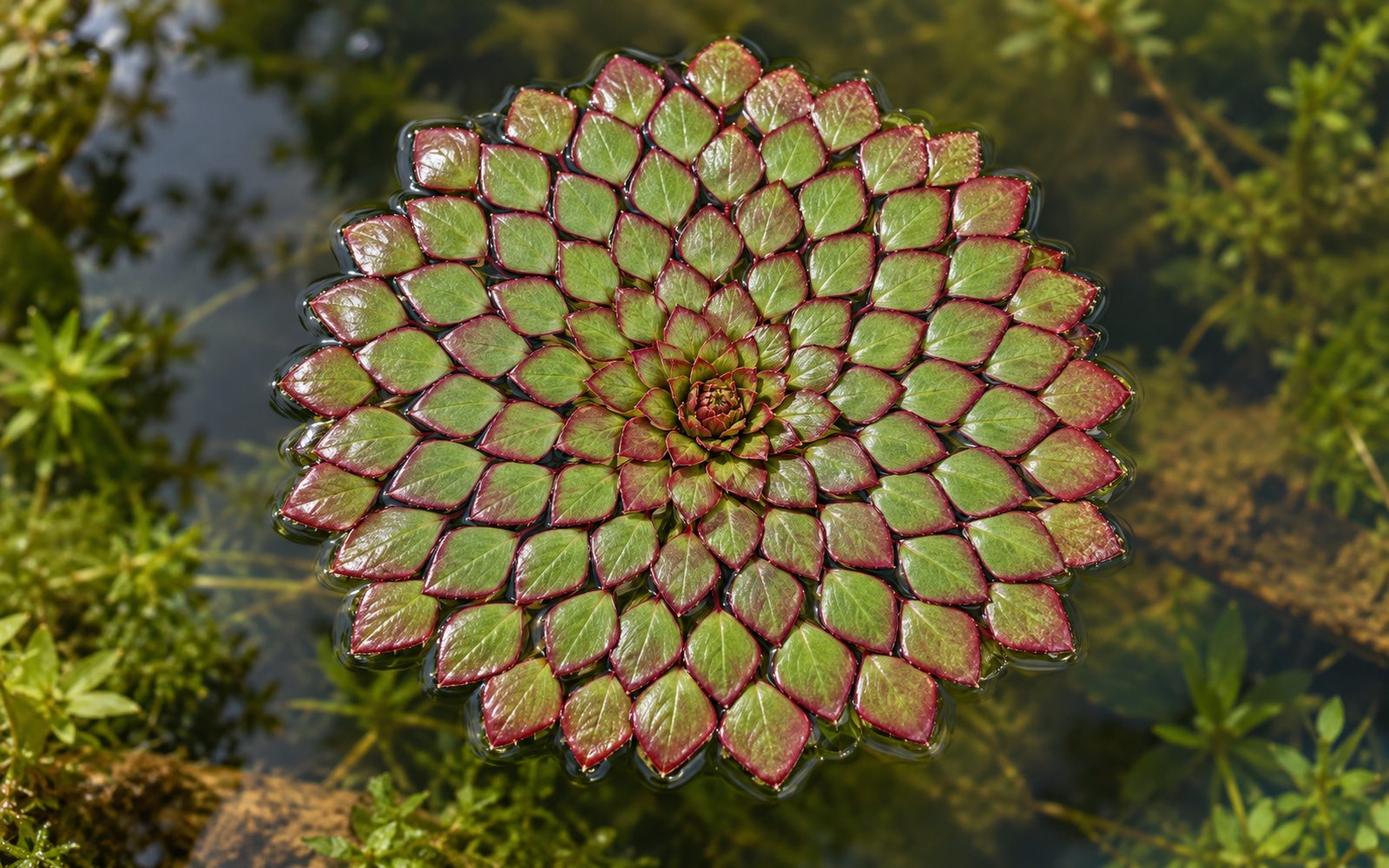
Ludwigia sedioides is a plant from the sunny, still waters of tropical America that is kept in aquariums and warm ponds. Its thin stem, rooted in the substrate, reaches up to the surface, where it opens floating rosettes made up of small, diamond-shaped leaves with a mosaic- or mandala-like look. The leaf edges turn red in strong light. The rosettes reach 8–12 cm in diameter. The stems are brittle; active, large fish can easily tear the plant apart.
Planting and Placement
- The rooted lower part of the stem is planted 3–5 cm deep in a nutrient-rich substrate; the rosette should lie flat on the surface.
- Choose a calm corner where the filter outlet does not ripple the surface; in a current the rosettes get pushed under and rot.
- Open-top aquariums, or ones with space between the surface and the light, are more suitable.
Care and Fertilization
- Light: High; in weak light the rosettes become smaller and the color is lost.
- CO₂: Beneficial; a nutrient-rich substrate and liquid fertilizer containing iron increase growth noticeably.
- Water: Stable parameters are important; sudden changes cause leaf melting.
- Trimming: As the rosettes cover the surface, remove some of them so the plants below get light. New rosettes growing from side shoots can be separated and replanted.
Propagation
This section has not been written yet. How is it propagated?
Be the first to write it
Common Problems
This section has not been written yet. Problems such as melting, yellowing and algae, and how to fix them.
Be the first to write it
Hobbyist notes
Things you won't find in books, learned by trial and error. The most helpful ones are on top.
No notes yet. If you have experience with this species, leave the first note.
Was this page helpful?
Change history and contributors
- Page created · October 16, 2026