
Water parameters
Temperature22–28°C
pH5.5–7
General hardness (GH)2–10 dGH
Recommended range
Overview
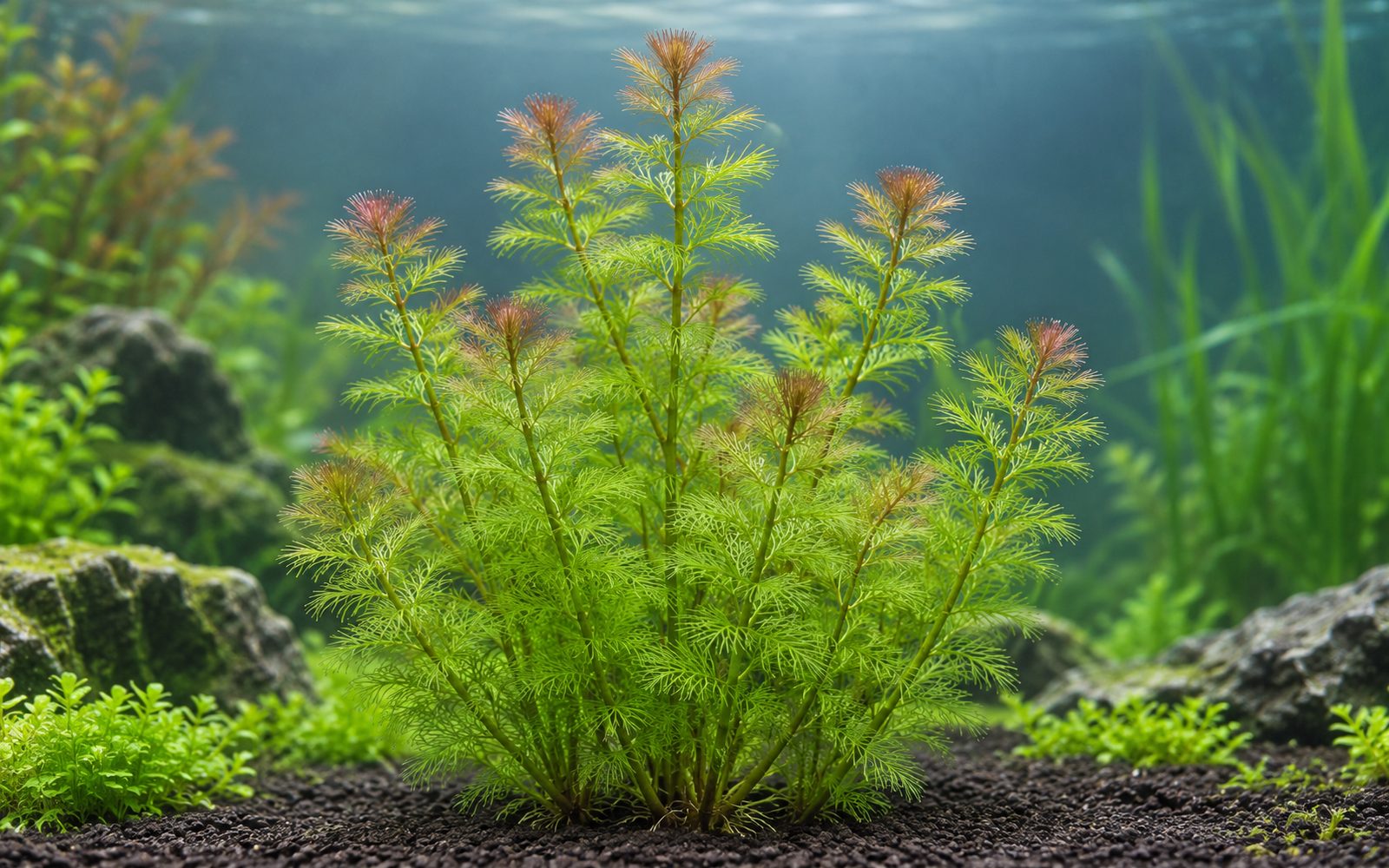
Myriophyllum mattogrossense is a stem plant from the Mato Grosso region of Brazil whose finely divided leaves are arranged in whorls along the stem. Its light green, feathery leaves add a soft texture to the aquarium; under strong light the shoot tips take on a reddish-brown tint. It grows fast and quickly reaches the surface. Because its fine leaves easily trap particles in the water, it needs clean, well-filtered water. It does best in slightly soft water.
Planting and Placement
- Plant the stems individually, 3 cm apart, 3–4 cm deep.
- Plant it in the background in groups of 5–7 stems; choose a spot where the current is not too strong.
Care and Fertilization
- Light: Moderate; under strong light it becomes denser and more colorful.
- CO₂: Not required but beneficial.
- Fertilizer: Regular liquid fertilizer, especially iron.
- Trimming: Cut stems that reach the surface from the top and replant them; if the lower parts become bare, renew the group with fresh tips.
Propagation
This section has not been written yet. How is it propagated?
Be the first to write it
Common Problems
This section has not been written yet. Problems such as melting, yellowing and algae, and how to fix them.
Be the first to write it
Hobbyist notes
Things you won't find in books, learned by trial and error. The most helpful ones are on top.
No notes yet. If you have experience with this species, leave the first note.
Was this page helpful?
Change history and contributors
- Page created · October 16, 2026