
Water parameters
Overview
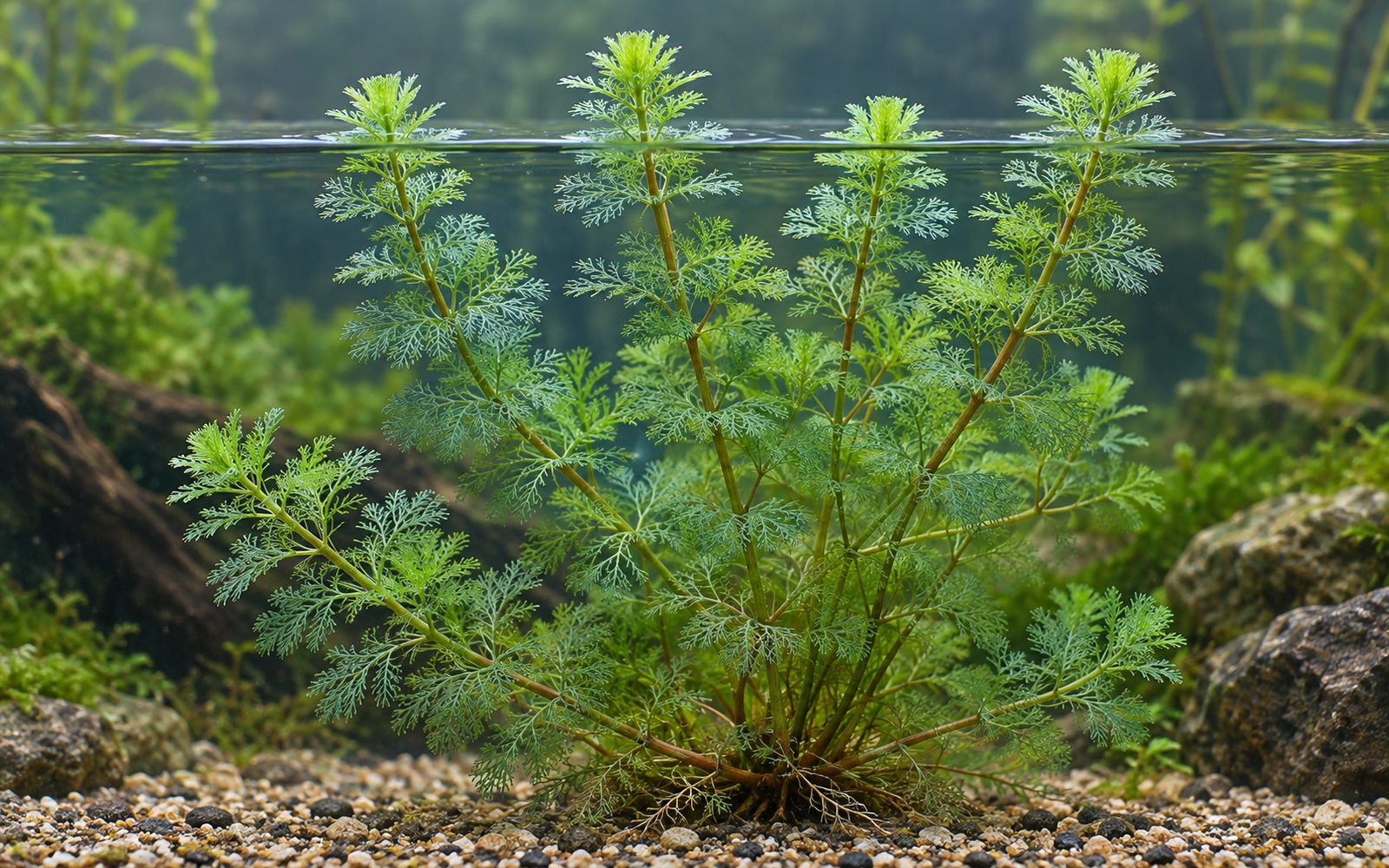
Myriophyllum aquaticum is a marsh plant from South America whose feathery, finely divided blue-green leaves form whorls along the stem. Its true nature is to push its stems above the water surface and grow there; kept fully submerged it survives for a while but gradually weakens. It is therefore better suited to open-top aquariums where the stems can rise above the water, paludariums and pond edges than to regular aquariums.
Invasive species: In many countries where it has escaped into natural waters it forms dense mats that cover the surface. It is on the European Union's list of invasive species and its sale is banned in EU countries. Since even small broken fragments grow into new plants, trimmings must never be thrown into natural waters.
Planting and Placement
- Bury the stems individually 3–4 cm deep; it gives the best results in an open-top tank or shallow areas where the stems can grow above the water.
- In paludariums it can also be planted in the moist ground at the water's edge.
Care and Fertilization
- Light: High.
- CO₂: Not required, but it helps the submerged form hold up.
- Fertilizer: Regular liquid fertilizer; leaves turn yellow when nutrients are scarce.
- Trimming: It grows fast; cut back excess stems and dry the trimmings before throwing them in the trash.
Propagation
Common Problems
Hobbyist notes
Things you won't find in books, learned by trial and error. The most helpful ones are on top.
Change history and contributors
- Page created · October 16, 2026