
Water parameters
Temperature22–28°C
pH6–7.5
General hardness (GH)2–10 dGH
Recommended range
Overview
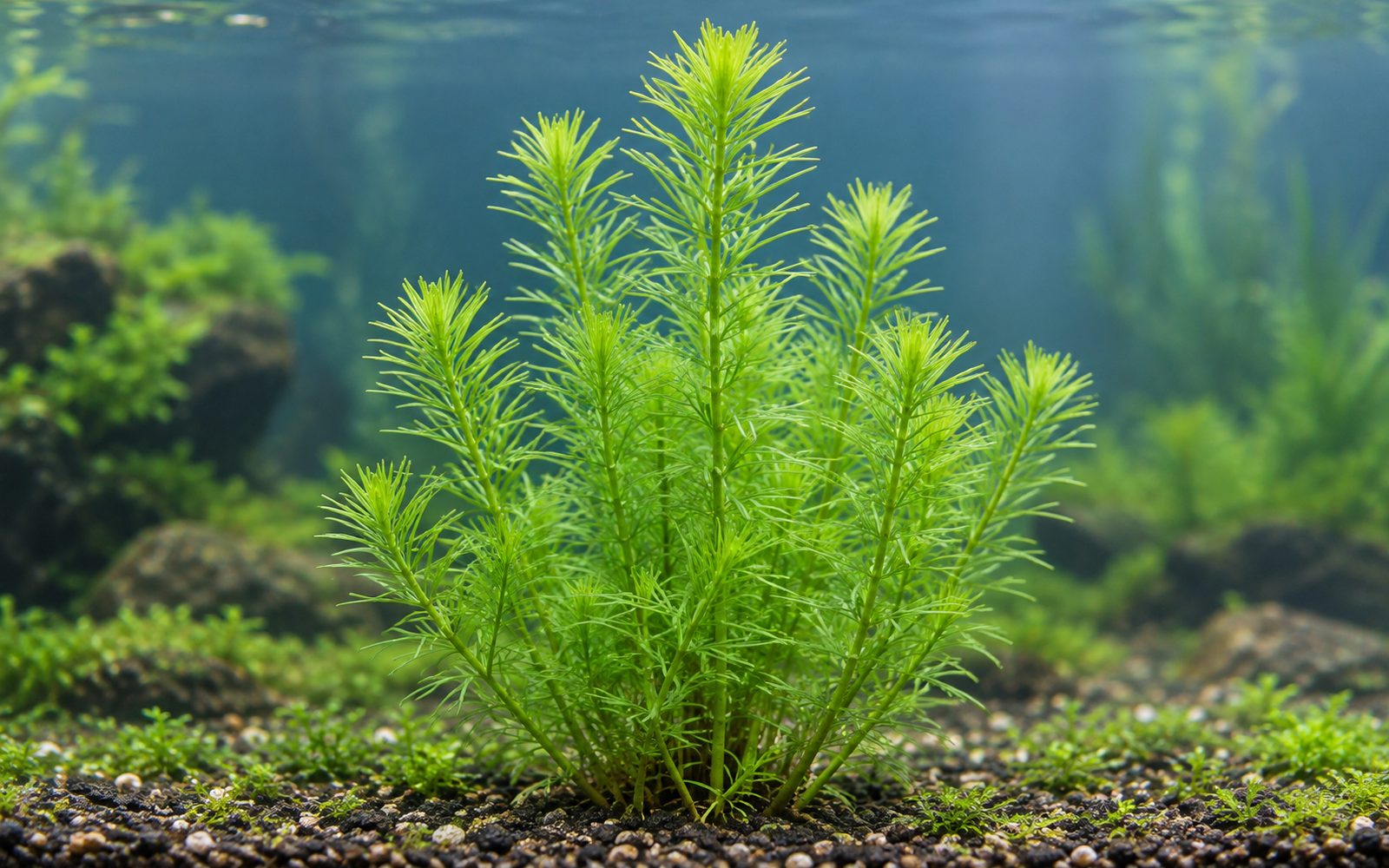
Pogostemon erectus is a stem plant from India that, as its name suggests, grows bolt upright. Its fine, needle-like light green leaves are arranged in dense whorls along the stem; planted as a group it creates a soft look reminiscent of small pine branches. In the midground or next to red plants it provides a nice textural contrast. With strong light and regular nutrients it stays dense; if light is insufficient, the lower parts become bare.
Planting and Placement
- Plant the stems in groups of 3–5, 2–3 cm apart, 3 cm deep.
- Place it in the midground in a spot that gets plenty of light.
Care and Fertilization
- Light: High.
- CO₂: Not required but clearly beneficial; with CO₂ it becomes denser and brighter.
- Fertilizer: Regular liquid fertilizer and root tabs; when nutrients are scarce, new leaves turn pale.
- Trimming: Cut from the top; replant the cut tips to keep the group dense.
Propagation
This section has not been written yet. How is it propagated?
Be the first to write it
Common Problems
This section has not been written yet. Problems such as melting, yellowing and algae, and how to fix them.
Be the first to write it
Hobbyist notes
Things you won't find in books, learned by trial and error. The most helpful ones are on top.
No notes yet. If you have experience with this species, leave the first note.
Was this page helpful?
Change history and contributors
- Page created · October 16, 2026