
Water parameters
Overview
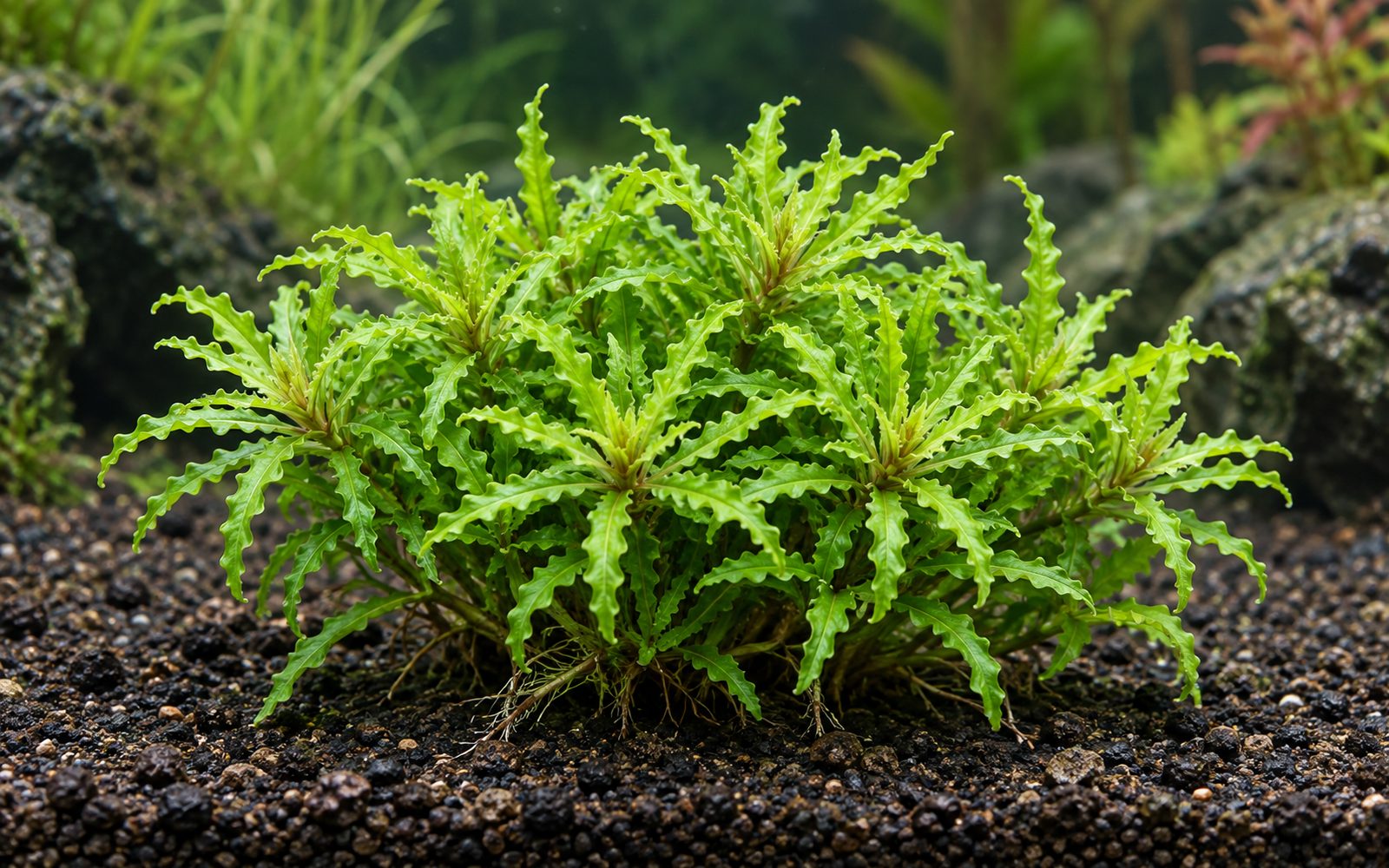
Pogostemon helferi is technically a stem plant, but because its internodes are very short, its leaves gather at the top of the stem in a star-shaped, rosette-like cluster. The edges of the light green leaves are distinctly wavy and curly. This unique look makes it a highly sought-after plant in stone layouts, in the foreground and midground.
It comes from the warm streams of Thailand and Myanmar and tolerates temperatures up to 30 °C well; for this reason it can also be used in aquariums for fish that need warm water, such as discus. It grows slowly; it lives in an aquarium without CO₂ but slows down a lot, while with CO₂ and good light it becomes denser and more vibrant.
Planting and Placement
- Plants are set one by one with 3–4 cm between them, burying only the lower 1–2 cm of the stem; burying them deep can cause stem rot.
- It looks lovely in groups at the base of stones and wood, in the foreground and midground.
- It can also be grown wedged between stones or tied to decor with thin fishing line.
Care and Fertilization
- Light: Medium; in strong light it stays more compact.
- CO₂: Not required, but clearly beneficial.
- Fertilizer: Regular liquid fertilizer and root tabs; when nutrients are lacking, the leaves turn pale.
- Trimming: When the plant gets tall, the top can be cut and replanted; the main stem produces side shoots.
Propagation
Side shoots growing from the main stem are cut and planted separately once they have a few leaves. When the top of a tall plant is cut, both the top and the remaining stem produce new plants.
Common Problems
- Stem rotting at the base: Planted too deep, or a compacted, airless substrate. Plant close to the surface.
- Leaves melting: After new planting or after sudden water changes; a healthy plant produces new leaves.
- Pale, yellowish leaves: Nutrient deficiency, especially nitrogen or iron.
- Very slow growth: Natural in an aquarium without CO₂; be patient.
Hobbyist notes
Things you won't find in books, learned by trial and error. The most helpful ones are on top.
Change history and contributors
- Page created · October 16, 2026