
Skip to content
Plant Freshwater Care: easy

Sagittaria Platyphylla

Sagittaria platyphylla
— No votes yet Rate it
Other names: Delta arrowhead, Broad-leaf sagittaria, Broadleaf arrowhead
Group: Rosette and bulb plants · Family: Alismataceae · Origin: North America — southern United States and Mexico

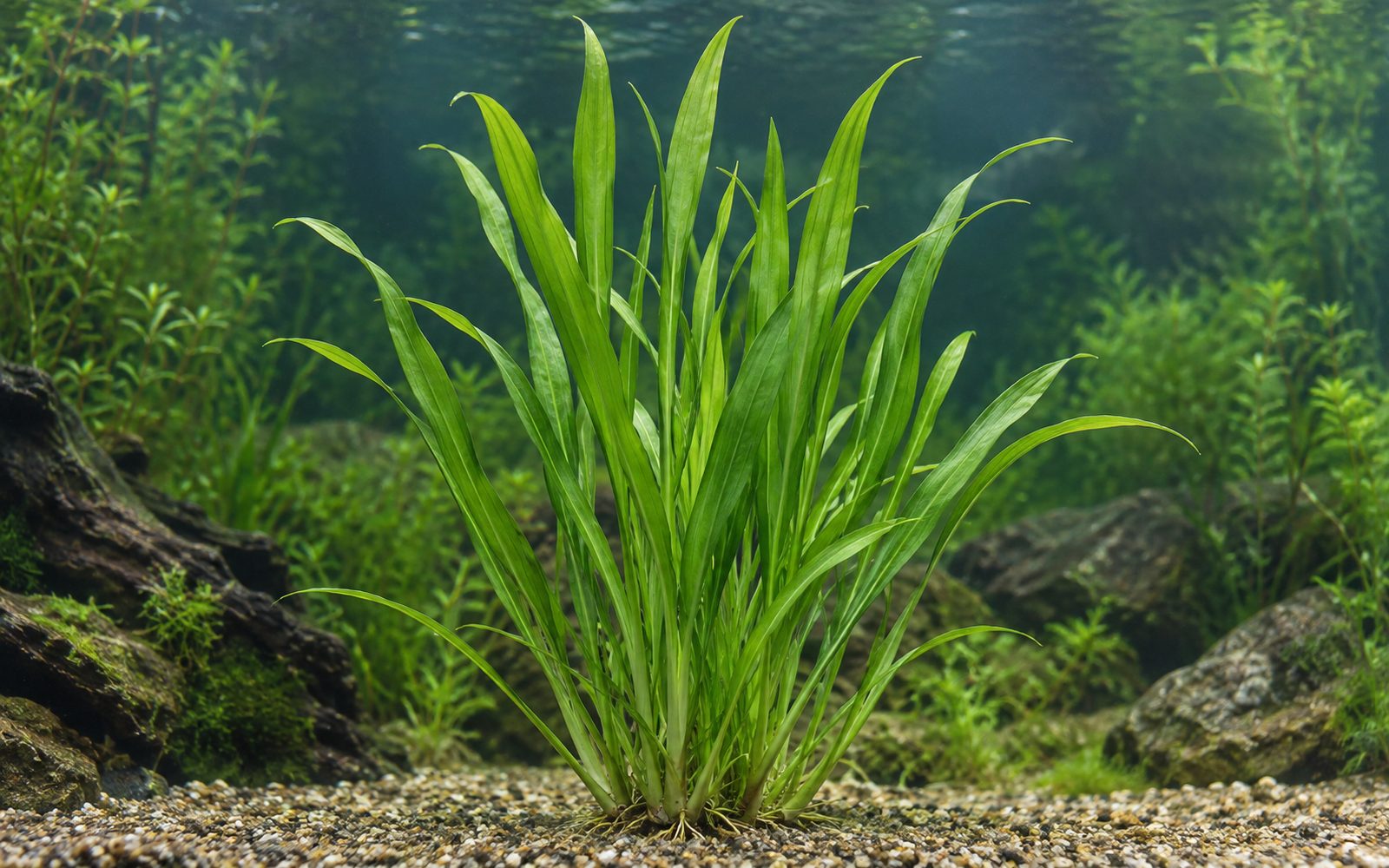
A hardy sagittaria that produces ribbon leaves 1–2 cm wide underwater and arrow-shaped leaves above water. It also grows in hard water; it is invasive in some countries and must not be released into the wild.

Last updated October 16, 2026

Temperature
18–28°C
pH
6.5–8
Hardness
4–18 dGH
Light
Medium
CO₂
Not needed
Growth
Medium
Placement
Background
Height
Up to 35 cm

Water parameters

Temperature18–28°C
pH6.5–8
General hardness (GH)4–18 dGH
Recommended range

Overview

October 16, 2026 · Suggest an edit

Sagittaria platyphylla is an arrowhead species from the swamps and shallow waters of southern North America. Underwater it forms flat, ribbon-shaped leaves 20–40 cm tall; when it grows above the water, it produces lance- or arrow-shaped leaves on long stalks and white flowers. In some countries, such as Australia, it has escaped into the wild and become an invasive plant that chokes waterways; trimmings and surplus plants must never be dumped into natural waters.

Planting and Placement

October 16, 2026 · Suggest an edit

The roots are buried with the crown left exposed. It is planted in the background or along the sides, leaving 6–8 cm between plants. In ponds it can also be planted in the shallow margin zone.

Care and Fertilization

October 16, 2026 · Suggest an edit
  • Light: Medium.
  • CO₂: Not required.
  • Fertilizer: Root tabs speed up growth.
  • It spreads through underground runners; pull out surplus daughter plants. Cutting the emersed leaves that reach the surface keeps the plant in its submerged form.

Propagation

This section has not been written yet. How is it propagated? Be the first to write it

Common Problems

This section has not been written yet. Problems such as melting, yellowing and algae, and how to fix them. Be the first to write it

Hobbyist notes

0 notes

Things you won't find in books, learned by trial and error. The most helpful ones are on top.

No notes yet. If you have experience with this species, leave the first note.
Change history and contributors
  1. Page created · October 16, 2026