
Water parameters
Temperature8–24°C
pH6–8
General hardness (GH)4–20 dGH
Recommended range
Overview
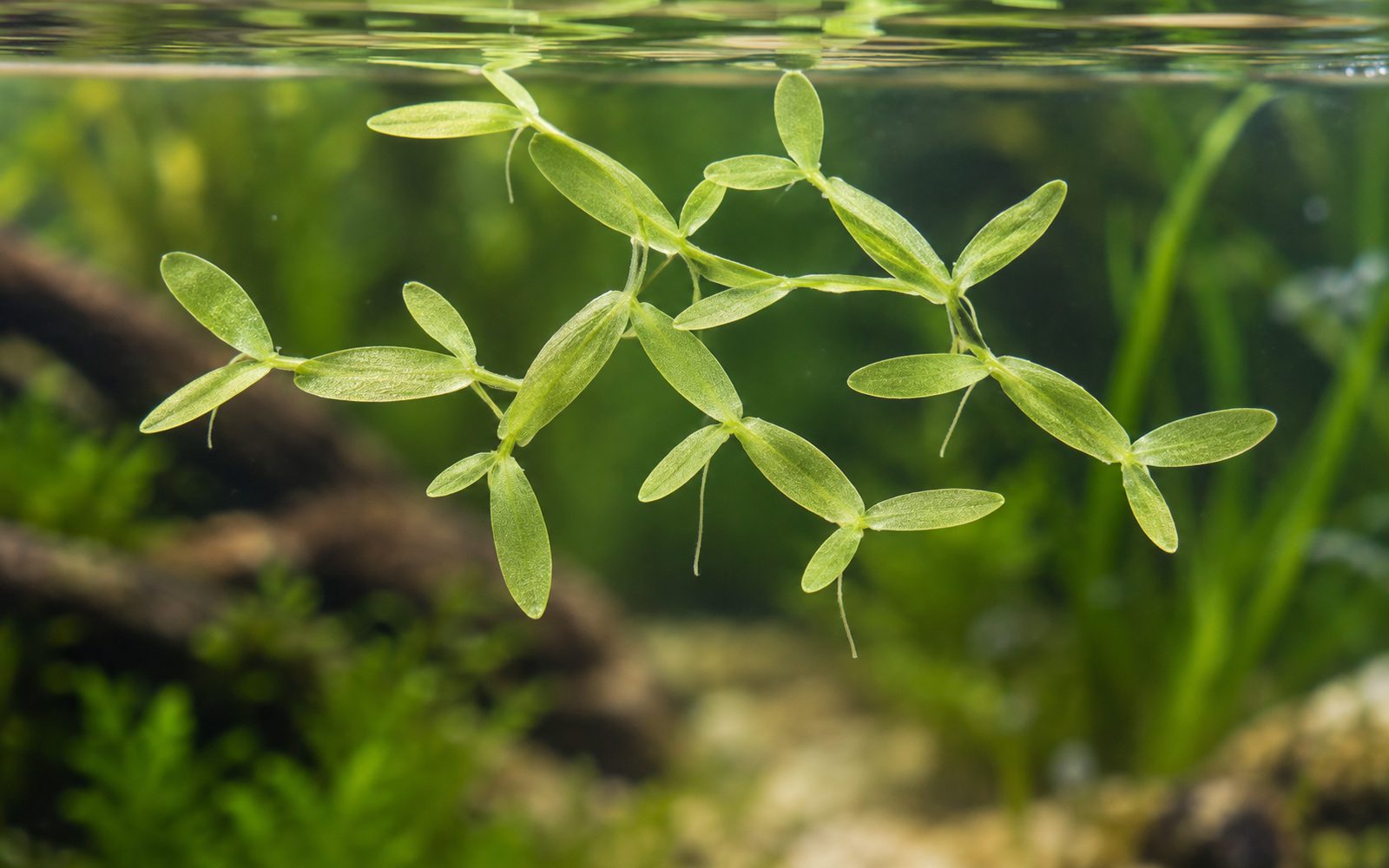
Although star duckweed is a relative of common duckweed, it is a species with a different appearance and way of life. Its leaf-like bodies are 6–10 mm long, lance-shaped, translucent and short-stalked. New bodies grow out at right angles from both sides of the parent body and stay attached, forming criss-crossing, star-like chains. These chains drift not on the surface but just below it; for this reason it does not cover the surface completely and cut off the light.
Planting and Placement
It is not planted; it is placed in the water. In calm areas without current it gathers just below the surface.
Care and Fertilization
- Temperature: It likes cool water; above 24°C it weakens. It is suitable for coldwater aquariums and ponds.
- Light: Moderate.
- CO₂: Not required.
- It provides hiding places for shrimp and fry. It reproduces as the chains break apart; remove the excess with a net and do not throw it into natural waters.
Propagation
This section has not been written yet. How is it propagated?
Be the first to write it
Common Problems
This section has not been written yet. Problems such as melting, yellowing and algae, and how to fix them.
Be the first to write it
Hobbyist notes
Things you won't find in books, learned by trial and error. The most helpful ones are on top.
No notes yet. If you have experience with this species, leave the first note.
Was this page helpful?
Change history and contributors
- Page created · October 16, 2026