
Water parameters
Temperature20–28°C
pH6–7.5
General hardness (GH)2–15 dGH
Recommended range
Overview
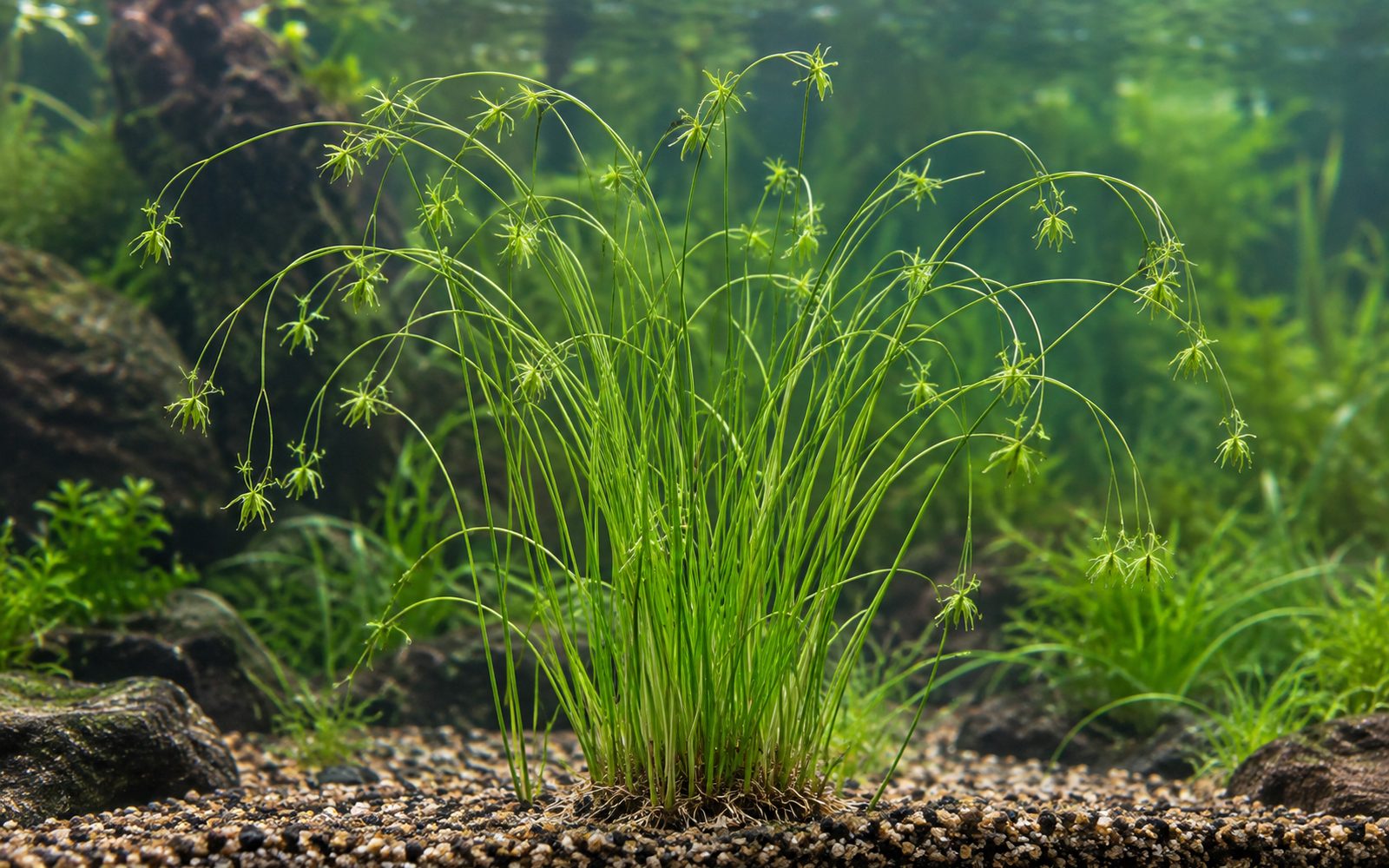
Eleocharis vivipara is a thin-stemmed hairgrass from the wetlands of the southeastern United States. The "vivipara" in its name comes from the new plantlets it forms at the tips of mature stems: as the stems lengthen, small tufts of leaves appear at their tips, and these tufts in turn grow new stems. The heavier tips curve downward and the plant takes on a look resembling an umbrella or an underwater willow. It can be confused with other plants sold in the trade as "giant hairgrass"; the plantlets at the tips set it apart.
Planting and Placement
- Divide the clump into bunches of 3–5 stems and plant them 2–3 cm apart.
- Use it in the background or in corners; keep in mind that over time it will droop forward.
Care and Fertilization
- Light: Medium is enough; under strong light it grows denser.
- CO₂: Not required, but increases growth and plantlet formation.
- Fertilizer: Root tabs; iron and potassium preserve the dark green color.
- Maintenance: It needs regular thinning; otherwise it turns into a tangled mass and blocks the light from the plants below. The plantlets at the tips are separated and planted to propagate it.
Propagation
This section has not been written yet. How is it propagated?
Be the first to write it
Common Problems
This section has not been written yet. Problems such as melting, yellowing and algae, and how to fix them.
Be the first to write it
Hobbyist notes
Things you won't find in books, learned by trial and error. The most helpful ones are on top.
No notes yet. If you have experience with this species, leave the first note.
Was this page helpful?
Change history and contributors
- Page created · October 16, 2026