
Water parameters
Overview
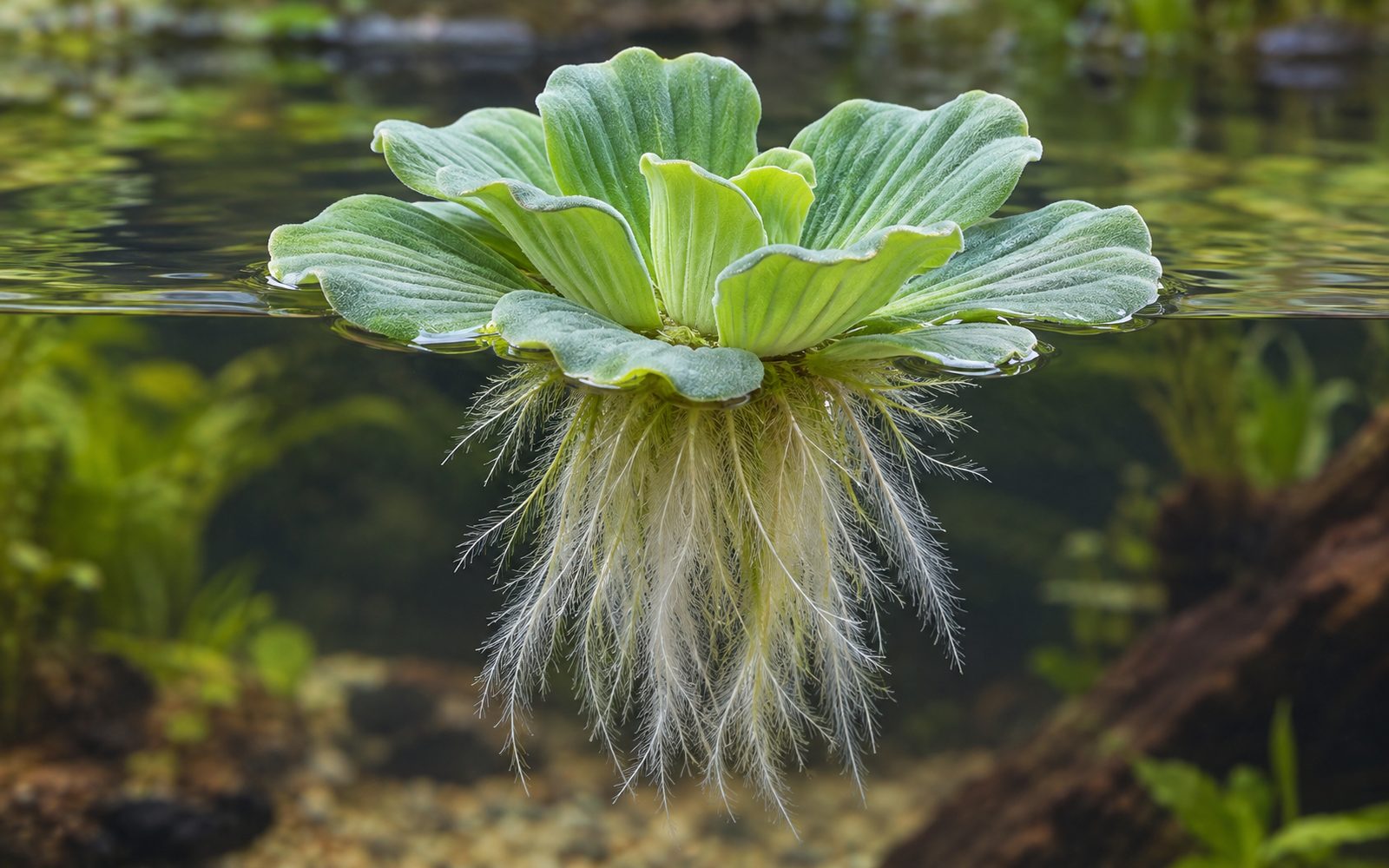
Water lettuce is a floating plant whose rosette of thick, velvety light green leaves with prominent parallel ridges resembles a small head of lettuce. In the aquarium the rosettes usually stay 5–15 cm across; long, dense, feathery roots hang beneath them. These roots are an excellent hiding place for fry.
Legal warning: In warm climates water lettuce completely covers the surface of lakes and canals, cutting off oxygen and light, and is one of the world's most problematic invasive aquatic plants. It has been added to the European Union's list of invasive alien species; trading, growing and releasing it into the wild are banned in EU countries. Check the regulations in your country and never throw the excess into natural waters or down the sink.
Planting and Placement
It is not planted; it is placed on the surface. It is suitable for aquariums with at least 10 cm of space between the lid and the water, or for open-top aquariums.
Care and Fertilization
- Light: Moderate to strong; however, the leaves burn if they stay too close to hot lamps.
- Humidity: It likes humid air, but droplets under the lid can rot the leaves.
- Fertilizer: Long roots and shrinking leaves indicate a nutrient deficiency.
- It multiplies quickly by forming young rosettes on side runners; remove the excess regularly and put it in the trash.
Propagation
Common Problems
Hobbyist notes
Things you won't find in books, learned by trial and error. The most helpful ones are on top.
Change history and contributors
- Page created · October 16, 2026