

Water parameters
Overview
The Asian arowana is the "dragon fish," regarded in East Asia as a symbol of luck and prosperity for its large shiny scales, barbeled chin and stately swimming. Depending on the color form, its price can be very high. It is thicker-bodied and shorter than the silver arowana; it reaches 60–75 cm in the aquarium and 90 cm in the wild.
Legal status: Because its wild populations have declined due to overcollection and habitat loss, it is listed in CITES Appendix I. International trade is permitted only for microchipped, certified fish bred on registered farms; in some countries, such as the USA, its import and sale are completely banned. Before buying, ask for the certificate and chip number and check local regulations; do not buy undocumented fish and never release any arowana into the wild.
Color and Fin Varieties
- Super red: from Borneo; the scales and fins turn deep red with age.
- Cross back golden: from Malaysia; the golden sheen extends all the way across the back.
- Red tail golden: from Sumatra; golden scales, a dark back and reddish fins.
- Green: the most common and most affordable form; silver-green scales.
Some researchers have described these color forms as separate species, but this view has not gained general acceptance.
Natural Habitat
It lives near the surface in slow-flowing, vegetated rivers, swamp forests and lakes of Southeast Asia.
Tank Setup
- Volume: at least 1200 liters for an adult; a footprint of at least 200 × 80 cm. The fish should not have to bend its body when turning.
- Lid: a heavy, sturdy lid; it is an excellent jumper.
- Water: clean, well-oxygenated, with stable values; strong filtration and a 30% water change weekly.
- Setting: a quiet room and gradual light transitions; sudden movements cause it to crash into the glass.
Diet
Carnivorous; it feeds from the surface. Shrimp, insects (crickets, grasshoppers, larvae), fish fillet and arowana pellets. Live feeder fish carry a risk of disease. Adults are fed once a day in moderation.
Behavior and Compatibility
Aggressive toward its own kind and toward large fish that share the surface; it eats fish and shrimp that fit in its mouth.
Good companions: in a very large aquarium, large and calm bottom- and mid-dwelling species: tigerfish, bichirs, large plecos, clown knifefish, large catfish.
Avoid: small fish, shrimp, a second arowana, other surface predators.
Group and Colony Structure
In a home aquarium a single fish is kept. Large groups are kept on farms and in very large systems; this is not recommended for the home.
Breeding
The male incubates the fertilized eggs in his mouth and carries the fry there until their yolk sacs are used up. Commercial breeding is done in large ponds in Southeast Asia; it does not breed in a home aquarium.
Health and Common Problems
- Drop eye: associated with a cramped aquarium and feeding from below.
- Scale and gill cover problems: poor water and insufficient space.
- Jumping injuries: with a weak lid.
Sexing
The sexes are hard to tell apart externally; mature males may have a larger mouth and head and a slimmer body.
Tank mates
This list is calculated automatically from the species profile and grows as new species are added to the catalog. Try it in the planner for a definite answer.
Usually compatible
 Spotted Tilapia
 Flowerhorn
 Redhead Cichlid
 Red Terror Cichlid
 Cryptocoryne Parva
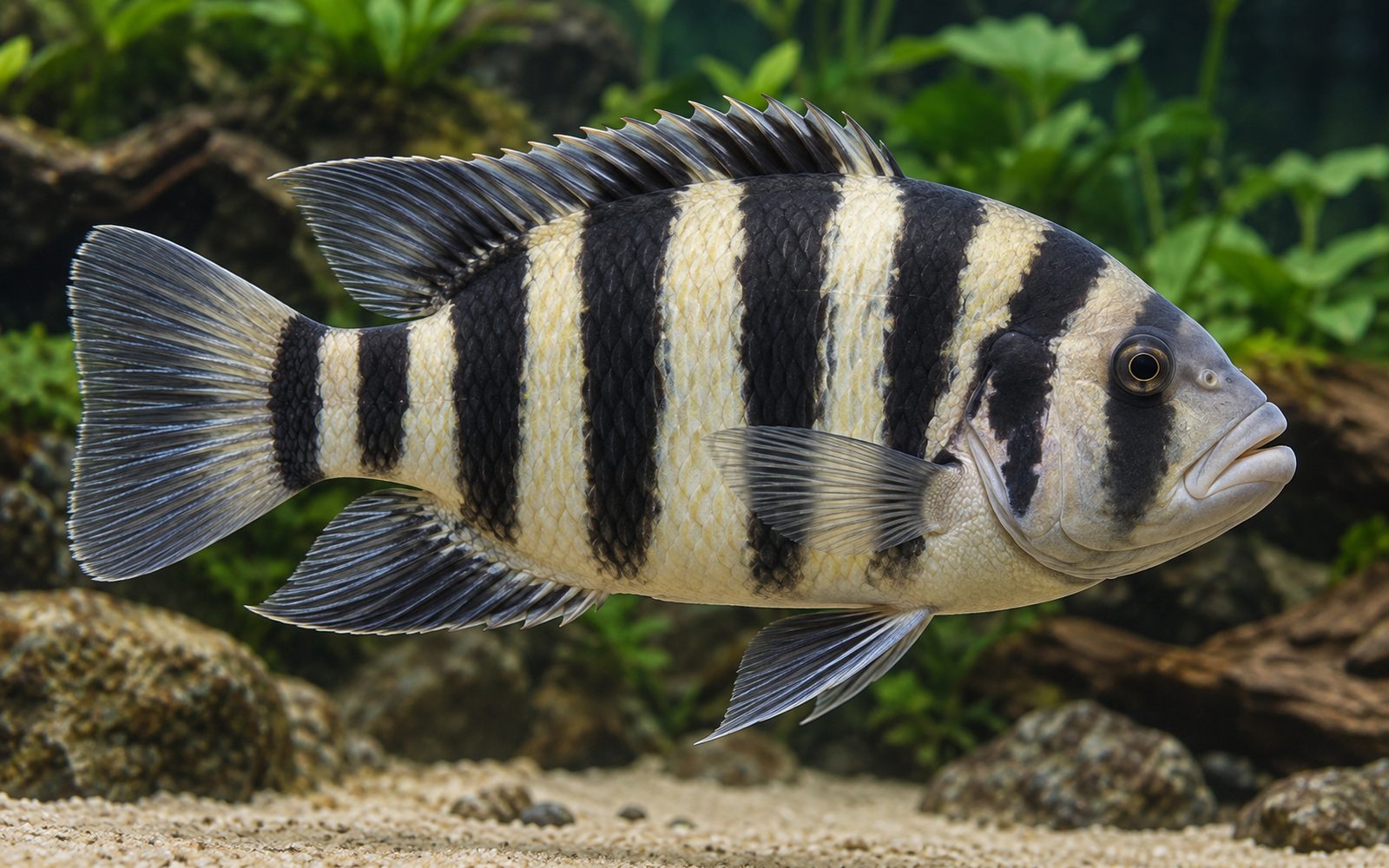 Zebra Tilapia
Adonis Pleco
African Brown Knifefish
Zebra Tilapia
Adonis Pleco
African Brown Knifefish
 Weeping Moss
 Flame Moss
Should not be kept together








Hobbyist notes
Things you won't find in books, learned by trial and error. The most helpful ones are on top.
Change history and contributors
- Page created · October 16, 2026