

Water parameters
Overview
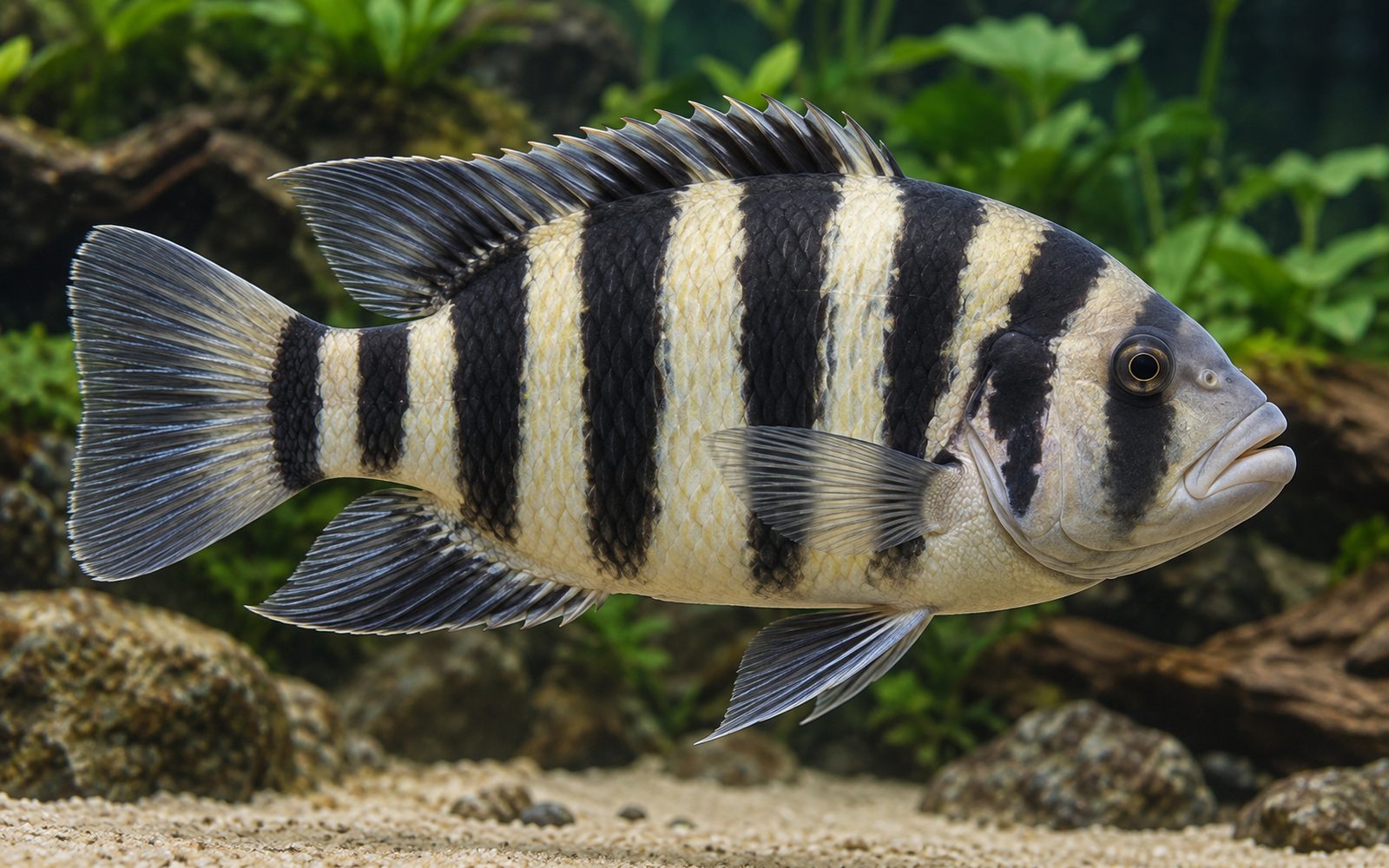
The spotted tilapia is a large cichlid from the coastal rivers and lagoons of West Africa. Juveniles carry distinct dark vertical bars; in adults these bars give way to large dark spots arranged on an olive-gold background. It grows up to 30 cm, is long-lived and becomes quite aggressive with age. It eats plants and constantly digs up the substrate.
Legal and ethical warning: Wherever the species has been released into waters outside its native range, such as Florida and Australia, it has become established and invasive. It must never be released into the wild under any circumstances; fish that cannot be cared for should be given to a dealer or another aquarist.
Tank Setup
- At least 450 liters and 180 cm of length for a single adult or a pair.
- Large rocks and roots; sturdy decor instead of plants.
- pH 6.5–8, a wide hardness range; a 30% water change every week and a very strong filter.
- Sand substrate; rocks should be set directly on the glass bottom.
Diet
Omnivorous with a leaning toward plant matter. It is fed large cichlid granules, spirulina-based foods, vegetables and frozen shrimp.
Behavior and Compatibility
Adults are territorial and aggressive; it preys on fish that fit in its mouth. A compatible pair lays a large number of eggs on a flat stone and guards the fry together.
Good companions: Very robust large cichlids of its own size and big catfish.
Avoid: Small and medium-sized fish, shrimp, calm species, planted layouts.
A short profile for this species
The Spotted Tilapia page has the basics, but the sections below have not been written yet. If you keep this species, write a section from your own experience; it will be published under your name after editor approval.
Tank mates
This list is calculated automatically from the species profile and grows as new species are added to the catalog. Try it in the planner for a definite answer.
Usually compatible
 Banded Jewel Cichlid
 Flowerhorn
 Jack Dempsey
 Jaguar Cichlid
 Red Devil Cichlid
 Red Terror Cichlid
 Cryptocoryne Parva
 Wolf Cichlid
 Zebra Tilapia
Adonis Pleco
Zebra Tilapia
Adonis Pleco
Should not be kept together








Hobbyist notes
Things you won't find in books, learned by trial and error. The most helpful ones are on top.
Change history and contributors
- Page created · October 16, 2026