

Water parameters
Overview
The jaguar cichlid takes its name from the irregular black spots on its silver-gold body. In juveniles vertical bars dominate; with age the spots and a broken horizontal stripe become prominent. With its large mouth, which can extend forward, it is a typical ambush predator.
It is sold in stores as cute 5 cm juveniles, but males reach 35–40 cm in the aquarium and grow even larger in the wild. Because of both its size and its aggression, it is suitable only for experienced hobbyists with a large aquarium.
Natural Habitat
It lives in lakes, swamps and slow-flowing rivers on the Atlantic slope of Honduras, Nicaragua and Costa Rica. It prefers warm, murky water rich in plants and roots. In the region it is a valued food fish.
Tank Setup
- Volume: At least 450 liters and 180 cm of length for a single adult; 700 liters or more for a pair.
- Decor: A few large stones and roots; a large open swimming area. It digs in the substrate and uproots plants.
- Equipment: A canister filter or sump turning over 5–8 times the tank volume per hour, a protected heater and a heavy lid.
- Maintenance: A 30–50% water change every week; it produces a lot of waste.
Diet
Carnivorous. Use a large carnivore cichlid granule or stick food as the staple; vary the diet with frozen shrimp, mysis, fish fillet and mussels. Live feeder fish are not recommended because of the risk of disease. One meal a day, or a larger meal every other day, is enough for adults.
Behavior and Compatibility
It recognizes its owner and waits in front of the glass at feeding time. It sees every fish that fits in its mouth as prey; during breeding it attacks even large fish.
Good companions: Only robust, fast fish of its own size: large plecos, large Central American cichlids, large silvery fish. All of them only in a very large tank.
Avoid: Every fish smaller than itself, shrimp, snails, slow and long-finned species, plants.
Group and Colony Structure
Most hobbyists keep the jaguar alone. A pair is only possible when juveniles are raised together and pair up naturally, and only in a very large tank. Because the male can seriously injure the female, a divider and a spare tank should be kept ready.
Breeding
The pair can lay thousands of eggs on a stone it has cleaned. The larvae are moved into dug-out pits; the parents guard the fry extremely aggressively. During this period the other fish in the same tank are in serious danger.
Health and Common Problems
- Hole-in-the-head disease (HLLE): With poor water quality and a monotonous diet.
- Mouth and jaw injuries: When it lunges at the glass and decor.
- Obesity and fatty deposits: With too much food and fatty foods.
Sexing
The male grows noticeably larger, and his dorsal and anal fins are longer and more pointed. The female is smaller and stockier. A reliable distinction is made by the papilla.
Tank mates
This list is calculated automatically from the species profile and grows as new species are added to the catalog. Try it in the planner for a definite answer.
Usually compatible
 Banded Jewel Cichlid
 Spotted Tilapia
 Flowerhorn
 Jack Dempsey
 Red Devil Cichlid
 Red Terror Cichlid
 Cryptocoryne Parva
 Wolf Cichlid
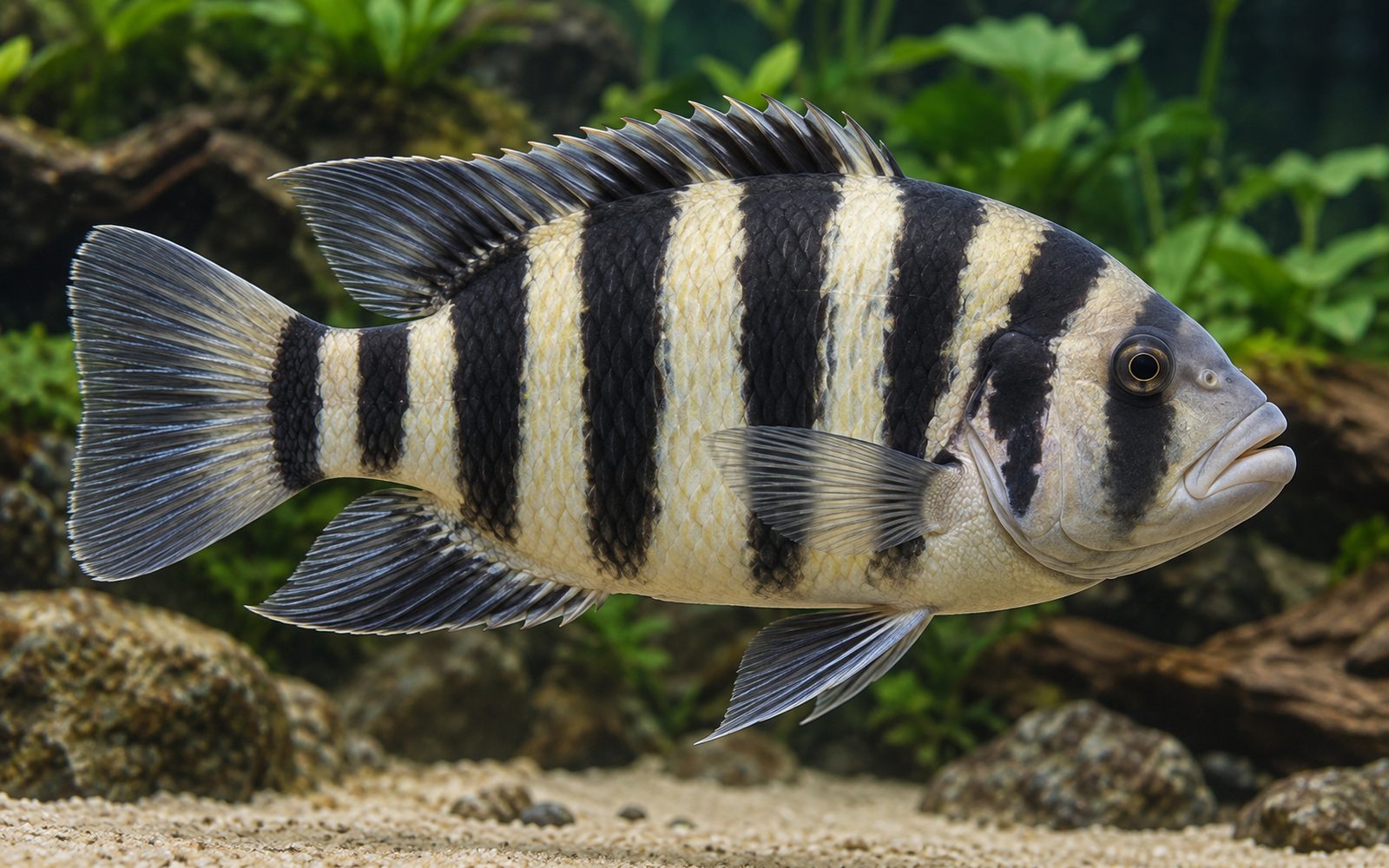 Zebra Tilapia
 Weeping Moss
Should not be kept together








Hobbyist notes
Things you won't find in books, learned by trial and error. The most helpful ones are on top.
Change history and contributors
- Page created · October 16, 2026