

Water parameters
Overview
The banded jewel cichlid is a large, predatory Hemichromis species that lives in rivers, lakes and coastal lagoons across a wide area of West Africa. Its most distinctive feature is the row of four or five large dark blotches along its olive-yellowish body; its colors darken during breeding. It can exceed 20 cm. In the wild it feeds largely on fish, and in the aquarium it also hunts every fish that fits in its mouth. They are model parents and defend their nest very fiercely.
Tank Setup
- At least 300 liters and 150 cm of length for a pair.
- Large roots, rock groups and flat stones; open swimming space.
- pH 6.5–8; it adapts to a wide range of water values; a 30% water change every week and a strong filter.
- Because it digs, plants should be attached to rocks.
Diet
Carnivorous. It is fed large cichlid granules, frozen mysis, krill and pieces of shrimp. Live feeder fish are not recommended because of the risk of disease.
Behavior and Compatibility
Territorial and predatory; its aggression peaks during breeding. The pair lays a few hundred eggs on a flat stone and guards the fry together.
Good companions: Robust fish of its own size: large Synodontis species, big and fast characins and, in a large tank, large African and American cichlids.
Avoid: Any fish that could fit in its mouth, shrimp, calm and delicate species.
A short profile for this species
The Banded Jewel Cichlid page has the basics, but the sections below have not been written yet. If you keep this species, write a section from your own experience; it will be published under your name after editor approval.
Tank mates
This list is calculated automatically from the species profile and grows as new species are added to the catalog. Try it in the planner for a definite answer.
Usually compatible
 Spotted Tilapia
 Flowerhorn
 Jack Dempsey
 Jaguar Cichlid
 Red Devil Cichlid
 Red Terror Cichlid
 Convict Cichlid
 Cryptocoryne Parva
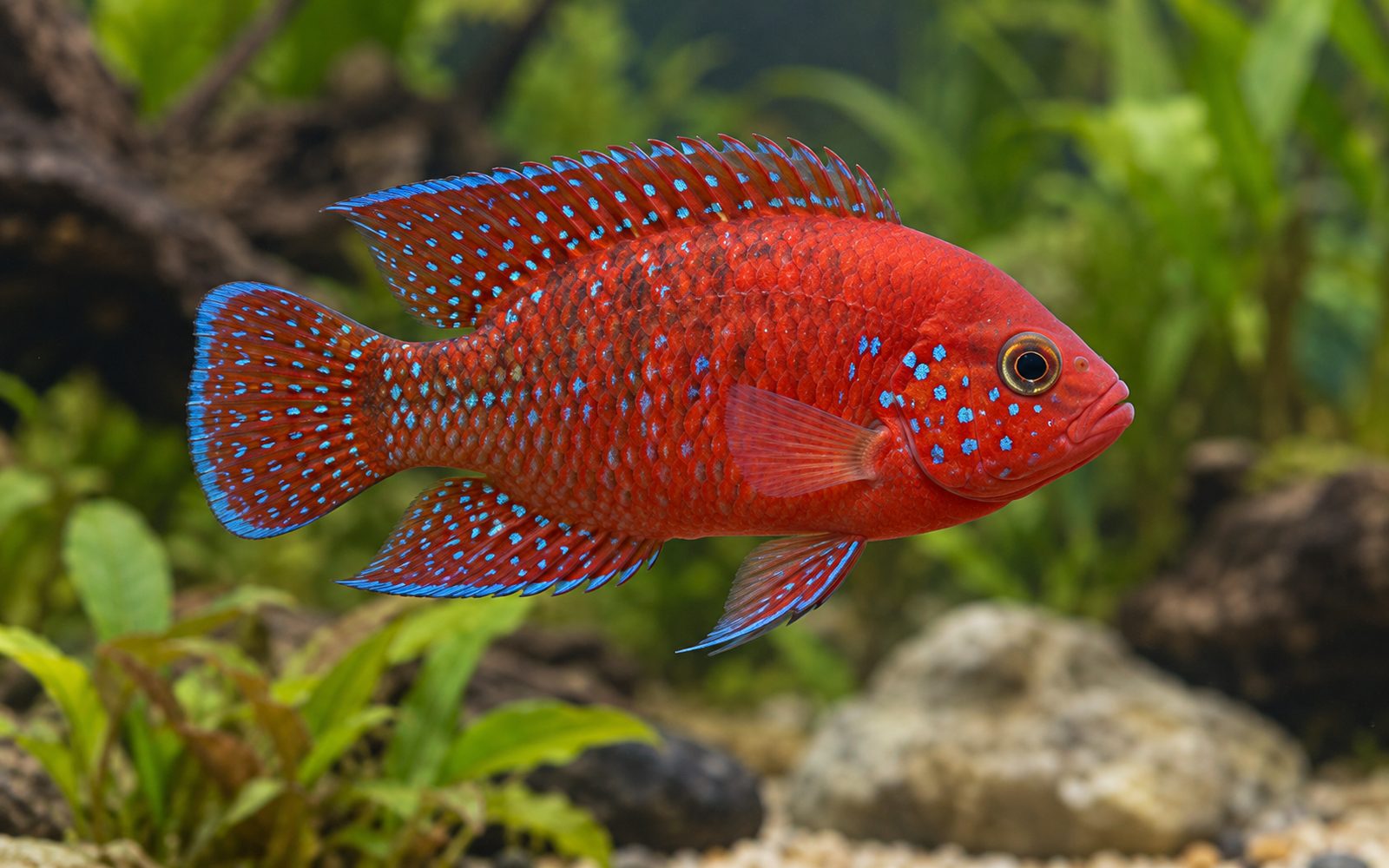 Lifalili Jewel Cichlid
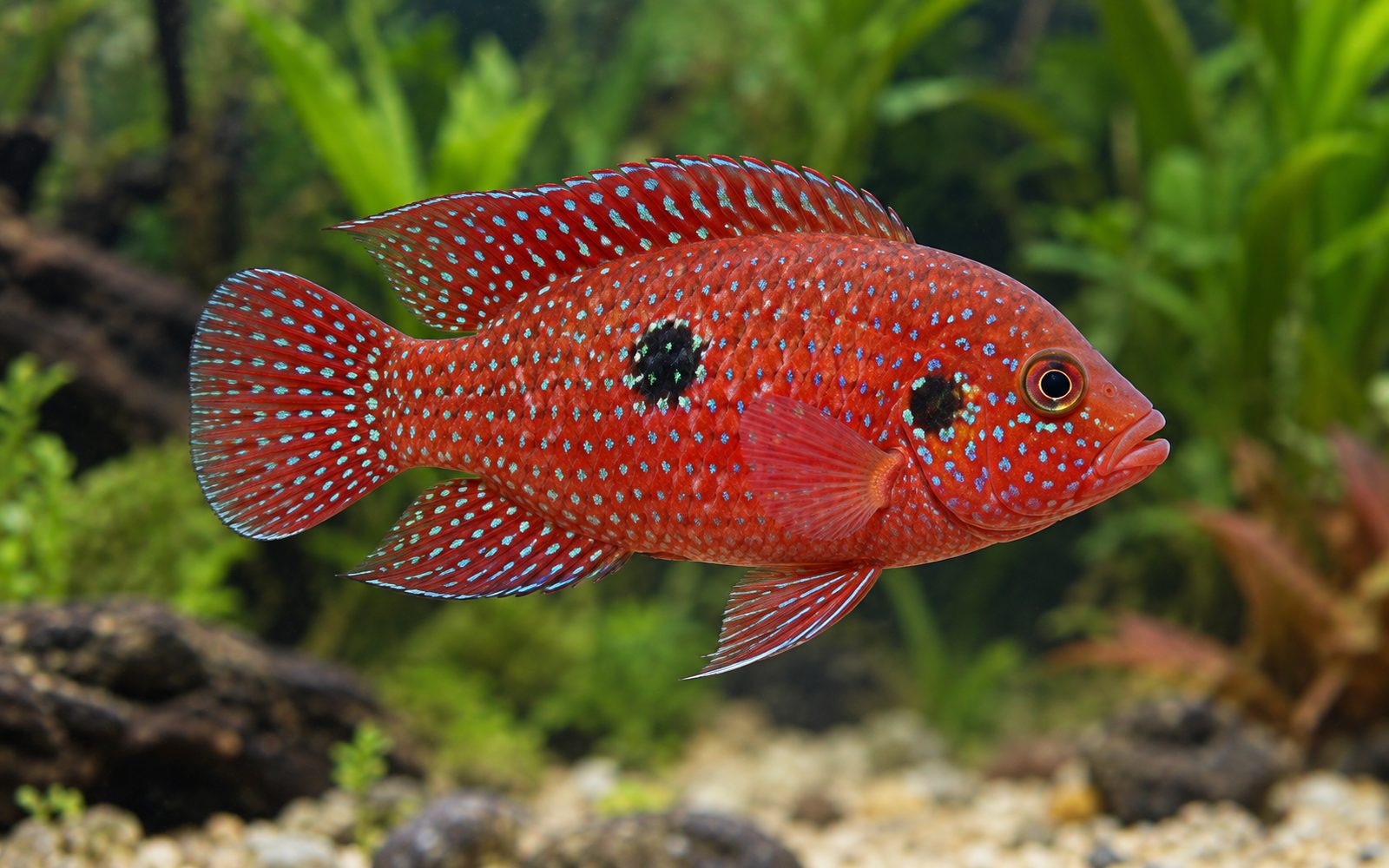 Jewel Cichlid
Should not be kept together








Hobbyist notes
Things you won't find in books, learned by trial and error. The most helpful ones are on top.
Change history and contributors
- Page created · October 16, 2026