

Water parameters
Overview
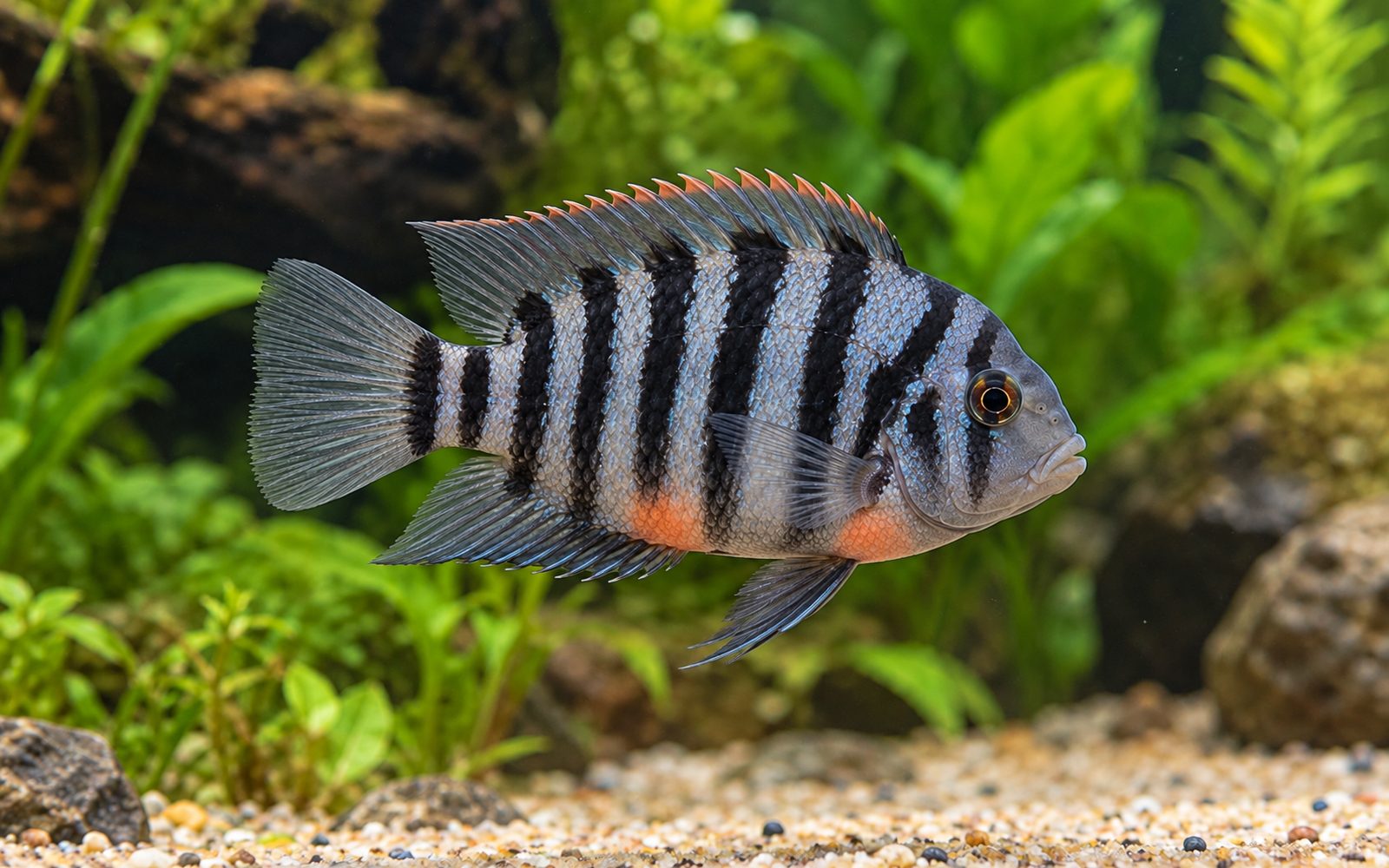
The convict cichlid got its name (convict) from the 8–9 black vertical bars on its gray-blue body; a white form ("pink convict") is also common. It is known for its hardiness and easy breeding: a pair of convicts will breed in the aquarium almost on their own.
But this ease comes with a warning: a breeding pair can claim half the aquarium and drive the other fish into a corner.
Natural Habitat
It lives in fast- and slow-flowing streams and rivers of Central America, over stony bottoms with plenty of roots.
Tank Setup
- Volume: At least 120 liters for a pair; 200 liters or more together with other species.
- Decor: Caves, flat stones, roots. Convicts dig in the substrate and rearrange the decor; plants get uprooted.
- Water: 22–26°C; it adapts to a wide range of values.
Diet
Omnivorous and insatiable. Cichlid granules, frozen foods, vegetables. Avoid overfeeding.
Behavior and Compatibility
Very aggressive for its size, especially when it has fry. It eats fish and shrimp that fit in its mouth.
Good companions: Larger Central American cichlids of similar temperament (in a large tank), robust plecos, fast and large schooling fish.
Avoid: Peaceful community fish, small fish, shrimp, planted tanks, slow and long-finned species.
Group and Colony Structure
The convict is kept as a pair. A second pair in the same tank is only possible in a very large layout divided up with rocks. In a tank where the pair breeds constantly, the number of fry rises quickly; there should be a plan for rehoming the fry.
Breeding
The pair chooses a cave, cleans it out and lays 100–300 eggs. The male and female guard the eggs and fry together for weeks. The fry eat fine food and brine shrimp from the first day.
Health and Common Problems
Very hardy. The main risk is injuries from territorial fights.
Sexing
Males are larger, with a steeper forehead and longer, more pointed dorsal and anal fins. Females have orange-pink patches on the belly and dorsal fin; this is the easiest way to tell the sexes apart.
Tank mates
This list is calculated automatically from the species profile and grows as new species are added to the catalog. Try it in the planner for a definite answer.
Usually compatible
 Banded Jewel Cichlid
 Chocolate Cichlid
 Demasoni Cichlid
 Jack Dempsey
 Red Devil Cichlid
 Cryptocoryne Parva
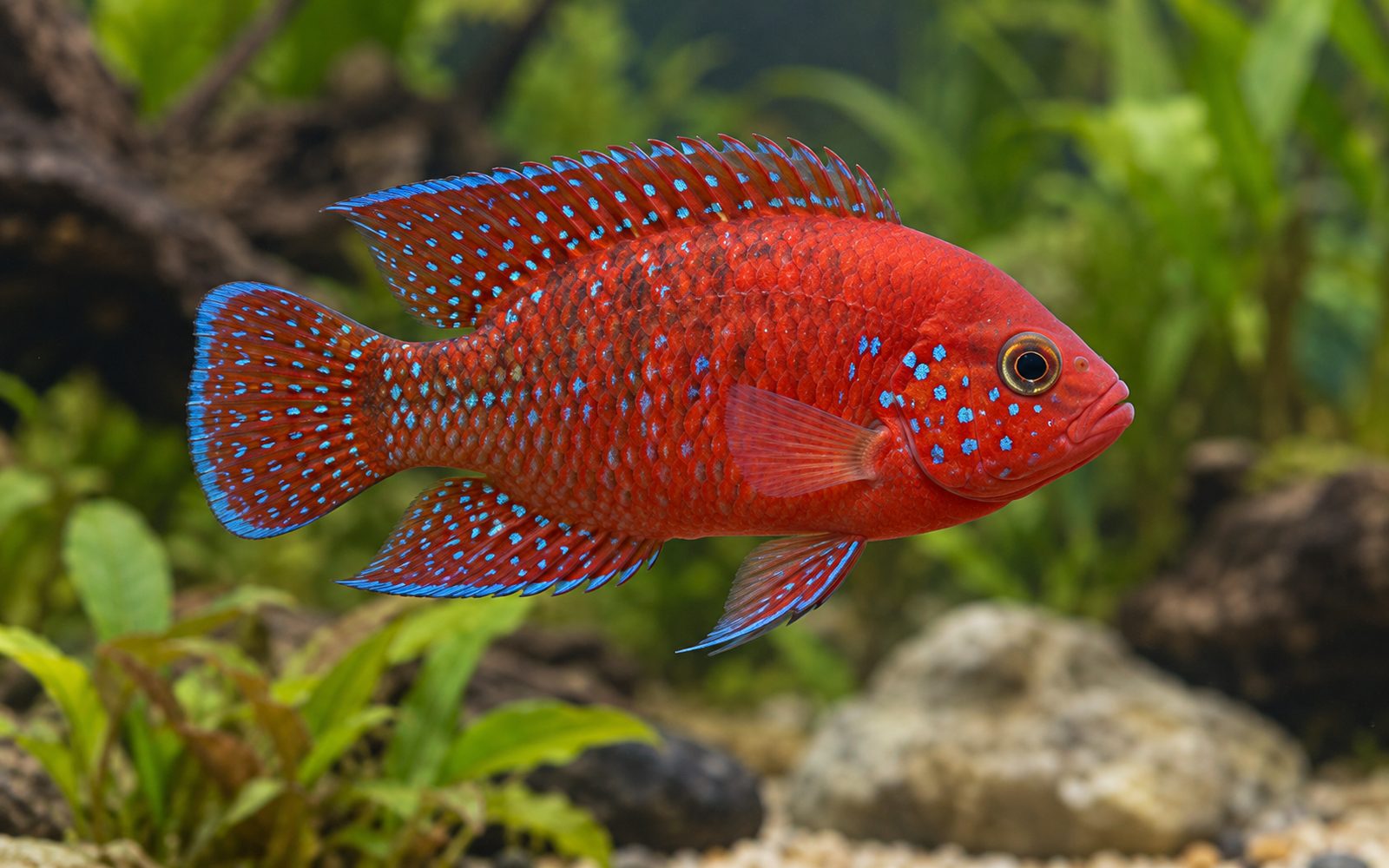 Lifalili Jewel Cichlid
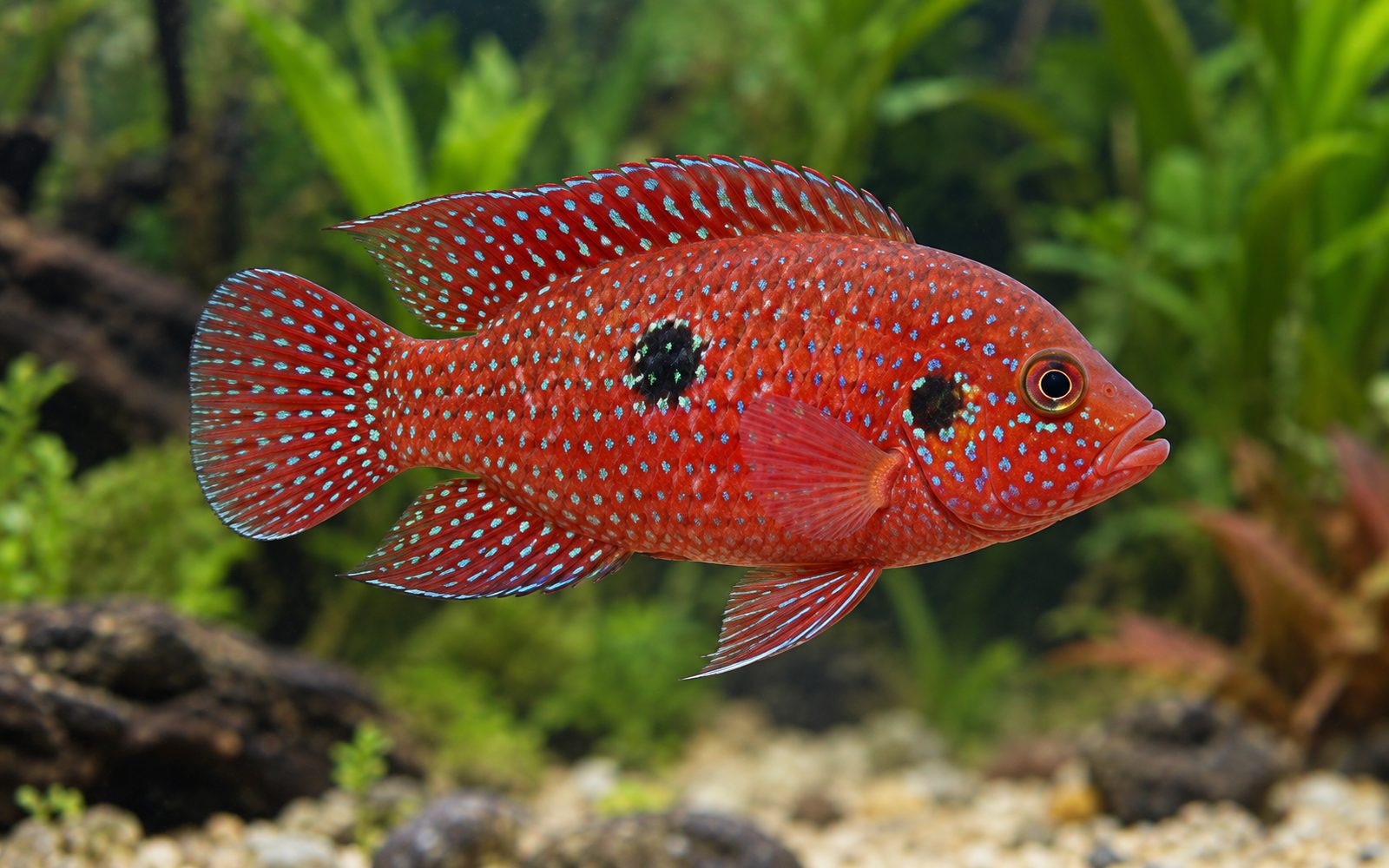 Jewel Cichlid
 Pundamilia nyererei
 Pundamilia pundamilia
Should not be kept together








Hobbyist notes
Things you won't find in books, learned by trial and error. The most helpful ones are on top.
Change history and contributors
- Page created · October 16, 2026