

Water parameters
Overview
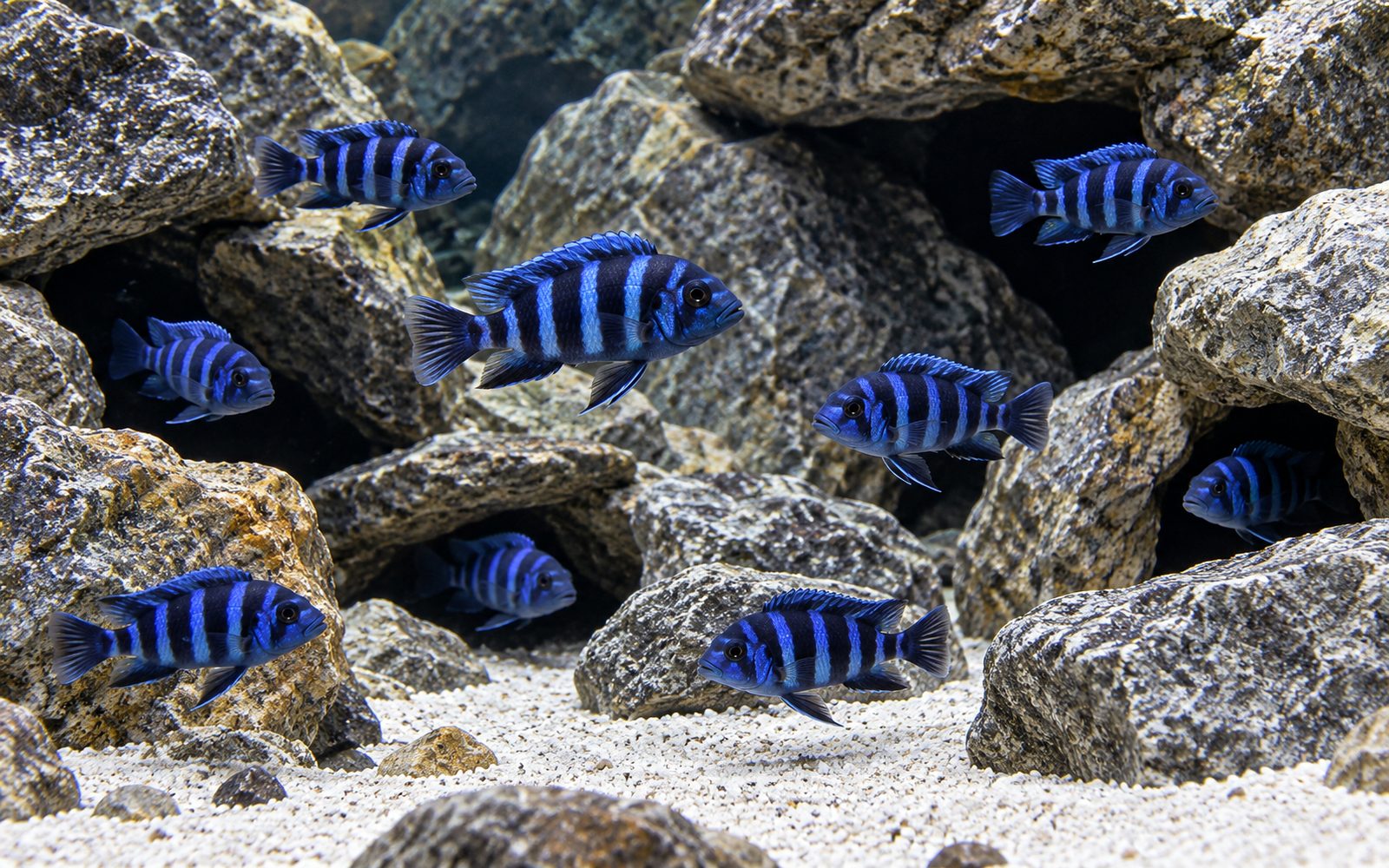
With dark navy and bright blue vertical bands running along its body, the demasoni is one of the most eye-catching Malawi cichlids. At an adult size of 7–8 cm it is one of the smallest mbuna, but its temperament is inversely proportional to its size: it is extremely aggressive both toward its own kind and toward similar-looking fish.
That is why the "small fish, small aquarium" logic does not work with demasoni. In a correctly set-up large group, however, it offers an impressive, constantly moving sight.
Natural Habitat
It lives only in a small area of Lake Malawi off the Tanzanian shore, around Pombo Rocks. In shallow (3–5 m), clear, hard and alkaline water it feeds by scraping the algae layer (aufwuchs) off the rocks. Because its natural habitat is so small, collection from the wild is limited; almost all of the fish in aquariums are captive-bred.
Tank Setup
- Volume: At least 200 liters and 120 cm of length for a large group. Floor area and the amount of rock matter more than volume.
- Rockwork: Most of the aquarium should be filled with rocks that form many caves and crossing lines of sight. Being able to disappear from view softens fights for a fish being chased.
- Water: Hard and alkaline (pH 7.8–8.5). With soft tap water, coral sand, aragonite and Malawi salt are used.
- Filter: A strong filter and a 30–50% water change every week; nitrate builds up quickly in a crowded mbuna aquarium.
Diet
Herbivorous; in the wild it feeds on algae and the small organisms within it. Spirulina-based mbuna food should be the staple. Bloodworms and high-protein foods can lead to "Malawi bloat"; they should not be given, or only very rarely. Feeding little and twice a day also reduces fights at feeding time.
Behavior and Compatibility
It is very aggressive toward its own kind and especially toward similar species with blue and black stripes (Pseudotropheus saulosi males, Metriaclima species). In a community it gets along better with peaceful mbuna of a different color, such as yellow or orange, and similar size.
Good companions: Labidochromis yellow (the color difference reduces aggression), Iodotropheus sprengerae, synodontis catfish suited to hard water.
Avoid: all community fish, shrimp, snails, plants, large and predatory Malawi species (including Aulonocara and haplochromines, because of differences in temperament and diet), blue-striped mbuna.
Group and Colony Structure
The only reliable way to keep a group of demasoni is numbers:
- At least 12, preferably 15 or more demasoni are kept together. In groups of 3–6 the dominant male may kill the others one by one.
- It is common to build the group from juveniles without sexing them; if they can be sexed, aim for 3–4 females per male.
- All individuals are put into the aquarium at the same time. A fish added later becomes the target of the established hierarchy.
- If one member of the group is seen constantly hiding with shredded fins, it is removed temporarily; when adding it back, the rocks are rearranged to break up the territories.
Breeding
A mouthbrooder. The male courts in front of a rock; the female takes 10–20 eggs into her mouth, and they are fertilized as she reaches toward the egg spots on the male's anal fin. The female carries the eggs in her mouth for about 3 weeks and does not eat during this time. In a crowded aquarium some of the fry can survive in rock crevices; for more, the holding female can be moved to a separate tank.
Health and Common Problems
- Malawi bloat: Triggered by the wrong (protein-rich) diet and stress; loss of appetite and a swollen belly. Early treatment is essential.
- Injury: From fights; the rock layout and group size are the best prevention.
- Darkened, hiding individual: A sign of the fish at the bottom of the hierarchy; if overlooked it can be lost within a few days.
Sexing
Males and females are almost the same color. Males are generally slightly larger and more intensely colored, with more distinct yellow egg spots on the anal fin. A definite distinction is made by looking at the genital papilla (vent); this is why groups are usually set up without knowing the sexes.
Tank mates
This list is calculated automatically from the species profile and grows as new species are added to the catalog. Try it in the planner for a definite answer.
Usually compatible
 Convict Cichlid
 Pundamilia nyererei
 Pundamilia pundamilia
 Zebra Obliquidens
 Anubias Angustifolia
 Anubias Barteri
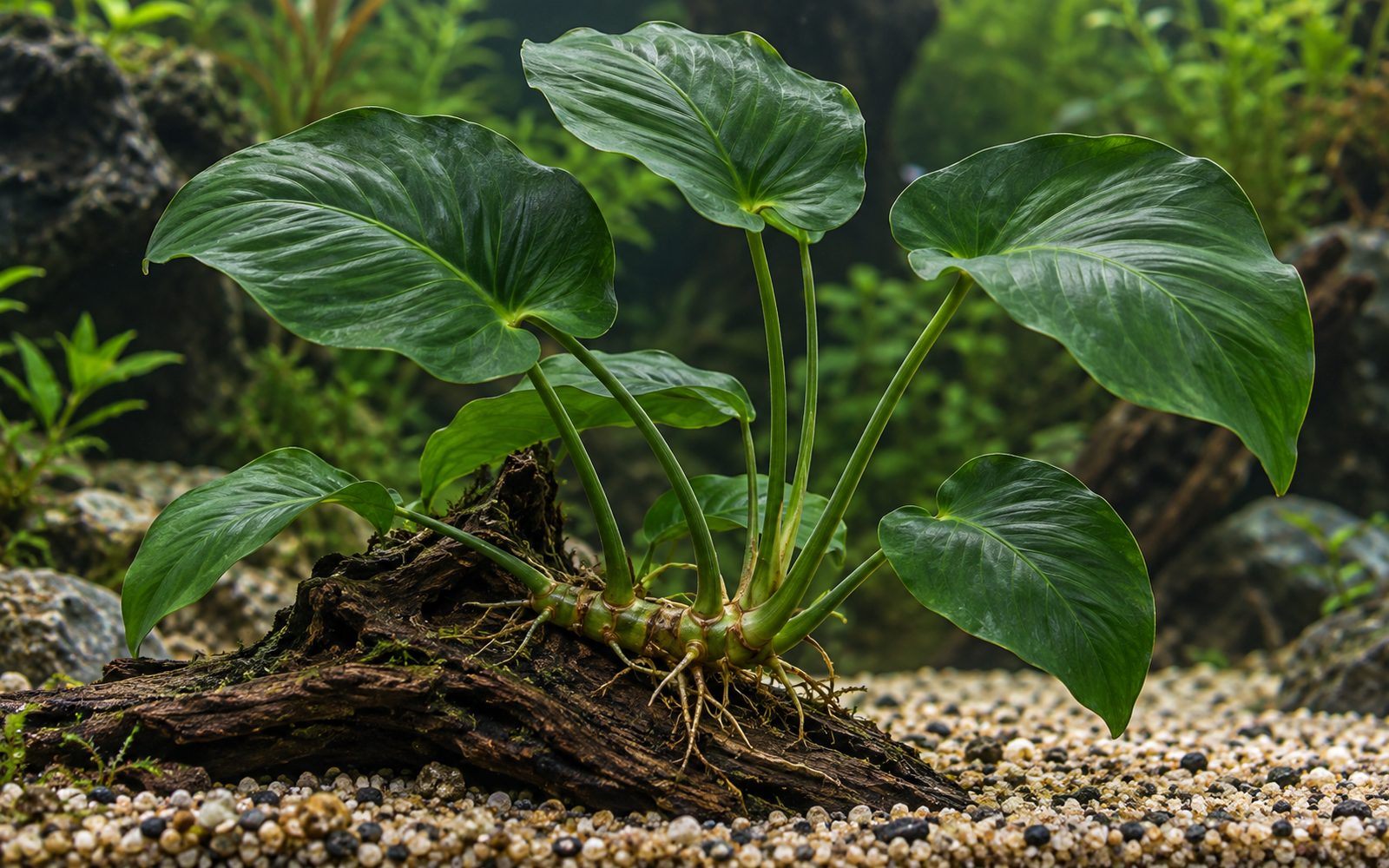 Anubias Caladiifolia
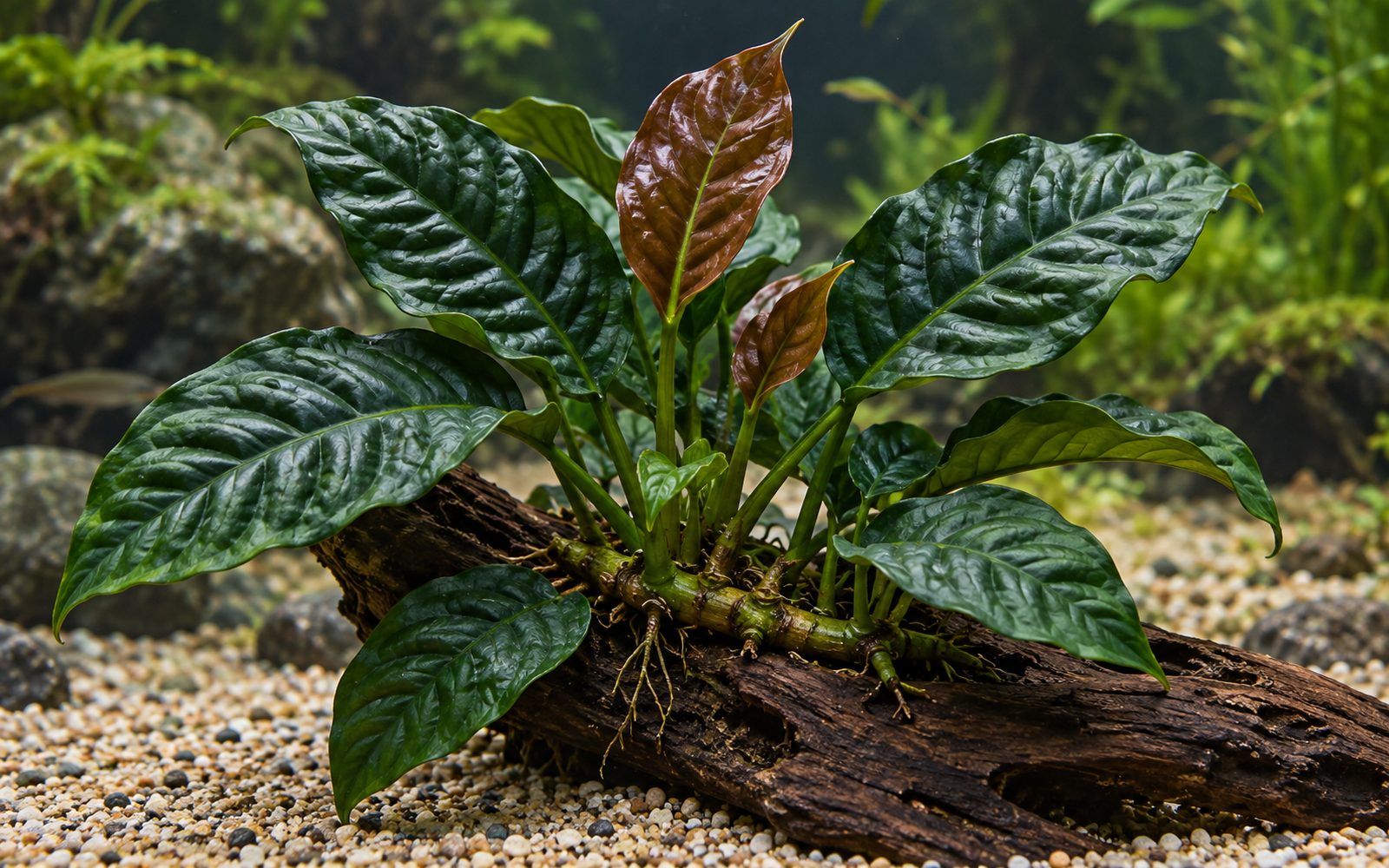 Anubias Coffeefolia
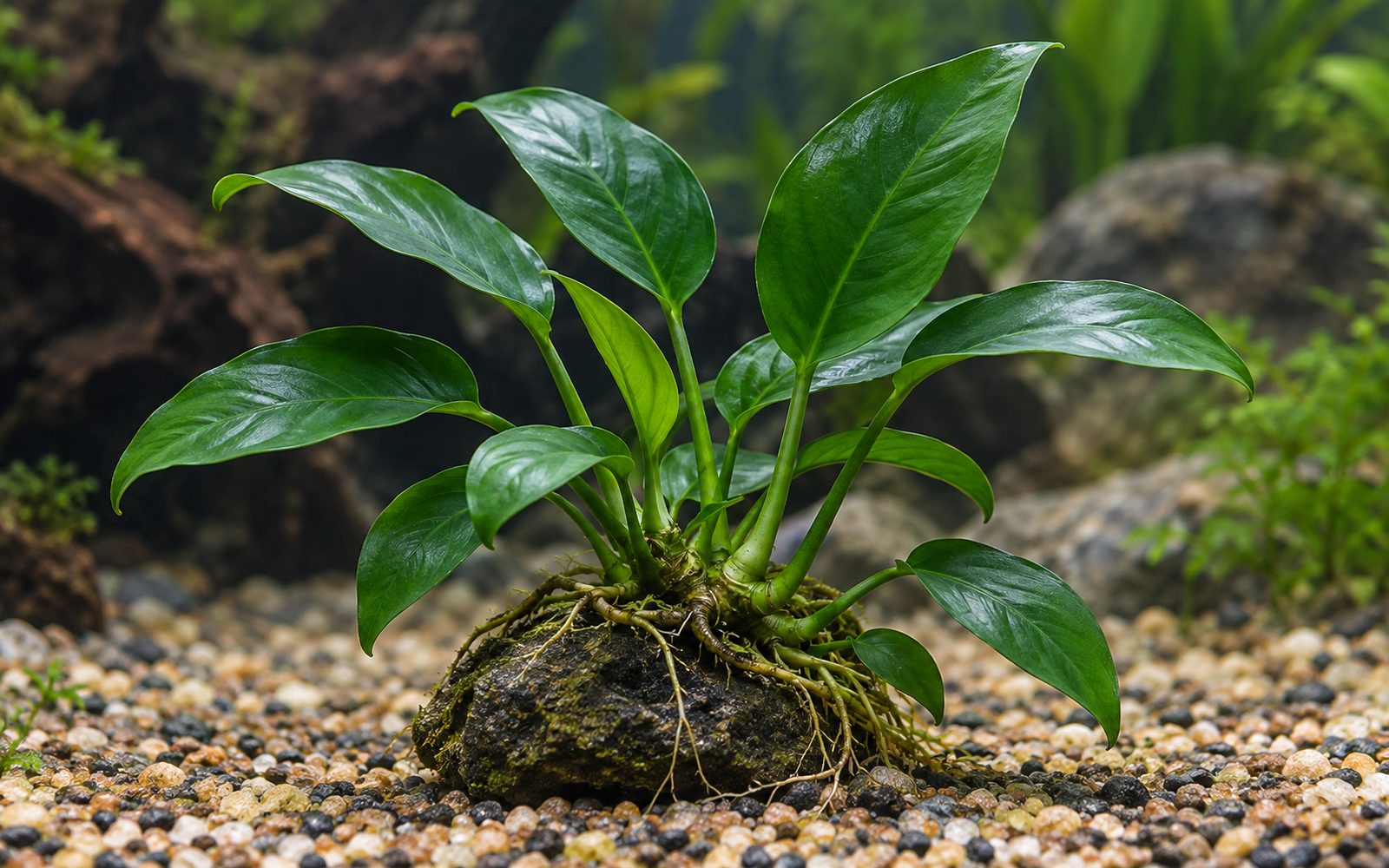 Anubias Glabra
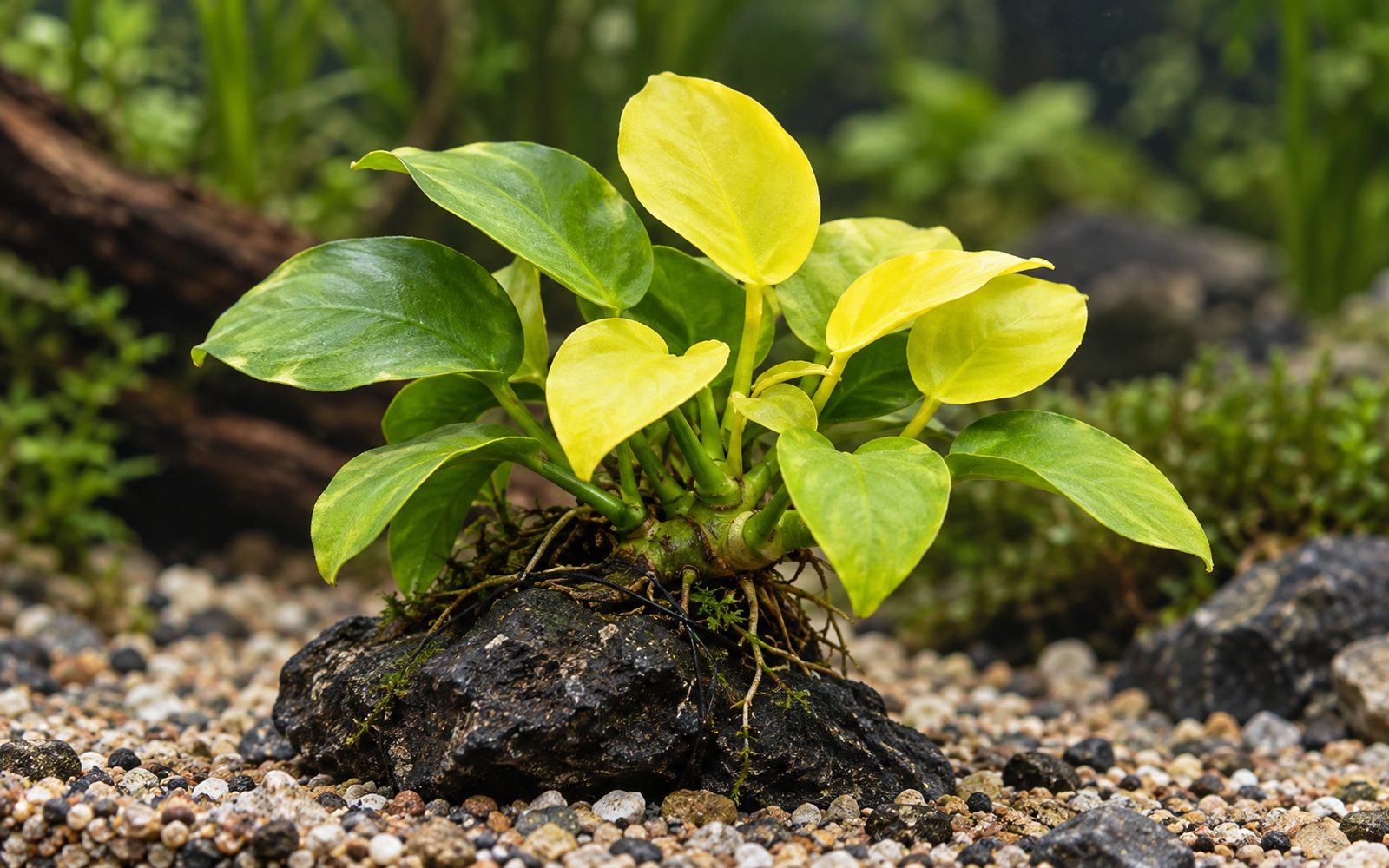 Anubias Nana Golden
Should not be kept together









Hobbyist notes
Things you won't find in books, learned by trial and error. The most helpful ones are on top.
Change history and contributors
- Page created · October 16, 2026