
Water parameters
Overview
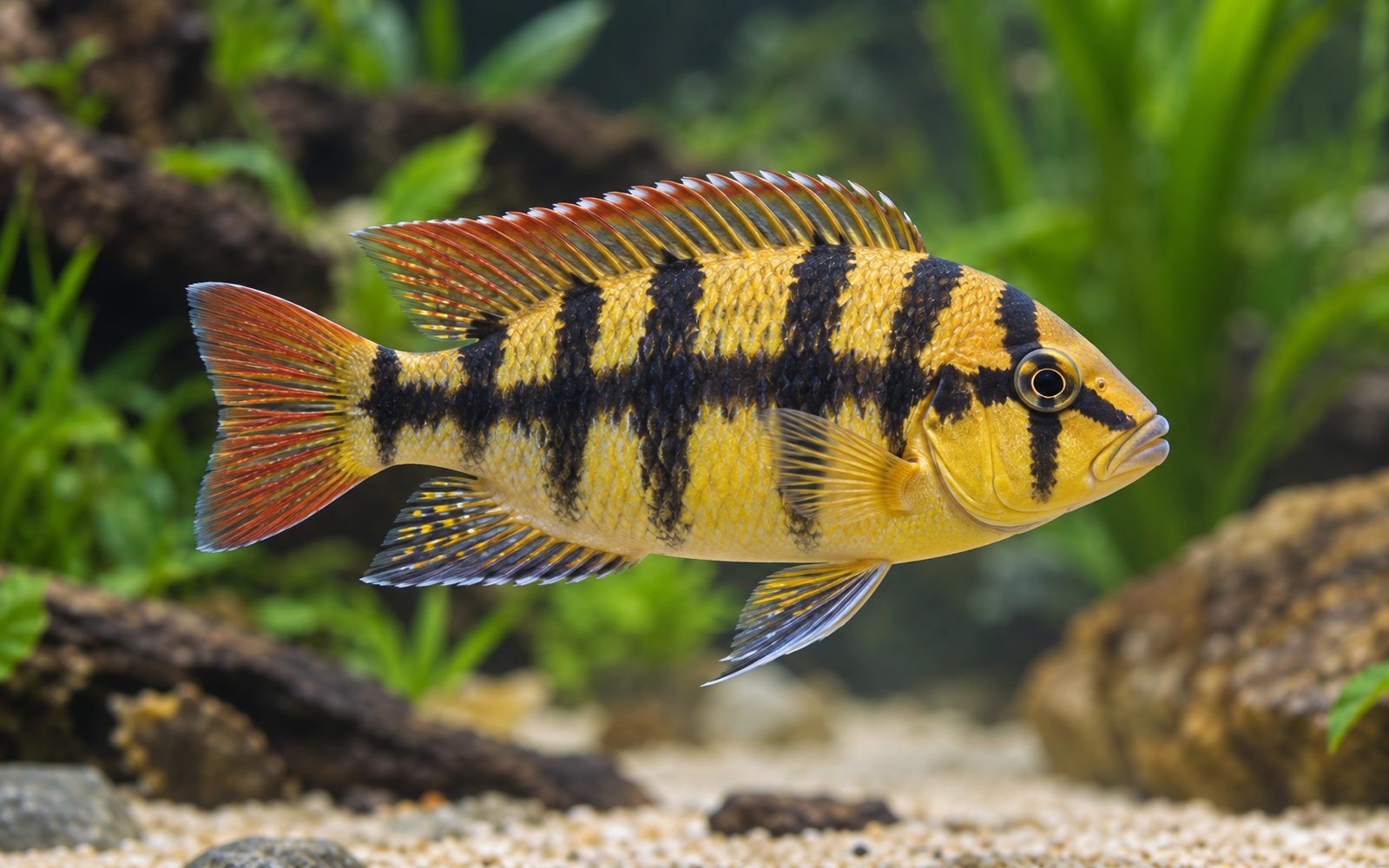
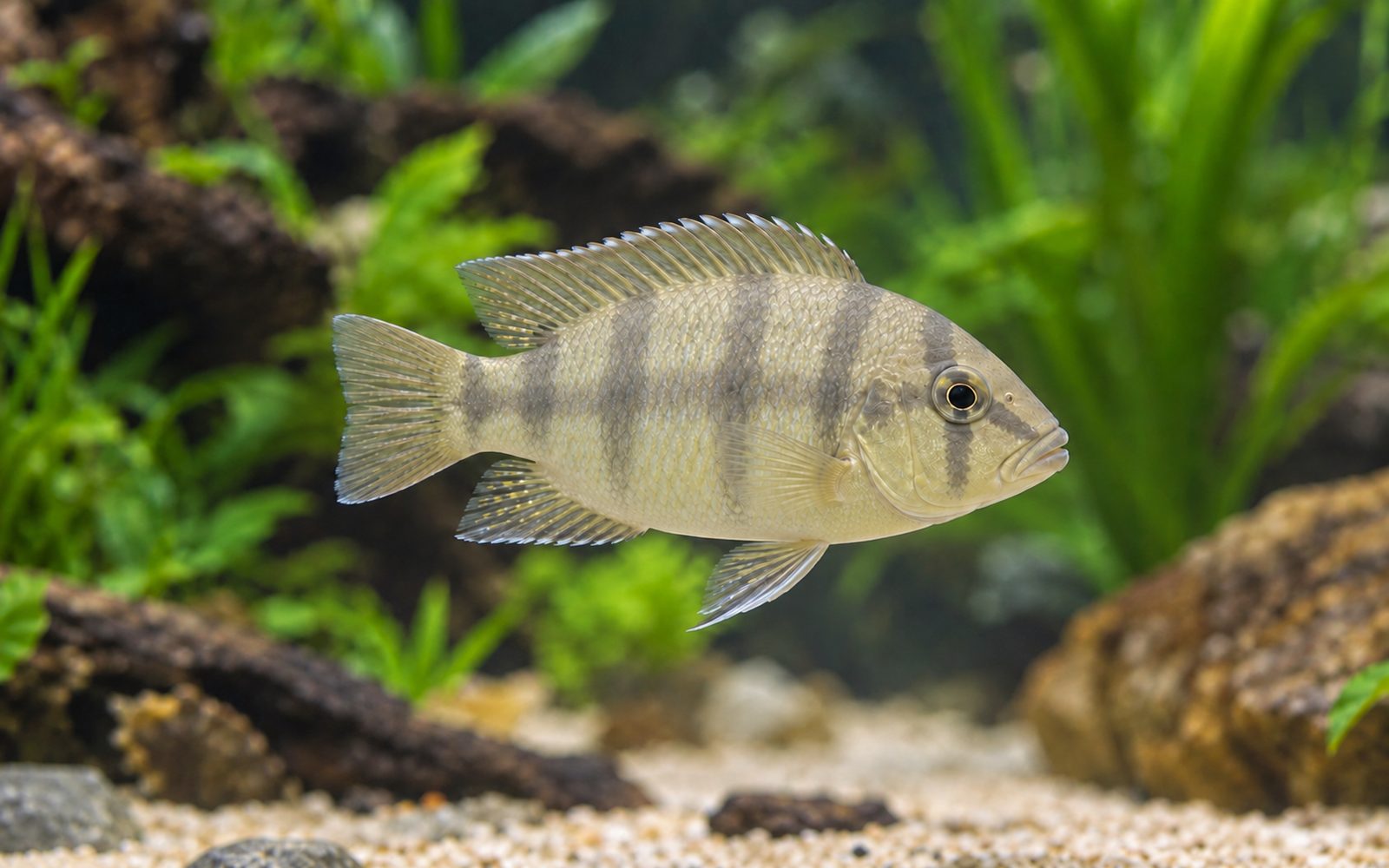
The zebra obliquidens is a haplochromine cichlid from Lake Kyoga and its surroundings in the Victoria basin. Males, with bold black vertical bars on a yellow background and a dark horizontal band along the body, really do resemble a zebra; reddish tones appear in the fins. Females are smaller, paler and plainly colored. Males reach around 12 cm.
Because it was sold in the trade for a long time as "Haplochromis obliquidens", it is still called the "zebra obliquidens"; the true Haplochromis obliquidens is a separate species. Its wild populations have declined sharply due to the release of non-native fish and habitat degradation, which makes preserving pure lines in the aquarium important.
Natural Habitat
It lives in the vegetated, shallow shore zones of Lake Kyoga and the small lakes connected to it. The water is warm, moderately hard and slightly alkaline. It moves about in small groups among sand and mud bottoms, shoreline plants and rocky areas.
Tank Setup
- Volume: At least 200 liters and 120 cm of length for one male and 3–4 females.
- Decor: Rock piles, caves and zones that break up lines of sight; open swimming space.
- Water: pH 7.2–8.5, moderately hard water; a 25–30% water change every week.
- Substrate: Sand; males dig nest pits.
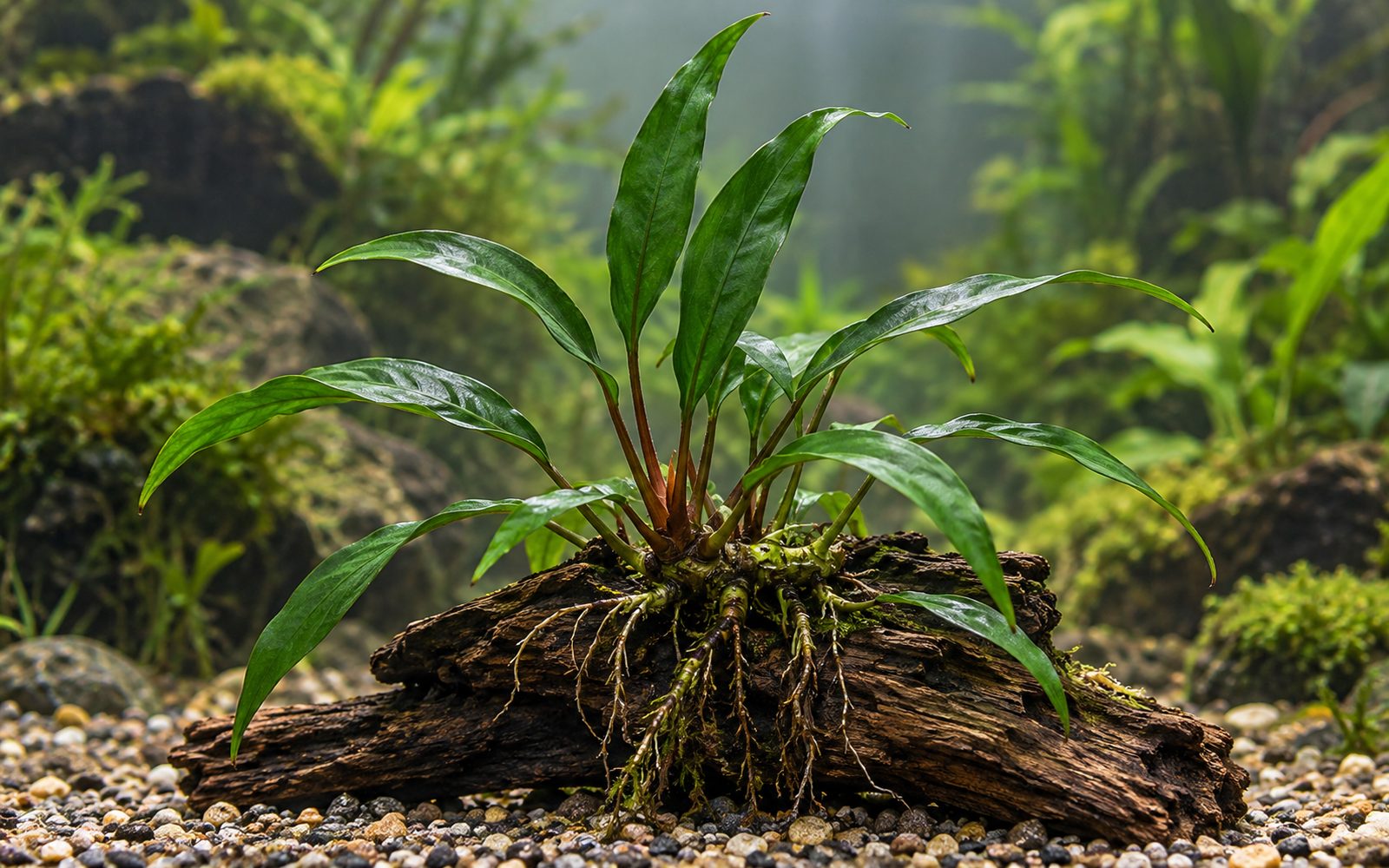
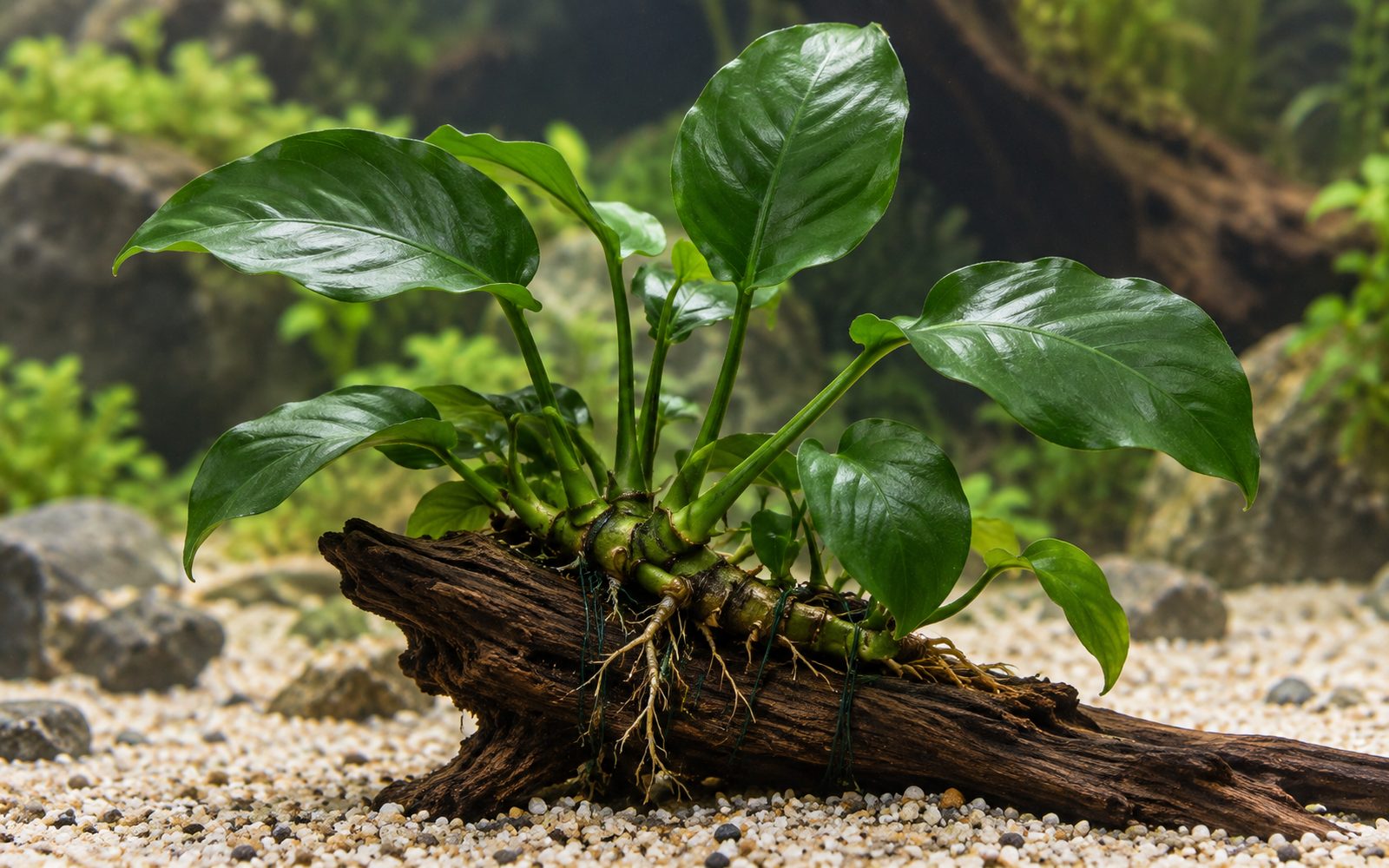
- Plants: Hardy plants (Anubias, Vallisneria) can hold up.
Diet
Omnivorous. Use a quality cichlid granule and spirulina-based flakes as the staple; vary the diet with frozen brine shrimp, mysis and cyclops. Avoid very high-protein foods and overfeeding.
Behavior and Compatibility
Males are aggressive toward each other and may chase females constantly; if there are too few females, a single female gets overwhelmed. It eats small fish and fry that fit in its mouth.
Good companions: Robust African cichlids of similar size and different appearance; Synodontis catfish; calm Malawi haplochromines in a large tank.
Avoid: Other Victoria haplochromines (they hybridize), small fish, shrimp, calm community fish.
Group and Colony Structure
- Kept as a harem: 1 male : 3–4 females.
- More than one male only works in a tank of 300 liters or more, with plenty of rocks and enough females.
- Buy juveniles together and raise them; adjust the ratio as the males color up.
- To prevent hybridization, no other Victoria species is kept in the tank.
Breeding
The female is a mouthbrooder. The male courts the female over sand or a flat stone; the female takes the eggs into her mouth, and they are fertilized while she nudges the egg spots on the male's anal fin. Incubation lasts about 2–3 weeks. The fry emerge ready to swim and are fed newly hatched brine shrimp.
Health and Common Problems
- Hardy; problems usually come from poor water and overfeeding.
- Bloat: Can occur with high-protein foods and overfeeding.
- Fight injuries: Seen when there are too few females or the tank is too small.
Sexing
Easy in adults: males show the yellow-black contrast and are larger; their anal fins carry yellow-orange egg spots. Females are pale, small and plainly colored.
Tank mates
This list is calculated automatically from the species profile and grows as new species are added to the catalog. Try it in the planner for a definite answer.
Usually compatible
 Banded Jewel Cichlid
 Demasoni Cichlid
 Jack Dempsey
 Red Devil Cichlid
 Convict Cichlid
 Jewel Cichlid
 Pundamilia nyererei
 Pundamilia pundamilia
 Anubias Angustifolia
 Anubias Barteri
Should not be kept together








Hobbyist notes
Things you won't find in books, learned by trial and error. The most helpful ones are on top.
Change history and contributors
- Page created · October 16, 2026