
Water parameters
Overview
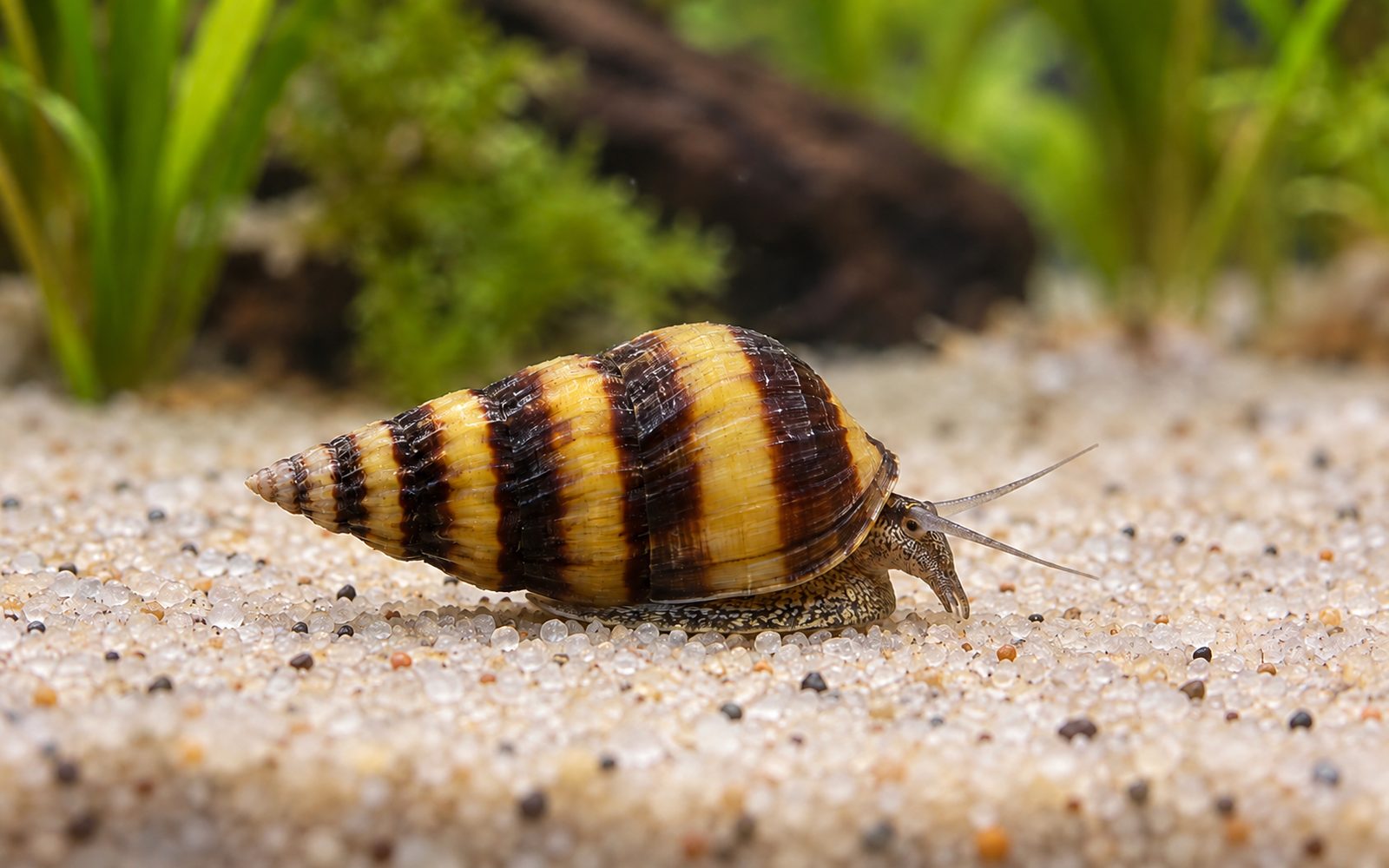
The assassin snail stands out with its shell spiraled in yellow and dark brown-black bands. It takes its name from the way it feeds: it finds other snails, extends its proboscis into their shells and eats them. It is used to control Malaysian trumpet snails and freshwater snails (Physa, Planorbis) that multiply in the aquarium without using chemicals.
Natural Habitat
It lives on the sandy and muddy bottoms of rivers and lakes in Southeast Asia; it often lies buried in the sand waiting for prey.
Tank Setup
- Volume: 20 liters or more; a few individuals balance the snail population of an aquarium within a few months.
- Substrate: fine sand; it buries itself in it to rest and hunt.
- Water: pH 7 or above, moderately hard to hard water (calcium is needed for shell health).
Diet
Carnivorous: its main food is other snails. When the snails run out, it should be fed frozen bloodworms, pieces of shrimp and sinking carnivore tablets; it also eats carrion.
Behavior and Compatibility
Harmless to fish and healthy shrimp. It hunts other snails: Malaysian trumpet snails, physa and planorbis are its most frequent prey; it may also attack large snails such as nerites and apple snails. It may rarely eat very small or molting shrimplets.
Good companions: community fish, shrimp tanks (generally), adult Neocaridina.
Avoid: valuable snails you want to keep (nerites, apple snails), snail-eating fish (clown loach, pea puffer).
Group and Colony Structure
It has no social needs. For snail control, 2–3 assassins per 40–60 liters is enough. Since it reproduces sexually, more than one individual is needed for breeding; reproduction is slow and does not turn into an infestation.
Breeding
The sexes are separate; a male and a female are needed for mating. The female lays eggs one at a time, each in a transparent capsule, on hard surfaces (stones, roots, glass). The young emerge after spending a few months in the sand. Reproduction is slow and is limited by how much food the species can find.
Health and Common Problems
Hardy. Copper and many antiparasitic medications are lethal. In soft, acidic water the shell erodes.
Sexing
Cannot be distinguished externally.
Tank mates
This list is calculated automatically from the species profile and grows as new species are added to the catalog. Try it in the planner for a definite answer.
Usually compatible









Hobbyist notes
Things you won't find in books, learned by trial and error. The most helpful ones are on top.
Change history and contributors
- Page created · October 16, 2026