
Water parameters
Overview
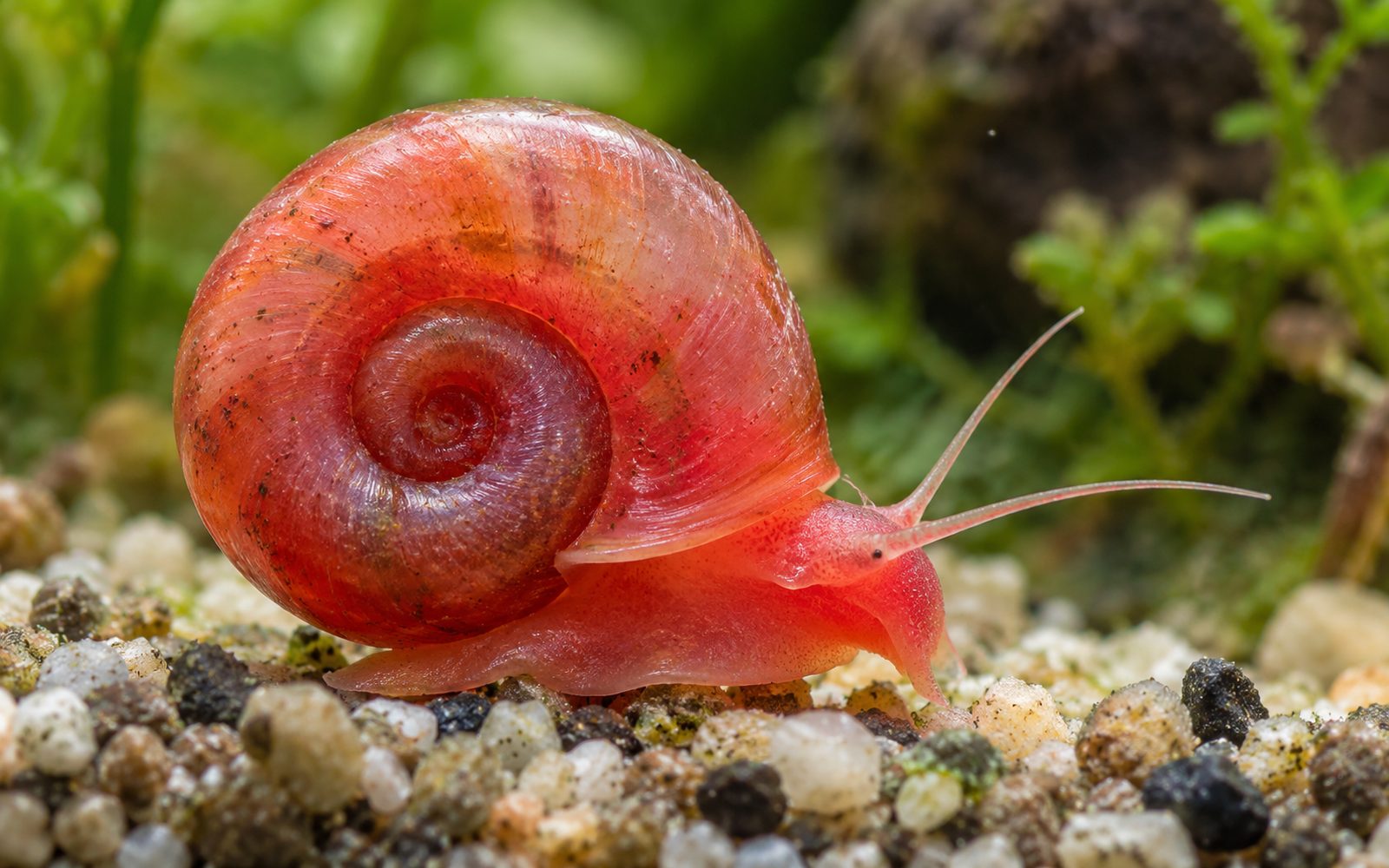
The ramshorn snail is recognized by the way it coils its shell in a single plane, like a ram's horn or a flat disc. The best-known form in the hobby is red: since the shell lacks pigment, the red of the hemoglobin in its blood shows through. There are also pink, blue, brown and spotted ("leopard") forms.
It is a useful snail that cleans up food leftovers, dead plant matter, biofilm and soft algae. It does not harm healthy plants. Its only drawback is that it multiplies quickly when food is plentiful.
Color and Fin Varieties
- Red: red body, semi-transparent reddish shell.
- Pink: lighter, pink-toned body and shell.
- Blue: bluish-gray shell, dark body.
- Leopard: shell with dark spots on a brown base.
Natural Habitat
It lives in the still and slow-flowing, vegetated fresh waters of Florida. It has been carried to many parts of the world by the aquarium trade and in some regions has escaped into the wild and established populations. Do not release surplus snails from your aquarium into the wild.
Tank Setup
- Volume: almost any size is suitable, including nano aquariums.
- Water: pH 7 or above, moderately hard to hard water. In soft, acidic water the shell thins and erodes.
- Calcium: necessary for the shell; in low-hardness water, cuttlebone or minerals can be added.
- Copper: lethal to snails; check the ingredients of medications and fertilizers.
- Population monitoring: a sudden appearance of many small snails on the glass and plants is the first sign that the aquarium is being overfed.
Diet
Omnivorous. It eats food leftovers, biofilm, soft algae, dead plant leaves and sinking tablets. In shrimp tanks it shares the shrimp food. When blanched vegetables are offered, they gather quickly.
Behavior and Compatibility
Completely peaceful; it leaves fish, shrimp and healthy plants alone.
Good companions: almost any peaceful community; shrimp tanks in particular.
Avoid: snail-eating species (clown loach, pea puffer, assassin snail, some cichlids), products containing copper.
Group and Colony Structure
It is hermaphroditic (each individual is both male and female); two individuals are enough to start a colony. The population is determined by the amount of food in the aquarium. To keep numbers under control, feed sparingly, remove in the morning the snails that gather on a vegetable slice placed in the evening, or add assassin snails.
Breeding
It lays flat, transparent, gelatinous clusters of eggs on the glass, plant leaves and decor surfaces. Each cluster contains anywhere from a few to a few dozen eggs; the young hatch in 1–2 weeks depending on the temperature.
Health and Common Problems
- Shell erosion: low pH and low calcium; white spots and thinning appear on the shell.
- Mass die-off: copper, ammonia or snail-killing medication.
- Overpopulation: not a disease, but a sign of overfeeding.
Sexing
Hermaphroditic; there is no distinction between males and females.
Tank mates
This list is calculated automatically from the species profile and grows as new species are added to the catalog. Try it in the planner for a definite answer.
Usually compatible









Hobbyist notes
Things you won't find in books, learned by trial and error. The most helpful ones are on top.
Change history and contributors
- Page created · October 16, 2026