
Water parameters
Overview
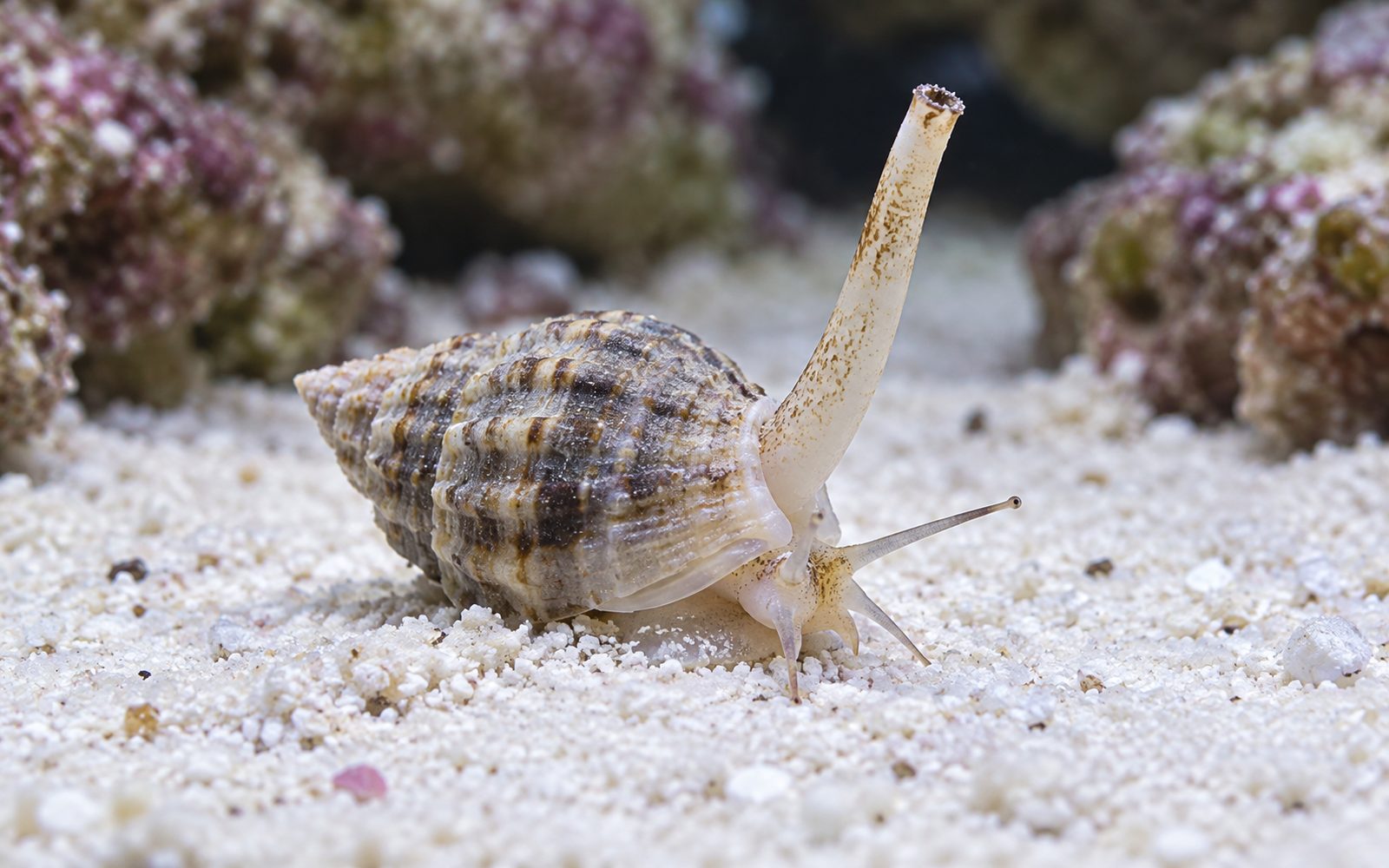
The Nassarius snail is a small scavenger that lives in the sand bed of the marine aquarium. It spends most of the day buried in the sand; only its long, trunk-like siphon is visible above the sand. When food falls into the water it picks up the scent immediately and within a few seconds emerges from the sand and races to the food; this is one of hobbyists' favorite sights.
By constantly stirring the sand it aerates it and cleans up leftover food that falls between the grains. It does not eat algae; therefore it is used alongside algae-eating snails, not instead of them. In the hobby it is known as Nassarius vibex; in current classification it has been moved to the genus Phrontis. Nassarius species from the Indo-Pacific are also sold under the same name and need similar care. Specimens in the trade are wild-collected.
Natural Habitat
It lives along Western Atlantic coasts, from the eastern United States to the Caribbean and Brazil, on shallow sandy and muddy bottoms, in lagoons and estuaries. It finds dead animals and organic debris by smell.
Tank Setup
- Volume: 40 liters or more; 1–2 snails per 20 liters, depending on the sand surface.
- Sand: a sand bed of fine to medium-grained sand at least 3–5 cm deep is essential; it is not kept in bare-bottom aquariums.
- Water: salinity 1.023–1.026 specific gravity, pH 8.1–8.4, temperature 22–27°C.
- Reef compatibility: Reef-safe; it leaves corals, algae and healthy animals alone.
- Acclimation and medication: Acclimate by the drip method for at least 1 hour. Copper-based medications kill snails.
Diet
A carnivorous scavenger: it feeds on leftover fish food, dead animals and organic particles in the sand. In aquariums where the fish leave little food it may go hungry; it is necessary to drop a few sinking granules or a small piece of mysis on the sand 2–3 times a week.
Behavior and Compatibility
Peaceful. It stays buried in the sand all day and comes to the surface at feeding times and at night. When there is a dead snail or fish, they gather there in crowds; this also helps you notice a loss in the aquarium.
Good companions: gobies, clownfish, blennies, cardinalfish; shrimp, algae-eating snails.
Avoid: wrasses that hunt in the sand, triggerfish, pufferfish; snail-eating sand stars such as Astropecten.
Group and Colony Structure
It has no social needs. Depending on the sand surface and the amount of food, 1–2 snails per 20 liters are enough. Many Nassarius go hungry in an aquarium with little leftover food.
Breeding
The sexes are separate. Females may lay small, transparent egg capsules on the glass and hard surfaces. The larvae develop in the plankton and rarely survive in the aquarium; lasting reproduction is not to be expected in home conditions.
Health and Common Problems
- Staying on the surface for a long time: a Nassarius that sits motionless on the sand for days is usually hungry or sick.
- Shell erosion: low calcium and alkalinity.
- Sudden deaths: copper, rapid acclimation, an oxygen-depleted sand bed.
Sexing
Cannot be told apart externally. Individuals laying egg capsules are female.
Tank mates
This list is calculated automatically from the species profile and grows as new species are added to the catalog. Try it in the planner for a definite answer.
Hobbyist notes
Things you won't find in books, learned by trial and error. The most helpful ones are on top.
Change history and contributors
- Page created · October 16, 2026