
Water parameters
Overview
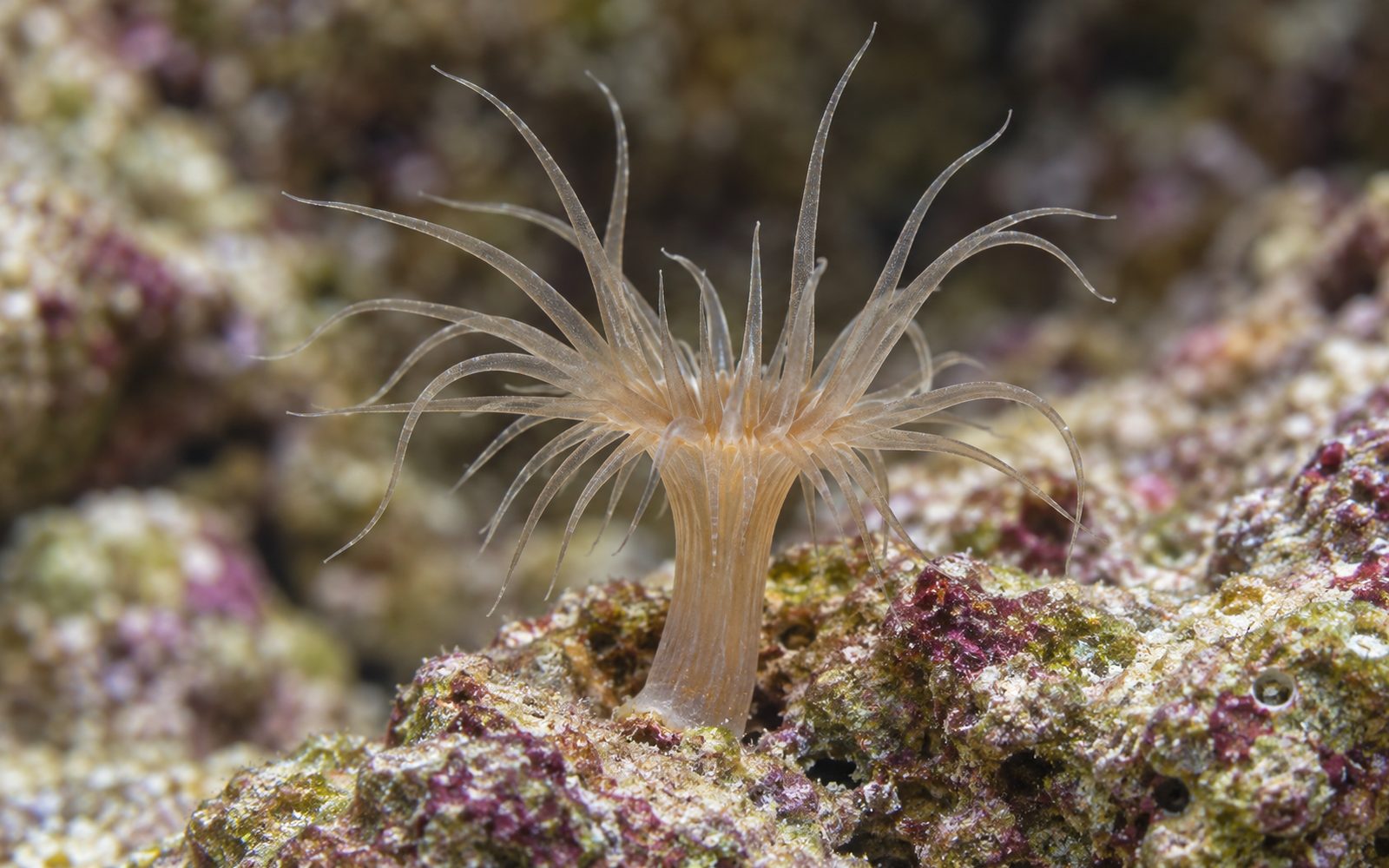
Aiptasia is the best-known pest of reef aquariums. It is a small anemone with a light brown, semi-transparent body and thin, long tentacles; it is usually between 1 and 5 cm in size. It almost always enters the aquarium unnoticed, together with live rock, a coral piece (frag) or an organism attached to rock.
It looks harmless while there are only a few, but under suitable conditions it soon covers the rocks and kills the surrounding corals by stinging them with its tentacles. Scraping it off or pulling it out by hand often makes the situation worse: every small piece of tissue left behind turns into a new anemone. In science it is used as a model organism to study the coral–algae symbiosis.
Natural Habitat
It lives in the tropical and warm seas of the world, on shallow rocky areas, harbor walls, mangrove roots and seagrass beds. It tolerates both nutrient-rich coastal waters and a wide temperature range, which explains why it is so successful in the aquarium.
Tank Setup
- How it arrives: With live rock, frags and corals attached to rock pieces. Every newly arrived piece should be inspected carefully before it goes into the aquarium.
- Water: Salinity 1.023–1.026, pH 8.0–8.4; it tolerates a wide temperature range. High nitrate and phosphate and plenty of leftover food speed up its spread.
- Reef compatibility: Not reef-safe; it stings corals and competes with them for space and light.
- Early intervention: The first individuals seen in the aquarium should be eliminated immediately, before they multiply.
Diet
It both uses the nutrients produced with light by the symbiotic algae in its tissue and catches plankton, leftover food and small organisms with its tentacles. Overfeeding and high nutrient levels markedly speed up its spread.
Behavior and Compatibility
When touched or when the light changes, it quickly contracts and retreats into a rock crevice, which makes it hard to catch. It stings neighboring corals and small organisms that come near it with its stinging tentacles.
Good companions: Unwanted in the aquarium. Its natural enemies: the Berghia nudibranch, the peppermint shrimp and the Aiptasia-eating filefish (Acreichthys tomentosus).
Avoid: Do not try to remove it by scraping or pulling it off; every piece forms a new anemone.
Group and Colony Structure
Under suitable conditions it spreads like a colony: from a few individuals it can reach hundreds within a few months. It usually concentrates in hard-to-reach places such as rock crevices, around pumps and on the back wall of the aquarium.
Breeding
It reproduces mainly asexually: small pieces of tissue break off from the edge of its foot (pedal laceration), and each one soon turns into a new anemone. It can also split in two and also reproduces sexually. This versatile reproduction makes it difficult to eradicate completely.
Health and Common Problems
What matters is not the health of Aiptasia itself but the control methods, for the sake of the aquarium's health:
- Injection: Commercial Aiptasia removers or a kalkwasser (limewater) paste are applied with a syringe directly into the anemone's mouth; this is done one by one and patiently.
- Biological control: Berghia nudibranchs eat only Aiptasia and are the most targeted method. Peppermint shrimp vary in effectiveness from individual to individual; they should not be used together with Berghia.
- Prevention: Inspecting new rock and frags, low nutrient levels and moderate feeding.
Sexing
In sexual reproduction the sexes are separate, but individuals cannot be told apart externally. Since almost all of the spread in the aquarium is asexual, sex has no practical importance.
Tank mates
This list is calculated automatically from the species profile and grows as new species are added to the catalog. Try it in the planner for a definite answer.
Usually compatible
Hobbyist notes
Things you won't find in books, learned by trial and error. The most helpful ones are on top.
Change history and contributors
- Page created · October 16, 2026