
Water parameters
Overview
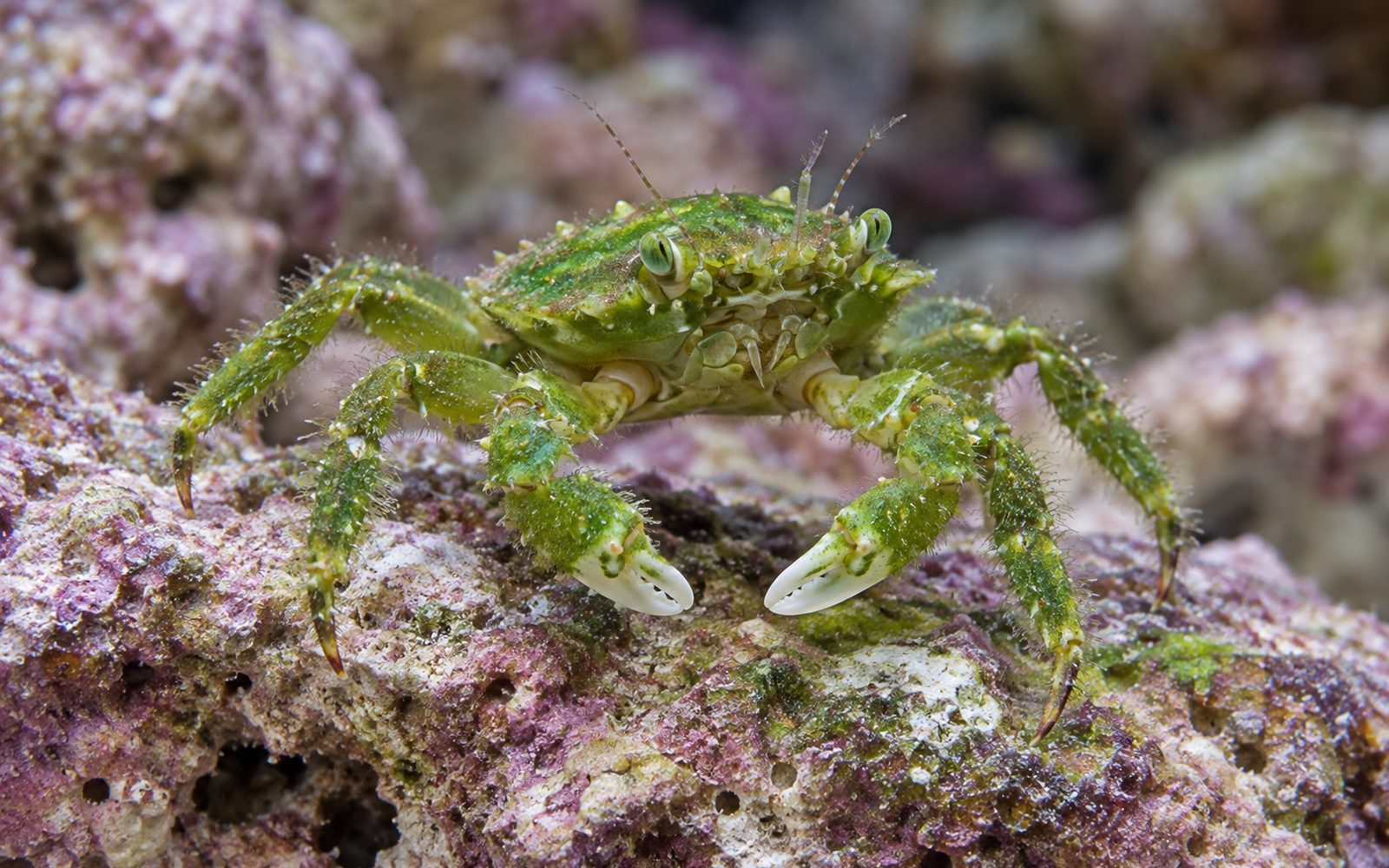
The emerald crab is recognized by its green carapace and the pale, spoon-shaped tips of its claws. These spoon tips are adapted for scraping algae. The main reason it is bought for reef aquariums is that it eats bubble algae (Valonia and similar), which few other animals touch.
When young it is a peaceful cleaner. However, as it grows and fails to find enough algae, it turns into an opportunistic omnivore: it is reported to attack snails, sleeping small fish, molting shrimp and coral tissue. For this reason it needs regular feeding and observation. Specimens in the trade are wild-collected.
Natural Habitat
It lives on the shallow reefs of the Caribbean, Florida and the Bahamas, among coral rubble and rock holes. During the day it hides in narrow crevices, and at dusk and at night it scrapes algae on rock surfaces.
Tank Setup
- Volume: 60 liters or more; live rock with many caves.
- Water: salinity 1.023–1.026 specific gravity, pH 8.1–8.4, temperature 24–27°C. Calcium, alkalinity and magnesium should be stable for molting.
- Reef compatibility: Reef-safe with caution. Young individuals are trouble-free; large, hungry individuals may pick at soft corals and zoanthids.
- Acclimation and medication: Acclimate by the drip method for at least 1 hour. Copper-based medications are lethal.
Diet
Omnivorous; it feeds on bubble algae, hair algae, algal film and leftover food. Once the bubble algae are gone, it should be supplemented 2–3 times a week with dried seaweed (nori), algae wafers and occasionally frozen mysis. A regularly fed emerald crab is much less inclined to go after other animals.
Behavior and Compatibility
Shy during the day, more active in the evening. It may fight with members of its own species over caves. When young it is considered reef-safe; large individuals are opportunistic and may attack snails, small shrimp or sleeping small fish.
Good companions: clownfish, tangs, dwarf angelfish, damselfish; large shrimp such as cleaner and fire shrimp, hermit crabs.
Avoid: tiny shrimp such as the sexy shrimp, very small gobies that sleep on the bottom at night; triggerfish, pufferfish, large wrasses.
Group and Colony Structure
Usually a single individual is kept per aquarium. In aquariums over 200 liters with plenty of caves there can be two, but each defends its own cave. More than one crab increases competition for algae and food, making aggressive behavior more likely.
Breeding
The sexes are separate. The female carries the fertilized eggs inside the wide flap under her abdomen. The larvae develop in the plankton; they do not survive in home aquariums.
Health and Common Problems
- Molting: a discarded shell is not a sign of death; the crab hides for a few days.
- Sudden deaths: copper, rapid acclimation, sudden salinity changes.
- Leg loss: legs lost after stress or fighting regenerate over the following molts.
Sexing
They can be told apart when the crab is turned over: the female's abdominal flap is wide and round, the male's is narrow and triangular. Males' claws are usually larger.
Tank mates
This list is calculated automatically from the species profile and grows as new species are added to the catalog. Try it in the planner for a definite answer.
Hobbyist notes
Things you won't find in books, learned by trial and error. The most helpful ones are on top.
Change history and contributors
- Page created · October 16, 2026