
Water parameters
Overview
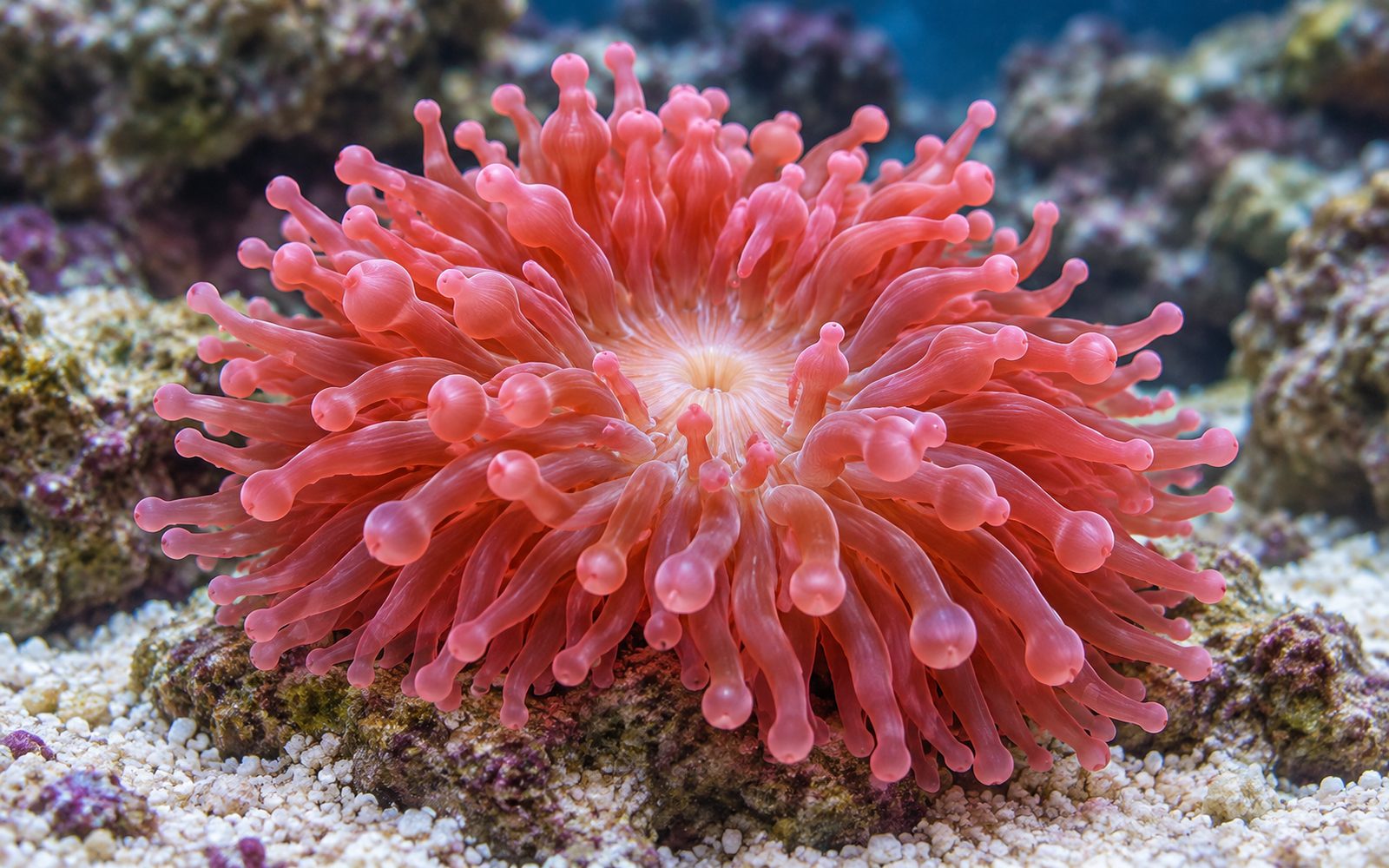
The bubble tip anemone is recognized by the bubble-shaped swellings at the tips of its tentacles. These bubbles are not always visible; the same anemone sometimes has straight, long tentacles. Besides its natural brown-green color, there are red, pink and fluorescent green forms. The symbiotic algae (zooxanthellae) in its tissue produce nutrients from light; that is why it needs strong lighting.
It is the easiest anemone to keep alive in the aquarium and hosts many clownfish species. A significant share of those sold today are clones produced from individuals that multiply by splitting in aquariums; these adapt to the aquarium much more easily than wild-collected ones and should be preferred.
Color and Fin Varieties
- Rose (red-pink): Body and tentacles between pink and deep red; the best-known form.
- Green (fluorescent green): Green tentacles that glow under blue light.
- Rainbow: A rarer and more expensive form with green, orange and red transitions in the tentacles.
Natural Habitat
It lives on reefs from the Red Sea to the Western Pacific, burying its foot in a deep rock crevice or coral cavity; only its tentacle crown remains exposed. In the wild it hosts species such as the tomato clownfish, Clark's clownfish and the maroon clownfish (Premnas biaculeatus).
Tank Setup
- Volume: At least 150 liters and a mature, stable reef aquarium at least 6 months old.
- Water: Salinity specific gravity 1.024–1.026, pH 8.1–8.4, temperature 24–27°C; nitrate and phosphate low, values stable.
- Light and flow: Moderate to strong reef lighting and variable, moderate flow. A rock crevice should be provided where it can bury its foot.
- Pump protection: The anemone roams while searching for a suitable spot; pump and filter intakes must be covered with sponges.
- Reef compatibility: Reef-safe with caution. While moving around it stings the corals it touches; space should be left between it and corals.
- Acclimation and medication: Acclimate by the drip method for at least 1 hour. Copper-based medications are lethal.
Diet
Carnivorous; besides the nutrition it gets from light, it should be fed 1–2 times a week with small morsels that fit in its mouth, such as mysis, chopped shrimp or fish flesh. It catches the morsel with its tentacles and carries it to its mouth. Too much food or large morsels are regurgitated and foul the water.
Behavior and Compatibility
It may roam the aquarium until it finds a suitable spot; once settled, it usually stays put. Contracting and reopening several times a day is normal. Its tentacles sting; it can catch small fish and shrimp that fall onto it.
Good companions: Ocellaris, percula, tomato, Clark's and maroon clownfish; sexy shrimp, porcelain crab, peaceful reef-safe fish.
Avoid: Butterflyfish and some angelfish that pick at anemones, a second anemone of a different species in the same aquarium; corals placed close to it.
Group and Colony Structure
Start the aquarium with a single specimen. If conditions are good, the anemone multiplies by splitting down the middle, and over time several individuals of the same clone form; individuals of the same clone do not harm each other. In the aquarium most ocellaris clownfish accept this anemone, but acceptance may take weeks or may never happen.
Breeding
In the aquarium it reproduces mainly by splitting: the anemone divides in two through its body, forming two complete individuals. Sexual reproduction is also seen in the wild; eggs and sperm are released into the water, but no offspring are obtained this way in the home aquarium.
Health and Common Problems
- Mouth protruding and deflating: Short-term deflating is normal; contraction lasting for days and a protruding mouth are signs of a serious problem.
- Bleaching: Loss of color is the loss of its symbiotic algae; lighting, temperature and water parameters should be checked.
- Death: A dead anemone decays very quickly and can poison the whole aquarium; it should be removed immediately and a large water change done.
Sexing
Cannot be distinguished externally. Individuals formed by splitting are all the same clone and carry the same sex.
Tank mates
This list is calculated automatically from the species profile and grows as new species are added to the catalog. Try it in the planner for a definite answer.
Hobbyist notes
Things you won't find in books, learned by trial and error. The most helpful ones are on top.
Change history and contributors
- Page created · October 16, 2026