
Water parameters
Temperature20–28°C
pH5.5–7
General hardness (GH)2–10 dGH
Recommended range
Overview
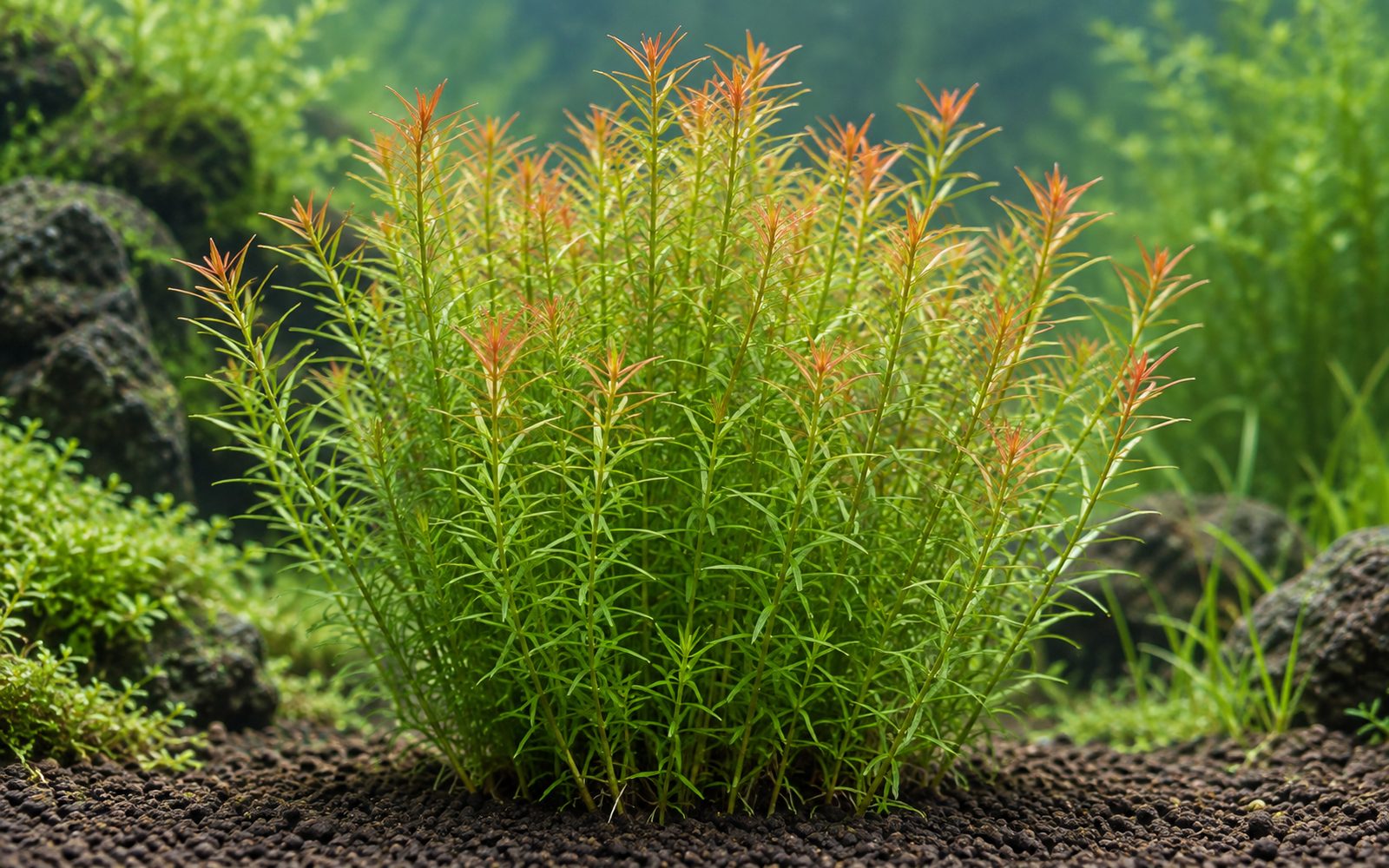
Didiplis diandra is a fine-textured stem plant from the shallow waters of North America. Narrow, needle-like light green leaves are arranged in dense pairs along the stem; when many stems are planted together, it looks like a soft, dense hedge. This is where the name "water hedge" comes from. In strong light the shoot tips take on orange and red tones. Its stems are thin and brittle; when newly planted, it may stay dormant for a while.
Planting and Placement
- Stems are planted in bunches of 5–7, leaving 2–3 cm between bunches, 2–3 cm deep.
- It is used in the midground, at the base of stones and wood, or in front of background plants.
- It does not like being pulled up and replanted often; choose its spot carefully from the start.
Care and Fertilization
- Light: High; necessary for color and dense growth.
- CO₂: Not required, but clearly beneficial.
- Fertilizer: Iron and micronutrient supplementation; a nutrient-rich substrate is recommended.
- Trimming: Clipped from the top; regular trimming keeps the hedge look.
Propagation
This section has not been written yet. How is it propagated?
Be the first to write it
Common Problems
This section has not been written yet. Problems such as melting, yellowing and algae, and how to fix them.
Be the first to write it
Hobbyist notes
Things you won't find in books, learned by trial and error. The most helpful ones are on top.
No notes yet. If you have experience with this species, leave the first note.
Was this page helpful?
Change history and contributors
- Page created · October 16, 2026