
Water parameters
Temperature20–28°C
pH6–7.5
General hardness (GH)2–12 dGH
Recommended range
Overview
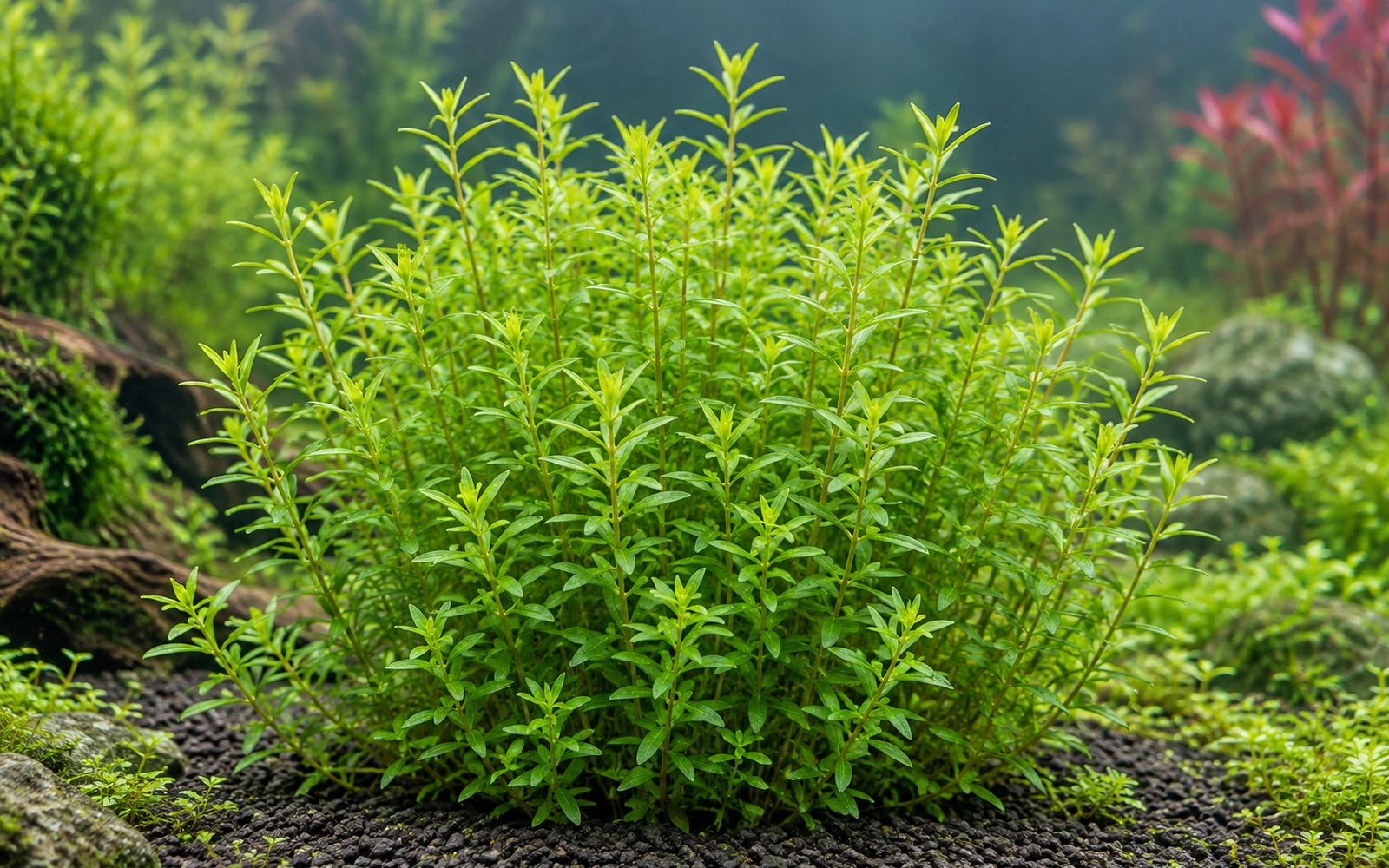
Rotala 'Green' is a form of rotundifolia that stays green. While other rotalas turn pink-red under strong light, this form keeps its light, fresh green color. Its internodes are short and it produces many side shoots after every trim; so when trimmed regularly it takes on a dense, soft, bushy look. In nature aquariums it is widely used next to red rotalas or as a filler plant at the base of rocks.
Planting and Placement
- Plant the stems in groups of 5–7, 2–3 cm apart.
- Remove the lower leaves and bury the stems 3 cm deep.
- Use it in the midground or as a step in front of background plants.
Care and Fertilization
- Light: Moderate; under strong light it stays denser and shorter.
- CO₂: Not required but beneficial.
- Fertilizer: Regular liquid fertilizer; when nutrients are scarce, the leaves turn pale.
- Trimming: Trim with scissors into a bush shape. When a group becomes too thick and its interior no longer gets light, it should be thinned out from time to time.
Propagation
This section has not been written yet. How is it propagated?
Be the first to write it
Common Problems
This section has not been written yet. Problems such as melting, yellowing and algae, and how to fix them.
Be the first to write it
Hobbyist notes
Things you won't find in books, learned by trial and error. The most helpful ones are on top.
No notes yet. If you have experience with this species, leave the first note.
Was this page helpful?
Change history and contributors
- Page created · October 16, 2026