
Water parameters
Temperature22–28°C
pH6–7
General hardness (GH)2–10 dGH
Recommended range
Overview
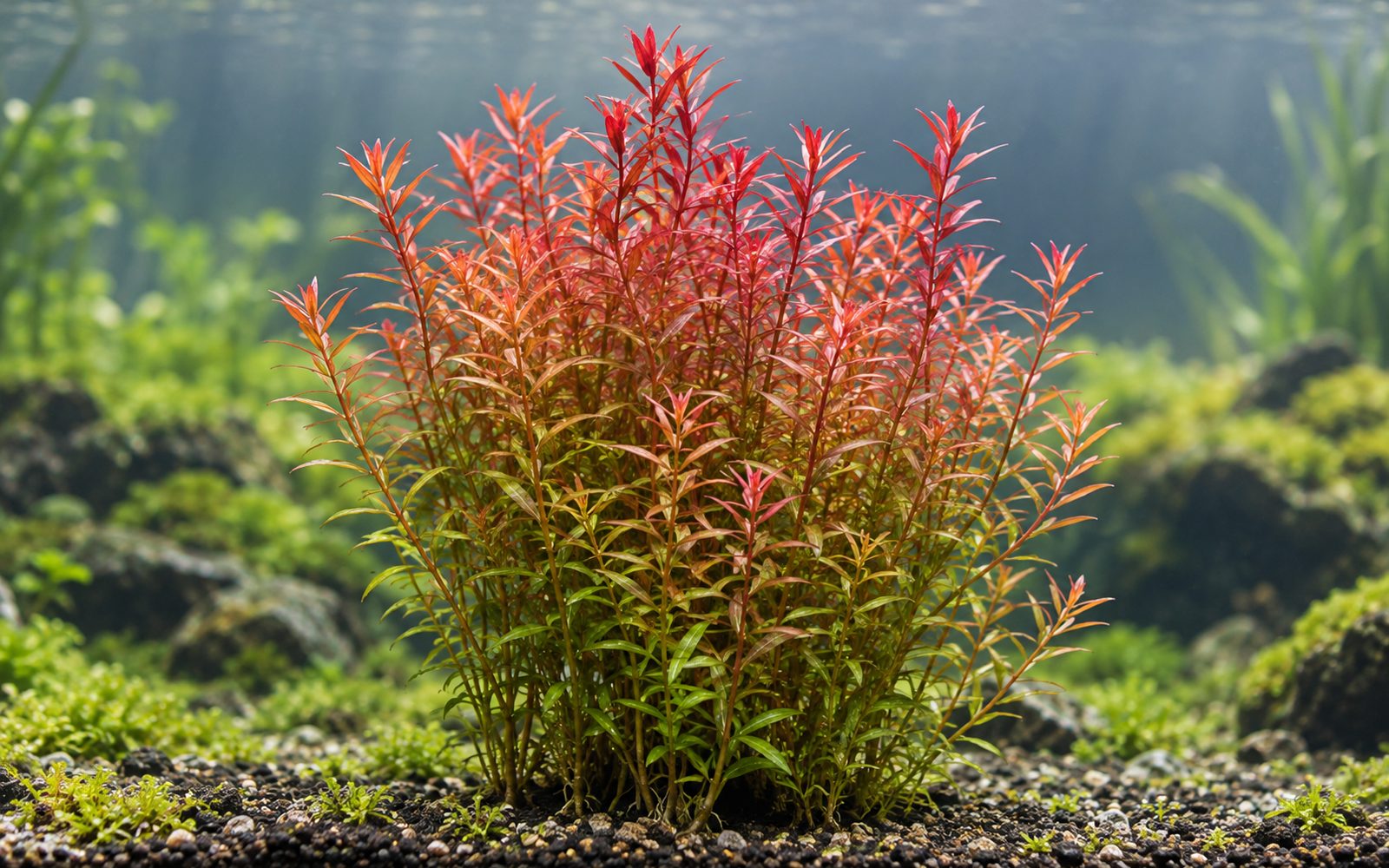
Rotala 'H'ra' is a rotala that entered the hobby from Vietnam and is named after the area where it was collected. Its species identity has not been firmly established; most sources regard it as a form of Rotala rotundifolia. Compared with ordinary rotundifolia its leaves are finer and denser and its colors more intense: under strong light the upper half of the stem turns from orange to deep red. It survives in moderate light but stays green-bronze.
Planting and Placement
- Plant the stems in groups of 5–7, 2 cm apart, 3 cm deep.
- Use it in the midground or background as a color focal point among green plants.
- Choose a nutrient-rich substrate and a position that receives direct light.
Care and Fertilization
- Light: High; the red color only becomes pronounced under strong light.
- CO₂: Not required but beneficial; recommended for color and dense growth.
- Fertilizer: Iron supplementation supports the color; very high nitrate can make the color fade.
- Trimming: Cut from the top; replant the cut tips to make the group denser.
Propagation
This section has not been written yet. How is it propagated?
Be the first to write it
Common Problems
This section has not been written yet. Problems such as melting, yellowing and algae, and how to fix them.
Be the first to write it
Hobbyist notes
Things you won't find in books, learned by trial and error. The most helpful ones are on top.
No notes yet. If you have experience with this species, leave the first note.
Was this page helpful?
Change history and contributors
- Page created · October 16, 2026