
Water parameters
Overview
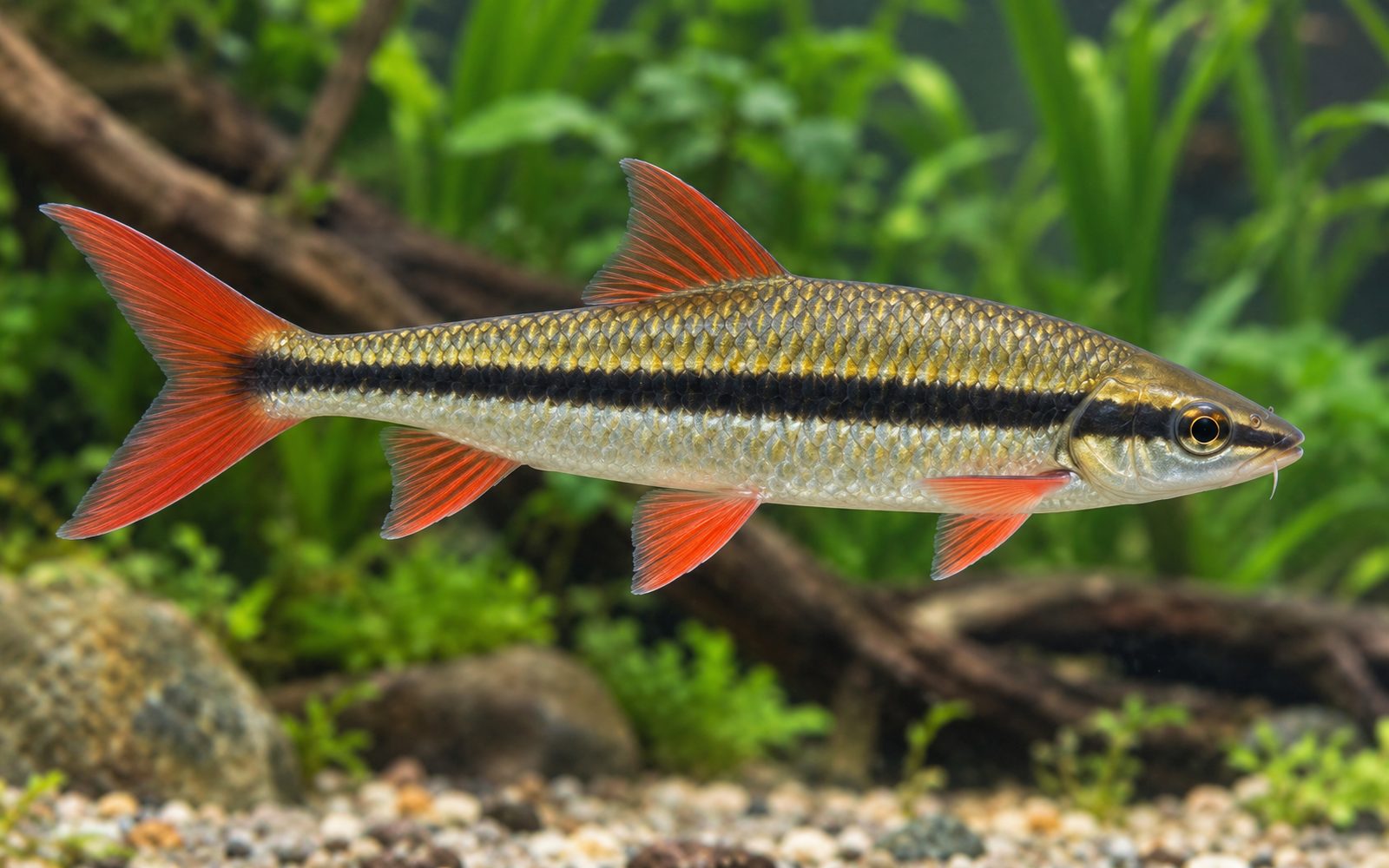
The mad barb is a large, long-bodied cyprinid that lives in the big rivers of Southeast Asia and is also farmed as a food fish in the region. Juveniles have a black band along their silver-gold body and red-orange fins; this look makes it seem attractive for small tanks. However, adults exceed 50 cm, and grow even larger in the wild. Its name is said to come from local stories that, in the wild, it swims as if dazed after eating certain forest fruits that fall into the water.
Tank Setup
- At least 2000 liters and 300 cm in length for a small adult group; the realistic option is a large indoor pond.
- 24–27°C; very powerful filtration, high oxygen levels, noticeable flow.
- Simple decor and a completely open swimming area.
- It jumps very powerfully; a heavy, tight-fitting lid is essential.
Diet
Omnivorous. Large pellets and granules, vegetables and fruit, frozen mysis shrimp and bloodworms. It eats small fish and shrimp that fit in its mouth and consumes soft plants.
Behavior and Compatibility
Peaceful but very fast and skittish. At sudden movement or light it can panic and crash into the tank walls and lid. It behaves more calmly in a group of its own kind.
Good companions: in a very large tank, peaceful fish of similar size: tinfoil barbs, Java barbs, bala sharks, large plecos.
Avoid: small and medium community fish, dwarf shrimp, slow and shy species.
A short profile for this species
The Mad Barb page has the basics, but the sections below have not been written yet. If you keep this species, write a section from your own experience; it will be published under your name after editor approval.
Tank mates
This list is calculated automatically from the species profile and grows as new species are added to the catalog. Try it in the planner for a definite answer.
Usually compatible
 Chocolate Cichlid
 Geophagus altifrons
 Geophagus surinamensis
 Redhead Cichlid
 Cryptocoryne Parva
 Gold Spot Pleco (L001)
African Brown Knifefish
Gold Spot Pleco (L001)
African Brown Knifefish
 Weeping Moss
 Flame Moss
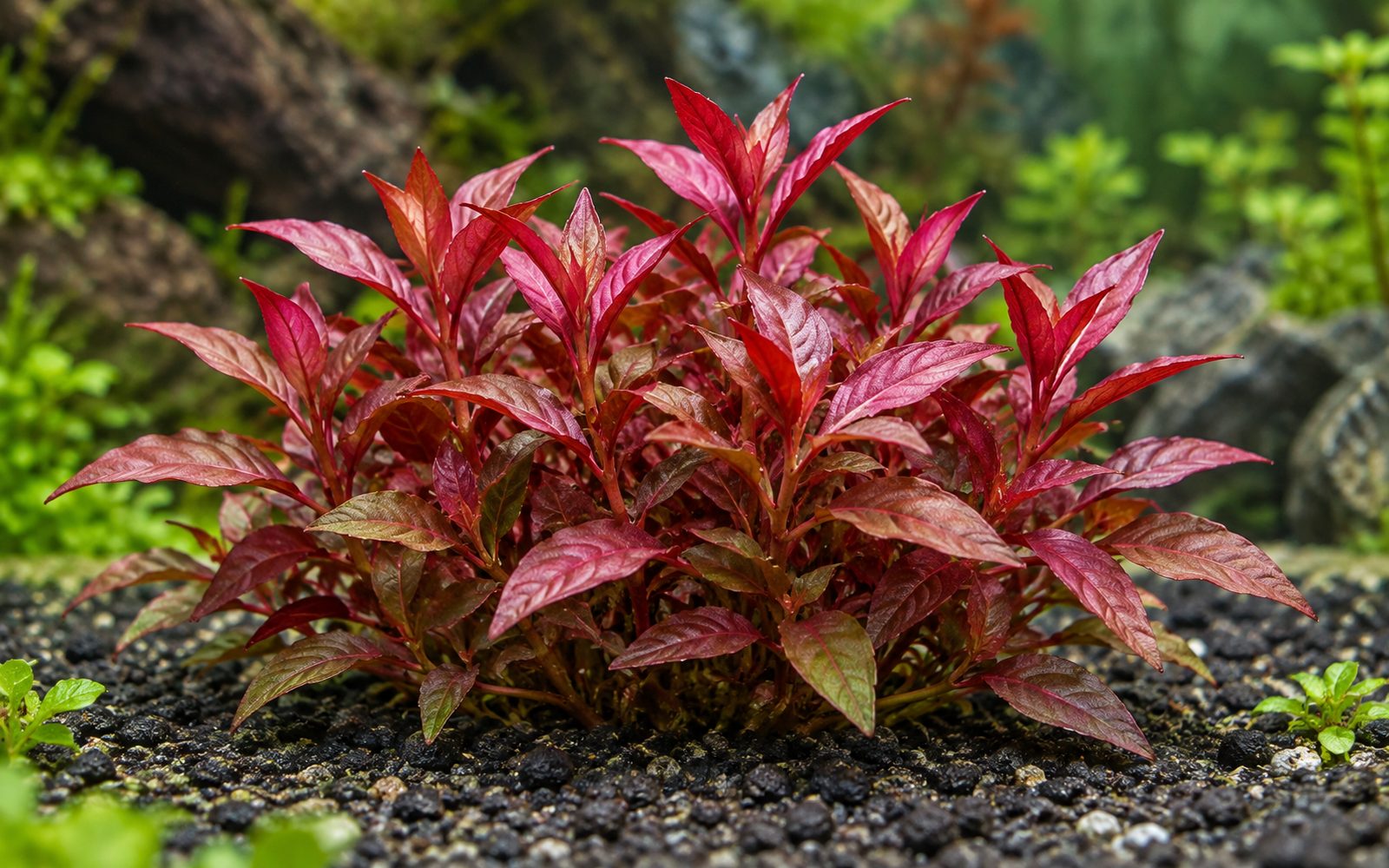 Alternanthera Reineckii 'Mini'
Should not be kept together









Hobbyist notes
Things you won't find in books, learned by trial and error. The most helpful ones are on top.
Change history and contributors
- Page created · October 16, 2026