
Water parameters
Overview
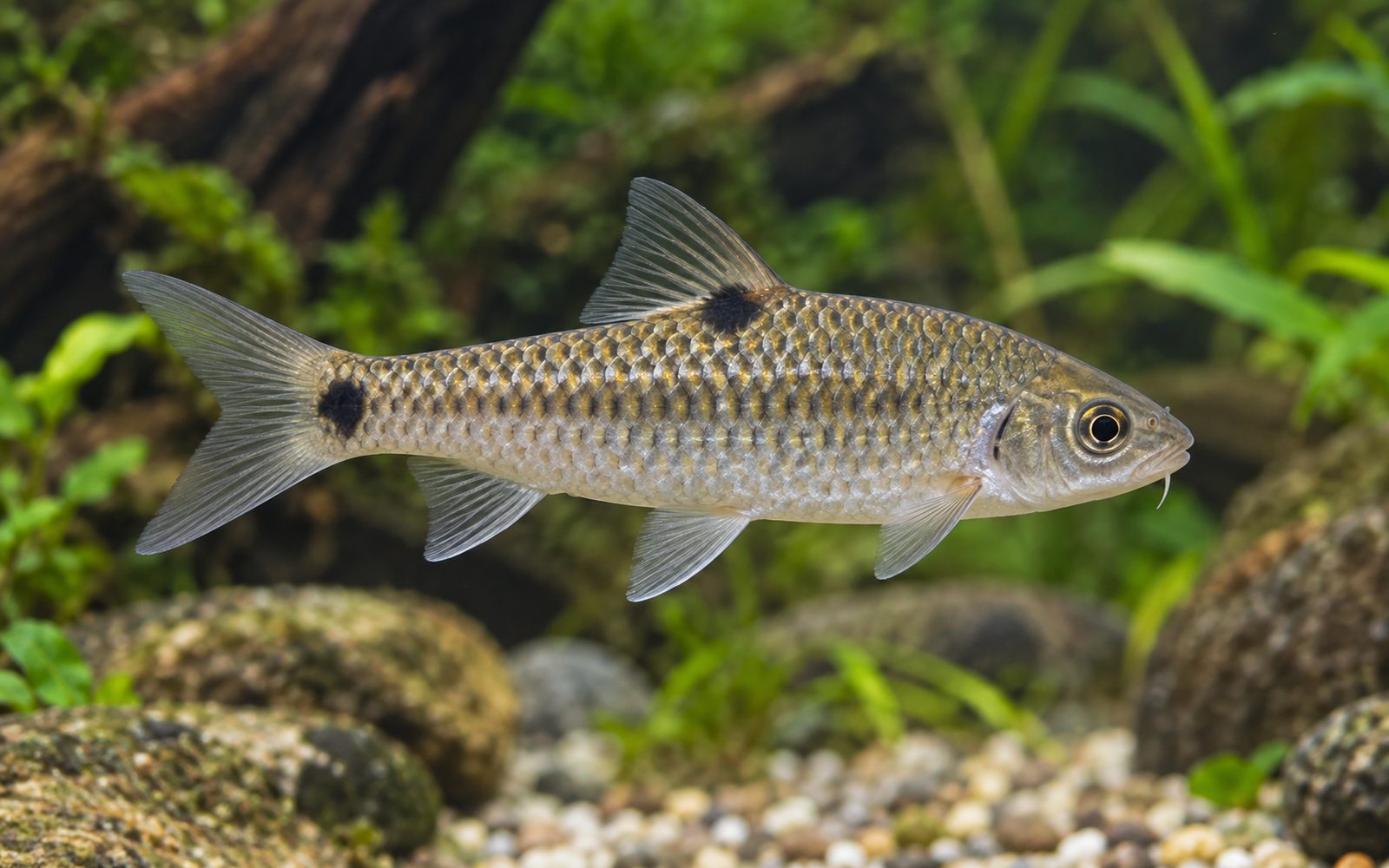
The spotted barb is one of the most common barbs in Southeast Asia; it is abundant in streams, rivers and canals. Juveniles show several black blotches or bars along the body; in adults the pattern is usually limited to two spots, one at the base of the dorsal fin and one on the caudal peduncle. It is not showy but it is hardy; since adults reach 15–20 cm, it is not suitable for small tanks.
Tank Setup
- At least 400 liters and 150 cm in length for a group of 5–6.
- 23–27°C; clean, oxygenated water and moderate flow.
- Sand-gravel substrate, rocks and roots; plenty of swimming space in the middle.
- It jumps; a tight lid is needed. A 30% weekly water change.
Diet
Omnivorous with a good appetite. Granules and pellets, spirulina and vegetables; frozen bloodworms, mysis shrimp and brine shrimp. It eats small fish and shrimp that fit in its mouth.
Behavior and Compatibility
Peaceful but fast and active. It chases within its own group; it causes no problems with fish of similar size.
Good companions: peaceful fish of similar size: T-barbs, red-tailed tinfoil barbs, large gouramis, clown loaches, plecos.
Avoid: small schooling fish, dwarf shrimp, slow and long-finned species.
A short profile for this species
The Spotted Barb page has the basics, but the sections below have not been written yet. If you keep this species, write a section from your own experience; it will be published under your name after editor approval.
Tank mates
This list is calculated automatically from the species profile and grows as new species are added to the catalog. Try it in the planner for a definite answer.
Usually compatible
 Emerald Cory
 Porthole Catfish
 Keyhole Cichlid
 Firemouth Cichlid
 Cupid Cichlid
 Buffalohead Cichlid
 Festivum
 Geophagus altifrons
 Geophagus surinamensis
Should not be kept together






Hobbyist notes
Things you won't find in books, learned by trial and error. The most helpful ones are on top.
Change history and contributors
- Page created · October 16, 2026