
Water parameters
Overview
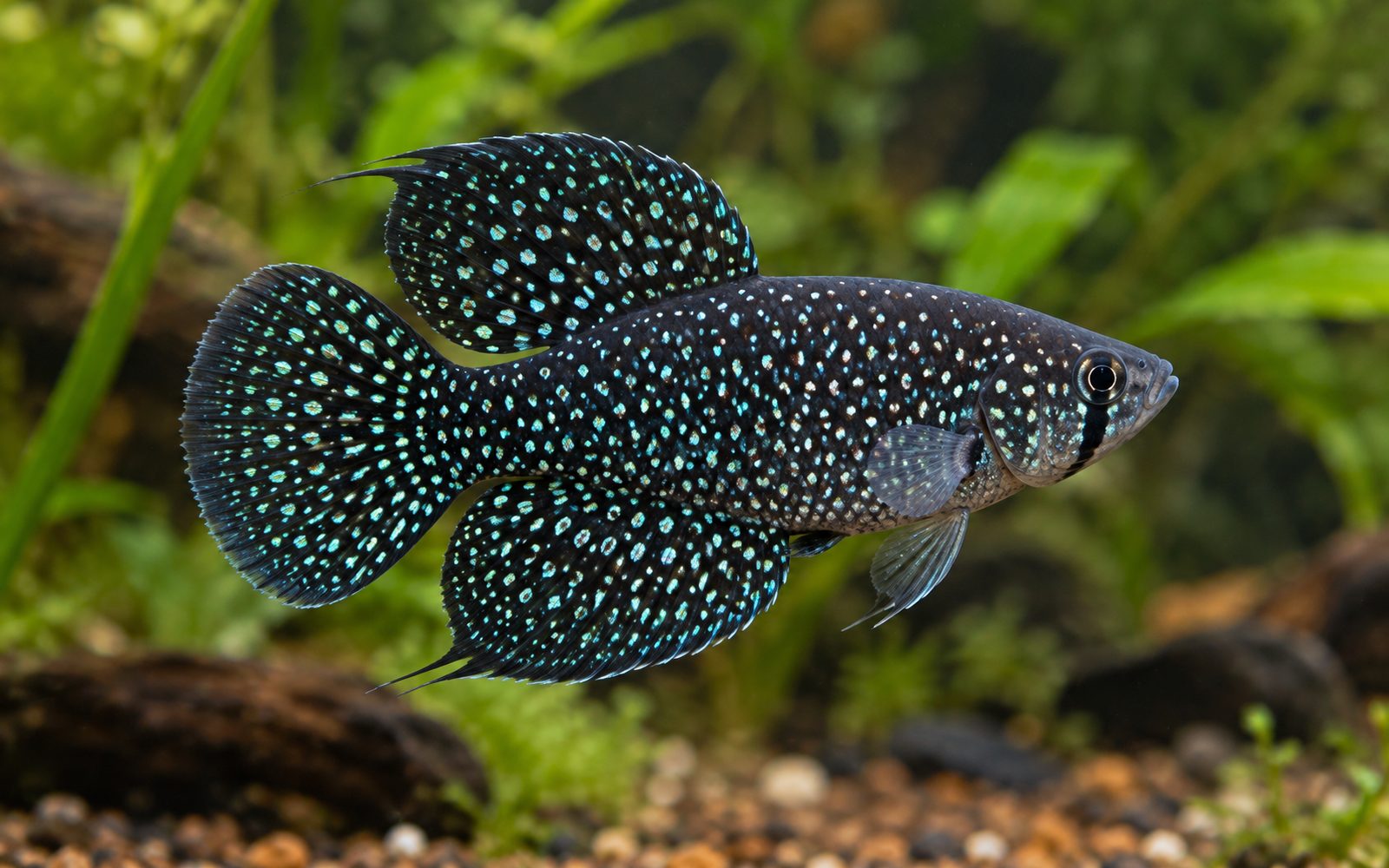
Austrolebias nigripinnis is an annual (seasonal) killifish from the temperate region of South America. The male's navy body, close to black, and its broad fins are covered with bright blue-green and white pearl spots. Females are light brown with irregular dark spots.
In the wild the pools fill with rain in winter and spring and dry out in summer. During this short period the fish hatch, grow, breed and die when the pool dries up; the eggs wait in the mud for the next rainy season. In the aquarium its lifespan is usually about a year, a little longer if kept cool.
Unlike tropical killifish, it likes cool water: an unheated room aquarium suits it, and the hot summer months are the real risk.
Natural Habitat
It lives in grasslands and floodplains of Argentina and Uruguay, in shallow depressions and temporary pools filled by rainwater. The water temperature changes markedly with the seasons; it is cool in winter and mild in spring. The bottom is muddy and covered with plant debris.
Tank Setup
- Volume: 30 liters for one male and two females; a species-only aquarium is recommended.
- Substrate: for spawning, a layer of boiled peat at least 4–5 cm thick or a container filled with peat; the fish dive fully into the peat to spawn.
- Water: 16–22°C; no heater is needed. In summer heat the aquarium should be kept in a cool room.
- Filter: an air-driven sponge filter; no strong flow.
- Lid: a tight lid is essential.
- Maintenance: a 25–30% water change every week.
Diet
Carnivorous and eats a lot. It should be fed live and frozen foods: bloodworms, daphnia, mosquito larvae, brine shrimp. It mostly refuses dry food. Fast-growing juveniles should be fed twice a day.
Behavior and Compatibility
Males are rough with each other and persistent with females; they constantly display with spread fins. Because of its need for cool water and its short lifespan, it should be kept in a species-only aquarium.
Good companions: females of its own species.
Avoid: tropical community fish (temperature mismatch), other Austrolebias species (the females look alike, hybridization), large and active fish.
Group and Colony Structure
Two females per male are recommended. In a small aquarium two males fight constantly. Females should be able to rest among plants.
Breeding
The pair dive side by side into the peat and bury their eggs one by one.
- Collection: the peat is taken out every 2 weeks, drained and squeezed until it is just damp.
- Storage: it is kept in a labeled zip-lock bag at 18–22°C in the dark.
- Duration: about 3–5 months. When dark eyes and a golden ring are visible in the egg, it is time to wet the peat.
- Wetting: the peat is placed in cool (16–18°C), soft, shallow water; the fry hatch within hours. Eggs that do not hatch are dried again and tried a few weeks later.
The fry eat brine shrimp from the first day, grow healthier in cool water and mature in about 2–3 months.
Health and Common Problems
- Warm water: staying above 24°C for long periods shortens its lifespan considerably.
- Aging: fading color and weakening are natural in fish approaching one year of age.
- Velvet disease (Oodinium): common in killifish.
Sexing
Males are blue-black, pearl-spotted and broad-finned. Females are smaller, light brown with irregular dark spots; their fins are short and plain. Both sexes have a dark bar running through the eye.
Tank mates
This list is calculated automatically from the species profile and grows as new species are added to the catalog. Try it in the planner for a definite answer.
Usually compatible
 Gymnogeophagus balzanii
 Cryptocoryne Parva
 Egyptian Mouthbrooder
 European Bitterling
 Weeping Moss
 Flame Moss
 Gold Barb
Golden Otocinclus
Hypostomus luteus
Gold Barb
Golden Otocinclus
Hypostomus luteus
 Amano Shrimp
Should not be kept together






Hobbyist notes
Things you won't find in books, learned by trial and error. The most helpful ones are on top.
Change history and contributors
- Page created · October 16, 2026