
Water parameters
Overview
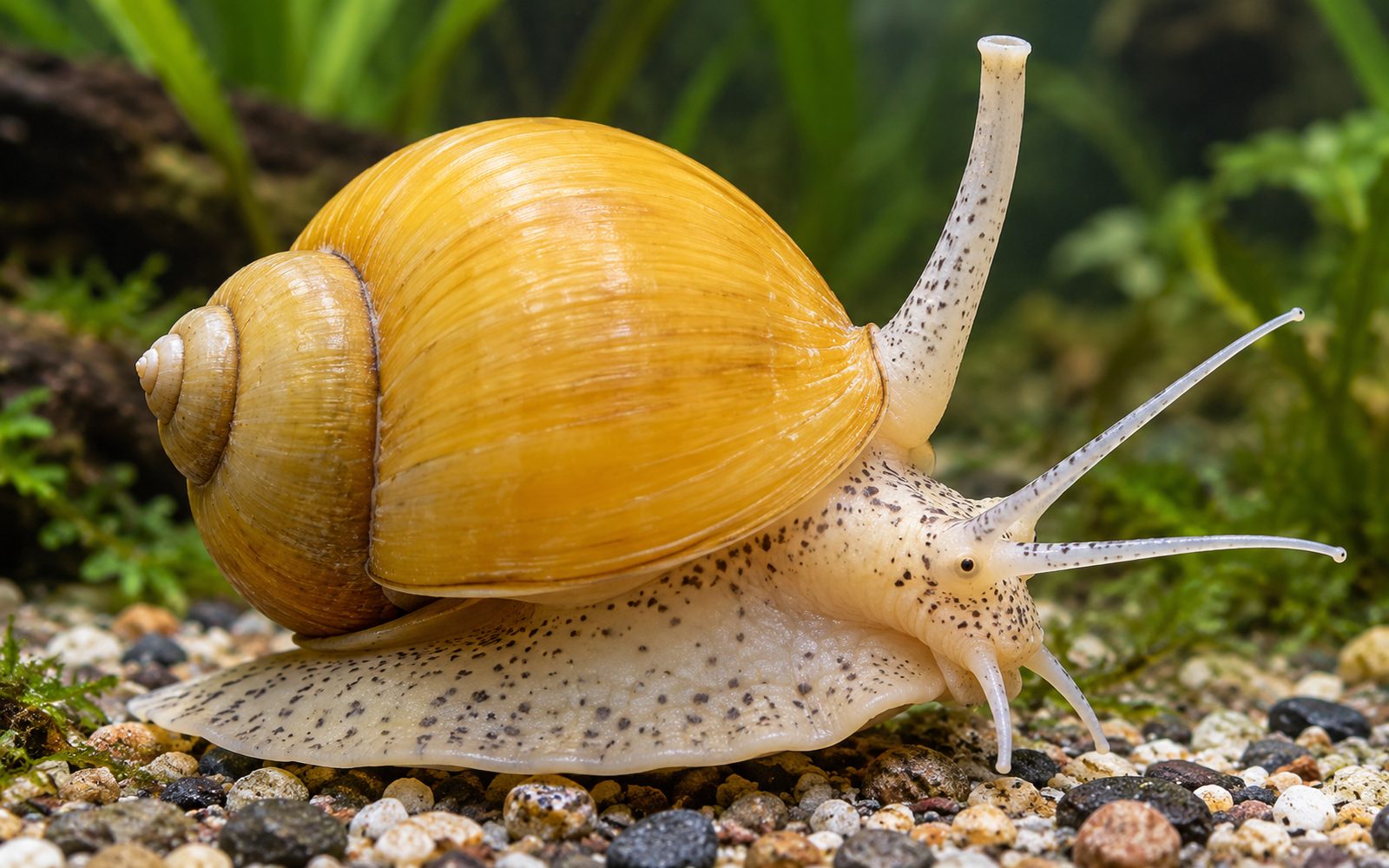
Most of the snails sold in the hobby as "mystery snails" or "apple snails" are the species Pomacea diffusa. Its round shell reaches 4–5 cm; through selective breeding there are gold, blue, purple, ivory, brown and black colors. In addition to its gill it also has a lung: it comes up to the water surface and extends a trunk-like siphon to take in air.
It is a calm, large animal that is a pleasure to watch. It cleans up food leftovers, dead plant matter and algae. Unlike its relative the channeled apple snail (Pomacea canaliculata), it generally leaves healthy plants alone.
Legal notice: since 2012 the European Union has banned the introduction of all species in the genus Pomacea into the EU and their movement within the EU; the decision was taken because of invasive apple snails spreading in rice paddies in Spain. Check current legislation for the legal status in Türkiye. Never release it into the wild.
Color and Fin Varieties
- Gold: yellow shell, pale cream body. The most common form.
- Blue: bluish-gray shell, dark body.
- Purple and magenta: purplish-pinkish tones beneath a dark shell.
- Ivory: white-cream shell, pale body.
- Black and chestnut: dark shell, plain or banded.
Natural Habitat
It lives in the still and slow-flowing, vegetated waters, ponds and floodplains of the Amazon basin. During droughts it can bury itself in the mud, close its operculum and wait.
Tank Setup
- Volume: 30 liters or more for one to three individuals; because of its large size it produces a lot of waste.
- Water: pH 7 or above, moderately hard to hard water. In low-calcium, acidic water the shell erodes.
- Surface gap: leave a gap of 5–10 cm between the water level and the lid; it is needed both for breathing air and for laying eggs.
- Lid: it can climb out of the water and walk on the glass; it escapes from tanks without a lid.
- Filter: protect the filter intake with a sponge; its long tentacles can be sucked in.
Diet
Omnivorous with a good appetite. It eats sinking tablets, spirulina, blanched zucchini, spinach and cucumber, food leftovers and algae. Calcium-rich foods and cuttlebone in the water are beneficial for shell health. If it goes hungry it may nibble soft-leaved plants.
Behavior and Compatibility
Completely peaceful. It leaves fish and shrimp alone, but quickly cleans up dead fish.
Good companions: peaceful community fish, shrimp, corydoras, other peaceful snails.
Avoid: fish that bite its antennae (tiger barbs, some tetras), clown loaches, puffers, large cichlids, crayfish.
Group and Colony Structure
It has no social needs; it can be kept on its own. Since the sexes are separate, breeding is possible if two or more individuals are kept together. Numbers are determined by aquarium volume and food availability; allow about 10 liters per snail.
Breeding
The female climbs above the water surface at night and lays a pale pink-cream clutch of eggs, like a bunch of grapes, on the glass or lid. Eggs that stay moist hatch in 2–4 weeks and the young drop into the water. If breeding is not wanted, the clutches are scraped off and destroyed by freezing for a day; they are never thrown out into nature. Bright pink or red eggs point to a different, more invasive Pomacea species.
Health and Common Problems
- Shell erosion and cracks: low pH, low calcium.
- Sudden death: copper and many antiparasitic medications are lethal. A dead apple snail fouls the water quickly; check any that have not moved for a few days (a dead snail gives off a strong smell).
- Lifespan: it grows faster in warm water but lives shorter; 22–24°C extends its lifespan.
Sexing
The sexes cannot be reliably told apart externally. The individual that lays eggs is female. Experienced breeders can determine the sex by looking at the male reproductive organ inside the mantle cavity when the snail is fully extended out of its shell.
Tank mates
This list is calculated automatically from the species profile and grows as new species are added to the catalog. Try it in the planner for a definite answer.
Usually compatible









Hobbyist notes
Things you won't find in books, learned by trial and error. The most helpful ones are on top.
Change history and contributors
- Page created · October 16, 2026