
Water parameters
Overview
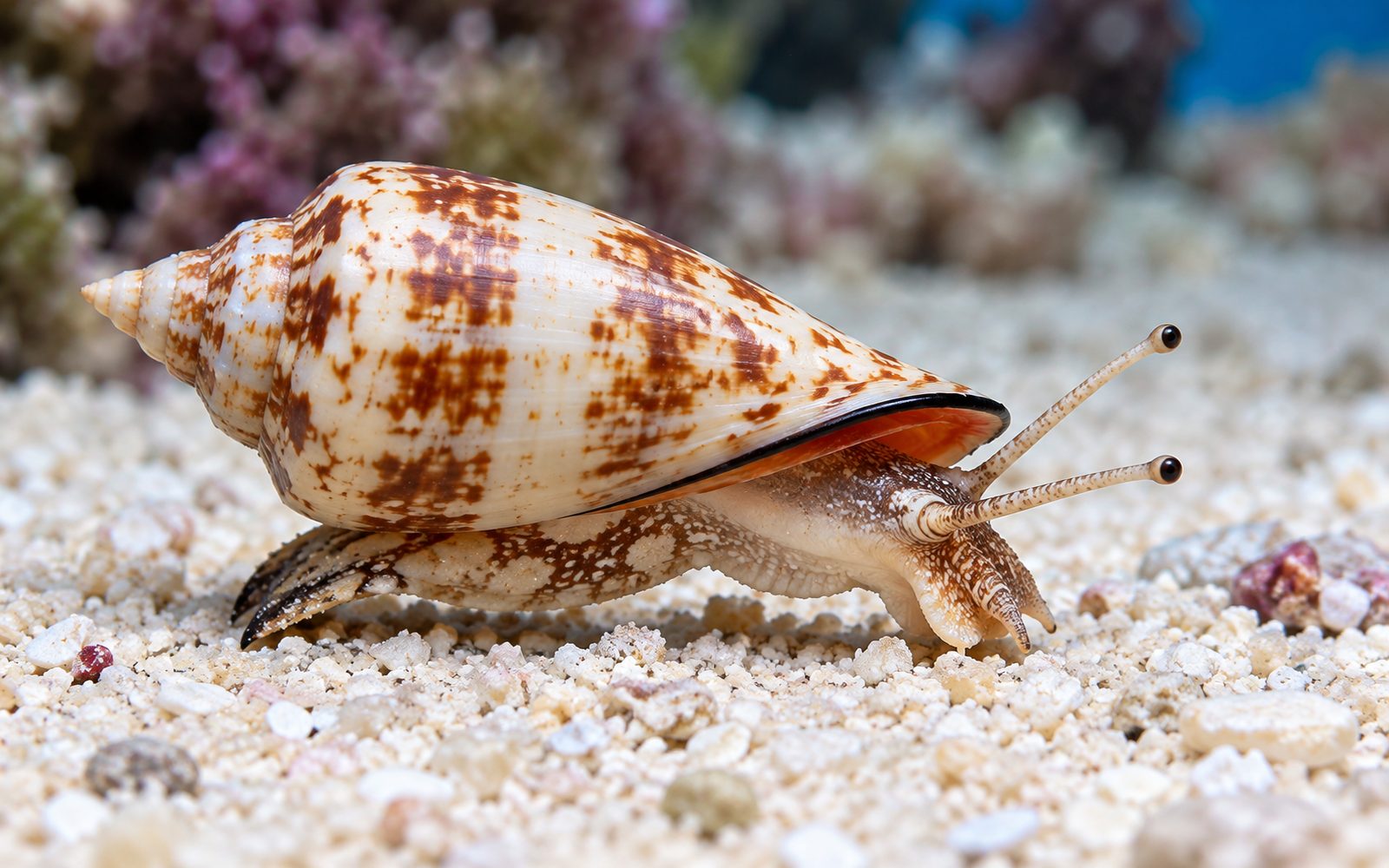
The strawberry conch is recognized by its cone-shaped shell and the strawberry-red to orange color of its aperture. The outer surface of the shell is mottled cream and brown; the inner edge of the aperture is dark. Its most fascinating traits are watching its surroundings with eyes at the tips of long stalks and moving as if hopping by digging its claw-shaped operculum into the sand and pushing itself forward.
By grazing the sand surface it cleans away the layer of diatoms and microalgae and keeps the sand bed constantly refreshed. It is also known by its old name, Strombus luhuanus. Specimens in the trade are wild-collected.
Natural Habitat
It lives in the shallow lagoons of the Western Pacific, on sandy and rubble bottoms and in seagrass beds, mostly in large groups. It moves across the sand surface feeding on the fine algal and organic layer.
Tank Setup
- Volume: 75 liters or more; a wide, open sand area.
- Sand: at least 3–5 cm of fine to medium-grained sand. If the sand surface is small and very clean, it goes hungry.
- Water: salinity 1.023–1.026 specific gravity, pH 8.1–8.4, temperature 24–27°C. Calcium and alkalinity should be kept stable for shell health.
- Reef compatibility: Reef-safe; it leaves corals and other animals alone. It may only push coral frags lying on the sand.
- Acclimation and medication: Acclimate by the drip method for at least 1 hour. Copper-based medications are lethal.
Diet
Herbivorous: diatoms, microalgae and the organic layer on the sand surface are its main food. On a mature sand bed with an algal layer it hardly needs extra food; if the sand is very clean, supplement with sinking algae wafers or spirulina-based granules.
Behavior and Compatibility
Peaceful and curious. It is visible during the day as well; it moves slowly over the sand and, when startled, suddenly hops using its operculum. It lives without problems with its own kind.
Good companions: gobies, clownfish, cardinalfish, blennies; shrimp, Nassarius and cerith snails.
Avoid: wrasses that hunt in the sand, triggerfish and pufferfish; Astropecten sand stars and large hermit crabs.
Group and Colony Structure
It has no social needs but also lives in groups without problems. Depending on the sand area, one conch per 75–100 liters is a general guideline. If the sand surface is small, several conchs compete for food and go hungry.
Breeding
The sexes are separate; males and females cannot be told apart externally. Females lay long, thin, coiled egg strings in the sand. The larvae develop in the plankton and do not survive in home aquariums.
Health and Common Problems
- Shell erosion: low calcium and alkalinity.
- Starvation: staying motionless on the sand for a long time, eyes withdrawn.
- Sudden deaths: copper, rapid acclimation, sudden salinity changes.
Sexing
Cannot be told apart externally. An individual laying an egg string in the sand is female.
Tank mates
This list is calculated automatically from the species profile and grows as new species are added to the catalog. Try it in the planner for a definite answer.
Hobbyist notes
Things you won't find in books, learned by trial and error. The most helpful ones are on top.
Change history and contributors
- Page created · October 16, 2026