
Water parameters
Overview
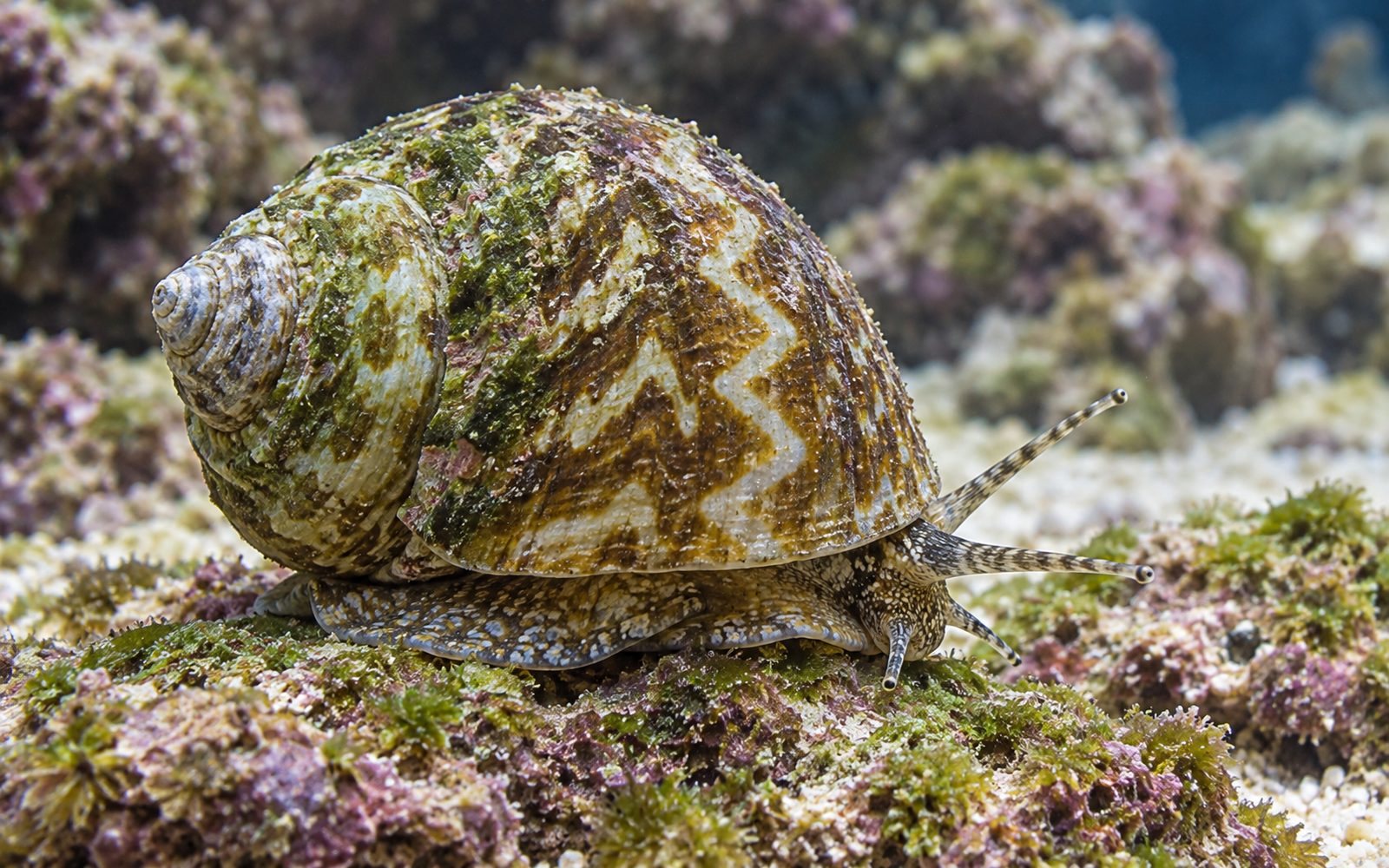
The turbo snail is one of the most powerful algae eaters in reef aquariums. Its thick, turban-shaped shell is brown and green, patterned with pale wavy lines. With its broad foot and strong rasping tongue (radula) it quickly clears hair algae, algal film and diatoms from rock and glass surfaces.
Its size and appetite are both an advantage and a disadvantage: it quickly goes hungry when the algae run out, and it can knock over unsecured coral frags as it moves. Some of the snails sold as "turbo" in the trade are other Turbo species from the Indo-Pacific; their care is similar, but the Mexican turbo prefers warm to cool water. Specimens in the trade are wild-collected.
Natural Habitat
It lives on algae-covered rocky areas between the intertidal zone and shallow waters in the Gulf of California and along the Pacific coast of Mexico. These waters are cooler and richer in nutrients than tropical reefs.
Tank Setup
- Volume: 60 liters or more; 1 turbo per 40 liters depending on the amount of algae.
- Water: salinity 1.023–1.026 specific gravity, pH 8.1–8.4, temperature 22–26°C. Prolonged temperatures above 27°C can lead to deaths.
- Reef compatibility: Reef-safe; it leaves corals alone, but it can knock over loose coral frags. Frags should be glued in place.
- Acclimation: Snails are sensitive to salinity differences; they should be acclimated by the drip method for at least 1 hour.
- Medication: copper-based medications kill snails.
Diet
Herbivorous; it eats hair algae, green algal film and diatoms. It hardly touches cyanobacteria and tough red algae. When the algae in the aquarium run short, it should be fed pieces of dried seaweed (nori) and algae wafers; a hungry turbo draws its foot in and slows down.
Behavior and Compatibility
Completely peaceful; it roams slowly day and night, scraping algae. Clean trails left by its mouth can be seen on the glass.
Good companions: almost all reef-safe fish; cleaner shrimp, scarlet reef hermit crab, other snails.
Avoid: triggerfish, pufferfish, large wrasses; blue-legged and electric blue hermit crabs in an aquarium without spare shells.
Group and Colony Structure
It has no social needs. The number is determined by the amount of algae in the aquarium: during the algae phase after setup, 1 turbo per 40 liters is enough. Too many turbos go hungry and weaken once the algae are gone; the number can be reduced as the aquarium matures.
Breeding
The sexes are separate. Males and females release eggs and sperm into the water; the water may look cloudy for a short time when this happens. The larvae develop in the plankton and do not survive in the aquarium; it does not reproduce in home conditions.
Health and Common Problems
- Flipping over: a turbo can usually right itself; those left upside down on the sand for days should be turned over.
- Shell erosion: low calcium and alkalinity.
- Sudden deaths: copper, rapid acclimation, excessive heat. A dead snail is noticed by its smell and should be removed before it fouls the water.
Sexing
Cannot be told apart externally. Spawning in the aquarium is noticed only as a cloudy plume released from the shell into the water.
Tank mates
This list is calculated automatically from the species profile and grows as new species are added to the catalog. Try it in the planner for a definite answer.
Hobbyist notes
Things you won't find in books, learned by trial and error. The most helpful ones are on top.
Change history and contributors
- Page created · October 16, 2026