
Water parameters
Overview
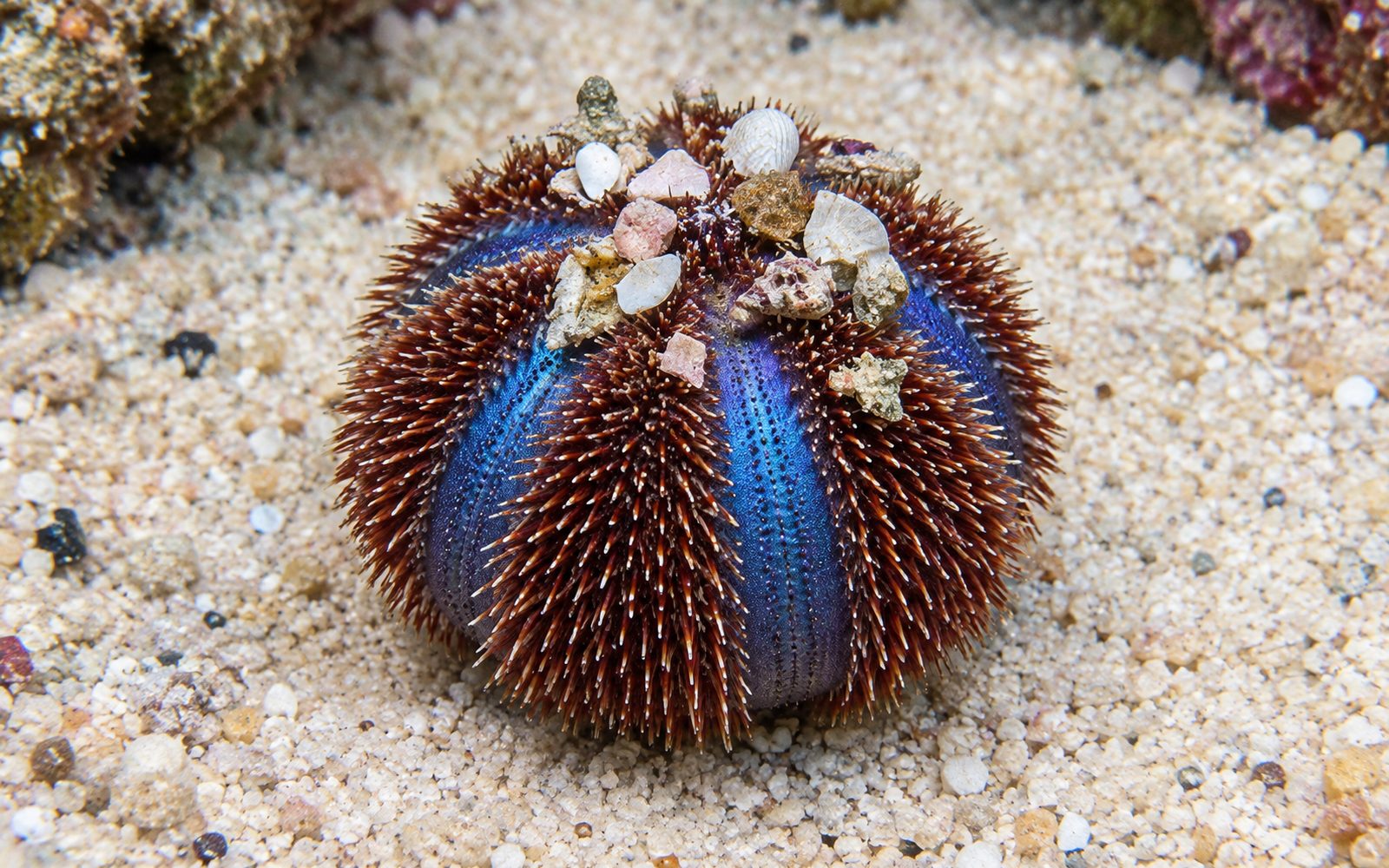
The tuxedo urchin is a small species recognized by the bright blue or dark bare stripes running between bands of short, dense spines. Its test rarely exceeds 5–6 cm. It moves slowly while grazing algae on rocks and glass and picks up bits of shell, algae or small stones onto its back with its tube feet; this "covering" behavior protects it from the sun and from predators.
Because its spines are short, it is much safer than long-spined species and is frequently chosen for reef aquariums. Like other echinoderms, it is very sensitive to changes in salinity. Specimens in the trade are wild-collected.
Natural Habitat
It lives on the shallow reefs and in the lagoons of the Indo-West Pacific, on algae-covered rocks and coral rubble. During the day it can also move about in the open by covering itself.
Tank Setup
- Volume: a mature reef of 75 liters or more; live rock with plenty of algae.
- Water: salinity 1.023–1.026 specific gravity, pH 8.1–8.4, temperature 24–27°C. Salinity and temperature should be stable.
- Reef compatibility: Reef-safe with caution. It does not attack corals, but it may pick up and carry small, unsecured coral frags and it grazes coralline algae.
- Acclimation: Echinoderms are very sensitive to salinity differences; it should be acclimated by the drip method for at least 2 hours and contact with air kept to a minimum.
- Medication: copper-based medications are lethal.
Diet
Herbivorous: it eats algal film, short hair algae, diatoms and coralline algae. When algae run short, pieces of nori or algae wafers should be fixed to a stone and offered; a hungry urchin drops its spines and weakens.
Behavior and Compatibility
Peaceful and slow; it grazes algae day and night. It may dislodge loose pieces of the aquascape and coral frags; for this reason the rockwork should be solid and frags glued down.
Good companions: clownfish, gobies, cardinalfish, tangs; shrimp, snails.
Avoid: triggerfish, pufferfish and large wrasses that prey on sea urchins; newly set-up aquariums where salinity fluctuates.
Group and Colony Structure
It has no social needs. Depending on the amount of algae, one urchin per 100–150 liters is enough. Larger groups exhaust the algae quickly and go hungry.
Breeding
The sexes are separate; it releases eggs and sperm into the water. The larvae develop in the plankton; they cannot be raised in home aquariums.
Health and Common Problems
- Spine loss: the most important warning sign; it is usually caused by salinity swings, starvation or poor water quality.
- Stopping covering behavior: may be a sign of stress or illness.
- Sudden deaths: copper, rapid acclimation, low salinity. A dead urchin fouls the water quickly and must be removed immediately.
Sexing
Cannot be told apart externally.
Tank mates
This list is calculated automatically from the species profile and grows as new species are added to the catalog. Try it in the planner for a definite answer.
Hobbyist notes
Things you won't find in books, learned by trial and error. The most helpful ones are on top.
Change history and contributors
- Page created · October 16, 2026