
Water parameters
Overview
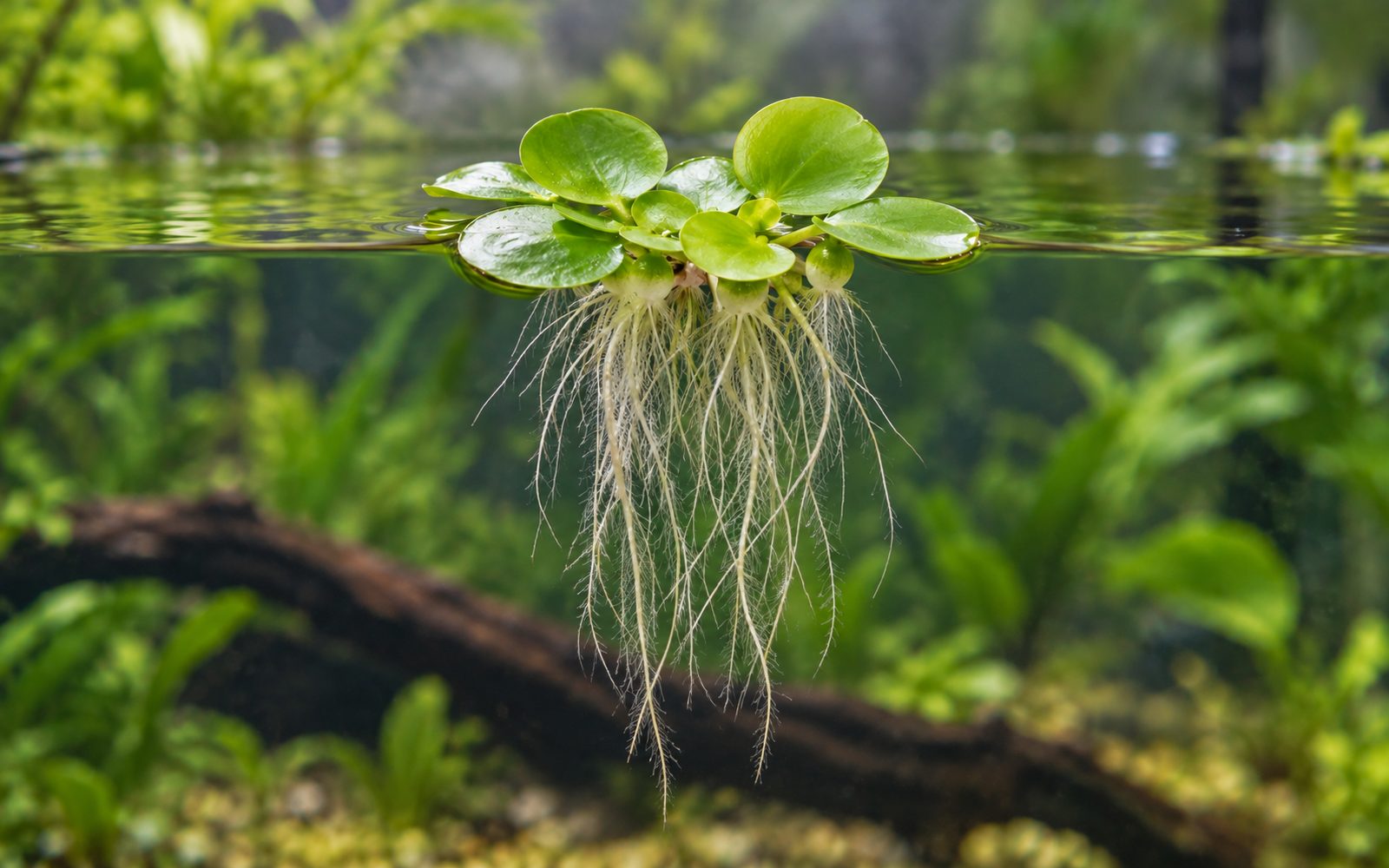
Amazon frogbit is a plant from the still waters of Central and South America that forms small rosettes on the surface. The underside of its round or heart-shaped leaves, 2–5 cm across, consists of an air-filled spongy tissue; this tissue keeps the plant afloat. Fine roots 10–20 cm long, or even longer, hang down from each rosette.
By growing fast it uses up excess nutrients in the water and competes with algae. Its dangling roots are a good hiding place for fry and shrimp. It is often used in betta, gourami and tetra aquariums that call for shade at the surface.
Planting and Placement
It is not planted; place the rosettes on the surface with the leaves facing up. It is important that the upper side of the leaves stays dry; take care that they do not flip over when you put them in.
Care and Fertilization
- Light: Moderate.
- CO₂: Not required; it uses CO₂ from the air.
- Humidity and condensation: Water droplets collecting under the lid and leaves that are constantly wet lead to rot. Leave a few centimeters of space between the lid and the water.
- Flow: It likes a calm surface; a strong filter outlet pushes the leaves under.
- Fertilizer: Long roots and shrinking leaves indicate a nutrient deficiency; add liquid fertilizer.
Propagation
New rosettes form at the ends of short horizontal runners (stolons) that grow from the mother rosette. These separate on their own or can be pinched off by hand. Under suitable conditions it can cover most of the surface within a few weeks.
Common Problems
- Rotting, darkening leaves: condensation droplets or the leaves getting wet.
- Excessive spread: remove the excess once a week; do not let it cover more than half of the surface.
- If the roots grow very long and the leaves get smaller: nutrient deficiency.
- Do not release into the wild: in some countries it has escaped into nature and become invasive.
Hobbyist notes
Things you won't find in books, learned by trial and error. The most helpful ones are on top.
Change history and contributors
- Page created · October 16, 2026