
Water parameters
Overview
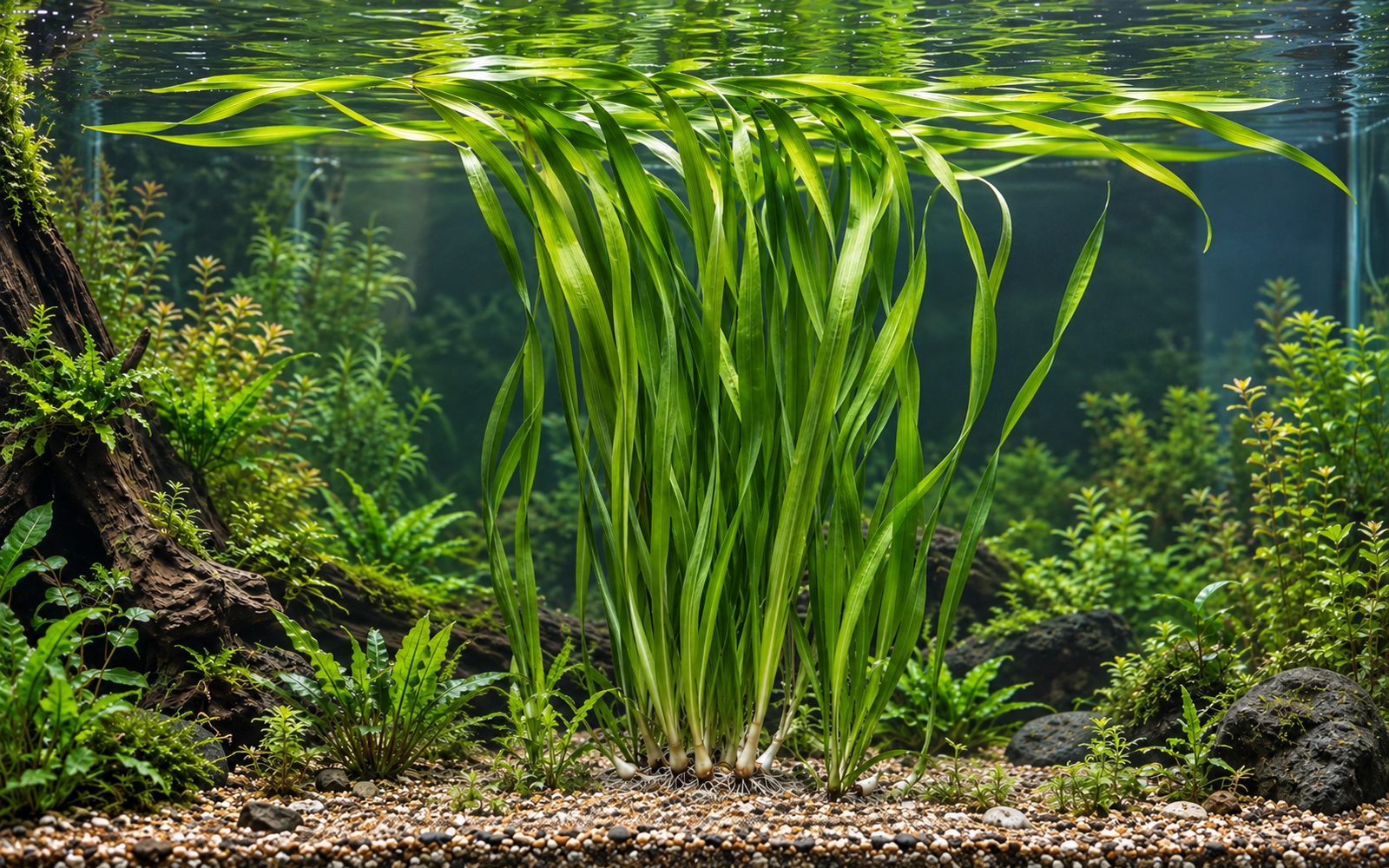
Jungle val is the largest eelgrass (Vallisneria) used in aquariums. Its leaves are 2–3 cm wide and in the aquarium easily grow longer than 1 meter; after reaching the surface they keep growing while lying on the water. It looks similar to V. spiralis but is larger in every respect. Some botanists treat this plant as part of the species Vallisneria americana; in the hobby the name gigantea is common.
Its fast growth uses up excess nutrients in the water, allowing it to compete with algae. Because it also adapts well to hard water and cichlid tanks, it is often used in the background of large, tall aquariums.
Planting and Placement
- When burying the roots, the white crown where the leaves emerge must stay exposed; if the crown is buried, it rots.
- Suitable for aquariums at least 50–60 cm tall and 200 liters or more.
- Plant it in a row in the background, leaving 8–10 cm between plants; the runners soon fill the gaps.
Care and Fertilization
- Light: Medium. Leaves lying at the surface shade the plants below; shorten them regularly.
- CO₂: Not required.
- Fertilizer: Root tabs and liquid fertilizer; with iron deficiency the leaves turn pale.
- Trimming: It is best to cut very long leaves off at the base. If a leaf is cut at the tip, the cut turns brown, but this does not harm the plant.
- Caution: It is sensitive to liquid carbon products (glutaraldehyde); these can cause the leaves to melt.
Propagation
It constantly forms plantlets at the ends of runners spreading under or over the substrate. Plantlets that have opened a few leaves can be cut off and planted where you want. This rapid spreading fills the background of a large aquarium in a few months.
Common Problems
- Rotting crown: planted too deep; expose the crown.
- Leaves melting: seen after fresh planting or when liquid carbon is used.
- Excessive spreading: pull out extra runners and plantlets regularly.
Hobbyist notes
Things you won't find in books, learned by trial and error. The most helpful ones are on top.
Change history and contributors
- Page created · October 16, 2026