
Water parameters
Overview
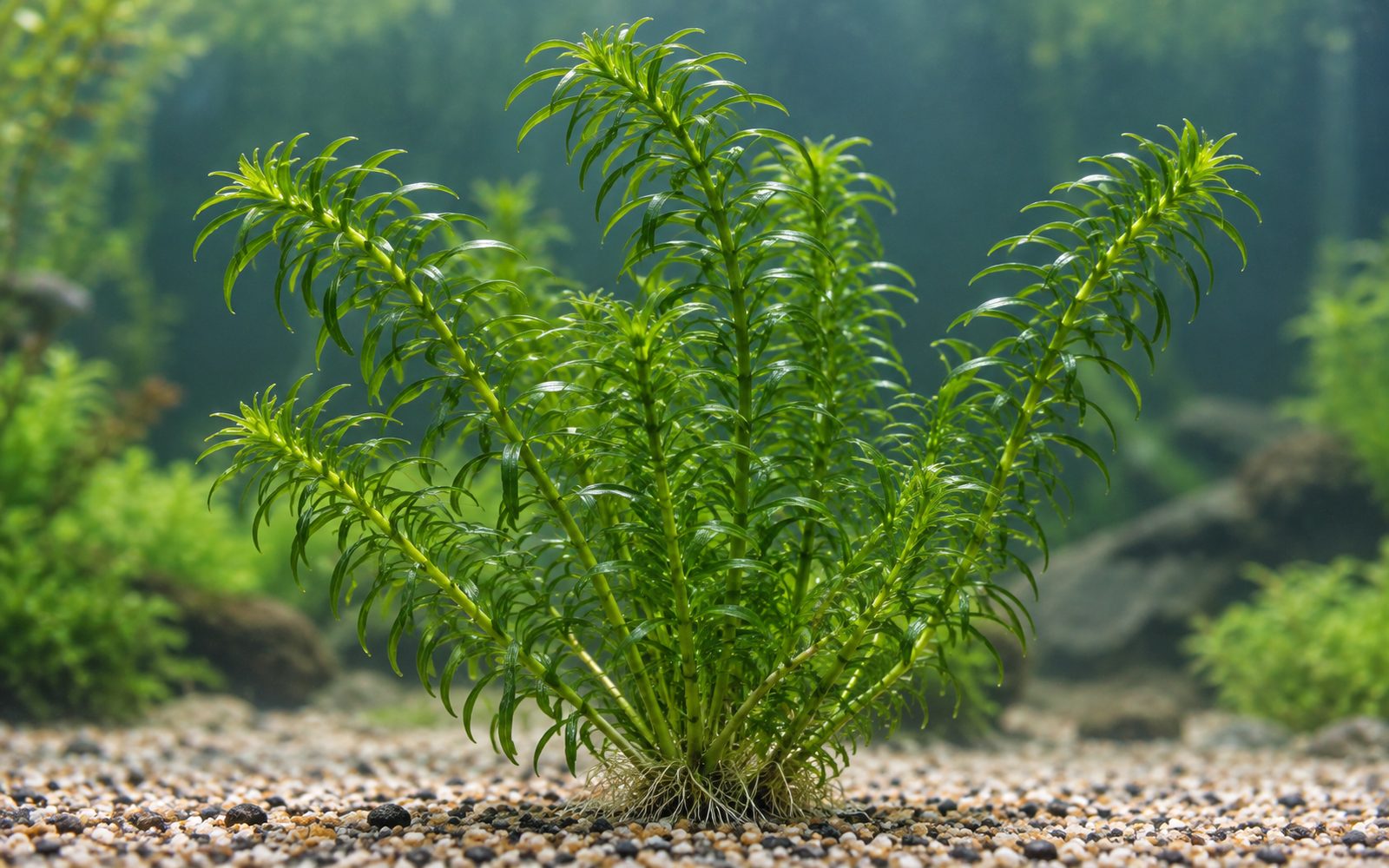
Egeria densa, often simply called "elodea" in the hobby, is a vigorous stem plant whose dark green strap leaves, 2–3 cm long, are arranged in whorls of four or five along the stem. It grows very fast, absorbs excess nutrients from the water and competes strongly with algae.
It likes cool, moderately hard water; it grows very well in unheated aquariums, goldfish tanks and garden ponds. If the temperature stays above 26 °C for long, it weakens and starts to fall apart; for this reason it is not the best choice for tropical aquariums. Goldfish eat its soft shoots, but the plant usually grows faster than it is eaten.
Do not release it into the wild: In many countries where it has escaped, Egeria is a serious invasive that chokes lakes and canals. Surplus plants and trimmings must never be dumped into natural waters.
Planting and Placement
- Stems are buried 4–5 cm deep, singly or in groups of 2–3; because its roots are weak, it may need to be held down with a weight for a while.
- If preferred, it can be left floating freely without planting; it forms a dense mat at the surface.
- It is used in the background, in corners or along pond edges.
Care and Fertilization
- Light: Medium; in strong light it grows even faster.
- CO₂: Not required; it can also use the carbon in carbonate-rich water.
- Temperature: Cool water; the ideal range is 15–24 °C.
- Fertilizer: Usually not needed; in an aquarium with a fish load it takes its nutrients from the water.
- Trimming: Because it grows fast, it is trimmed often, and the surplus is removed from the aquarium.
Propagation
The stem is divided into pieces; every healthy piece becomes a new plant. Outside its native range almost only male plants are found, so no seeds form; it spreads entirely through stem fragments.
Common Problems
- Falling apart in warm water: Above 26 °C the stems become thin and the leaves drop.
- Translucent, rotting stem tips: A sudden temperature change or insufficient light.
- Rapid spreading: If not thinned out regularly, it fills the aquarium.
Hobbyist notes
Things you won't find in books, learned by trial and error. The most helpful ones are on top.
Change history and contributors
- Page created · October 16, 2026