
Water parameters
Temperature20–28°C
pH5.5–7
General hardness (GH)1–8 dGH
Recommended range
Overview
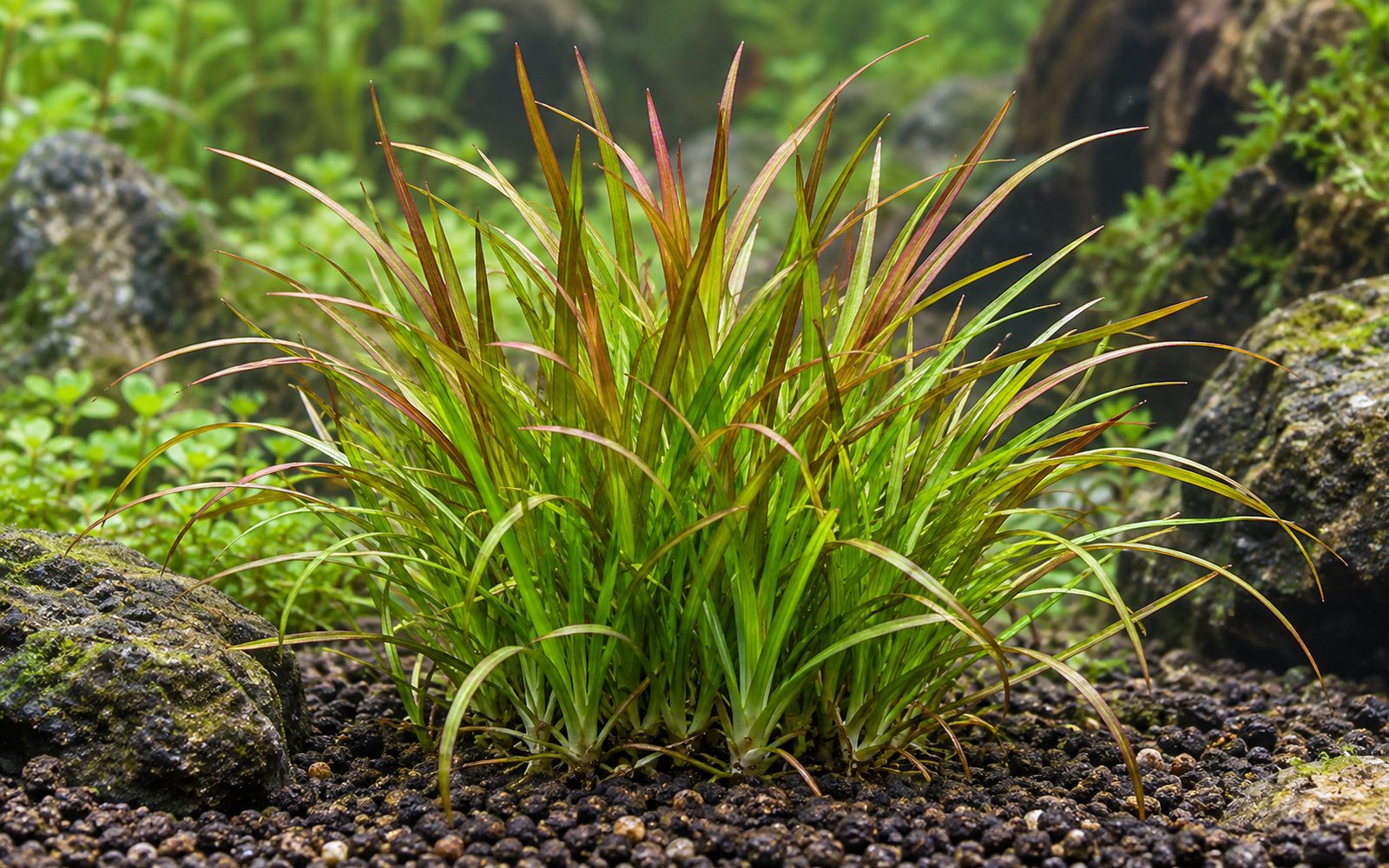
Blyxa japonica grows in the rice paddies and shallow waters of Asia and at first glance looks like a clump of grass. It actually consists of narrow, long leaves arranged in a spiral on a short stem; these stems branch and build dense clumps 8–10 cm high. Under strong light the leaf tips take on a bronze, orange or reddish tone. It is often used at the base of stones and driftwood in nature aquariums. It needs soft water, a nutrient-rich substrate and regular CO₂; if these conditions are not met, it melts.
Planting and Placement
- Separate the clumps into individual stems and plant them 2–3 cm apart and 2 cm deep.
- It is used in the foreground or midground, at the base of stones and between pieces of driftwood.
Care and Fertilization
- Light: High.
- CO₂: Required.
- Water: Soft (GH 1–8), slightly acidic.
- Fertilizer: Active substrate and root tabs; with nutrient deficiency the leaves turn pale.
- Trimming: Lengthening stems are cut and replanted; when clumps get crowded, they are separated and thinned out.
Propagation
This section has not been written yet. How is it propagated?
Be the first to write it
Common Problems
This section has not been written yet. Problems such as melting, yellowing and algae, and how to fix them.
Be the first to write it
Hobbyist notes
Things you won't find in books, learned by trial and error. The most helpful ones are on top.
No notes yet. If you have experience with this species, leave the first note.
Was this page helpful?
Change history and contributors
- Page created · October 16, 2026