
Water parameters
Overview
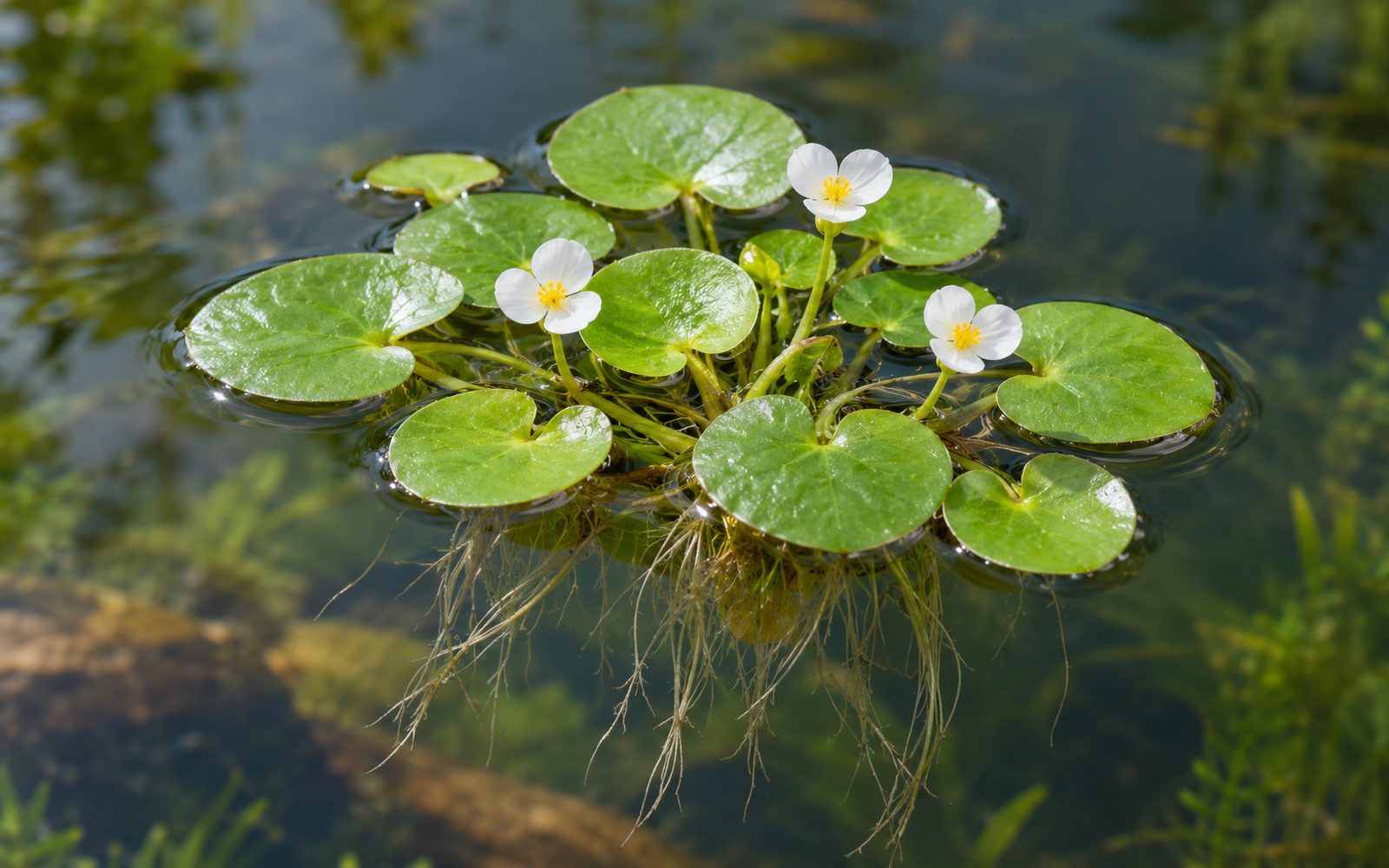
European frogbit is a floating plant that lives in the still lakes, ponds and ditches of Europe and Western Asia. Its round or kidney-shaped glossy green leaves, 3–5 cm across, resemble a small water lily. In summer it produces white flowers with three petals and a yellow center. In autumn it forms winter buds called "turions"; these sink to the bottom, the parent plant dies, and the buds rise back to the surface in spring and grow on.
It is a temperate-climate plant; it is suitable for outdoor ponds and unheated coldwater aquariums. In a tropical aquarium it cannot go into its winter rest, so it does not live long. In the parts of North America where it has been introduced it has become invasive; it must not be released into natural waters.
Planting and Placement
It is not planted; it is placed on the surface. It does best along the calm, sheltered edges of ponds.
Care and Fertilization
- Light: Moderate to strong.
- CO₂: Not required.
- Fertilizer: Usually not needed in ponds.
- Throughout the summer it forms young rosettes on side runners; remove the excess. Do not collect the winter buds from the bottom; they rise on their own in spring.
Propagation
Common Problems
Hobbyist notes
Things you won't find in books, learned by trial and error. The most helpful ones are on top.
Change history and contributors
- Page created · October 16, 2026