
Water parameters
Temperature22–28°C
pH6–7.5
General hardness (GH)2–12 dGH
Recommended range
Overview
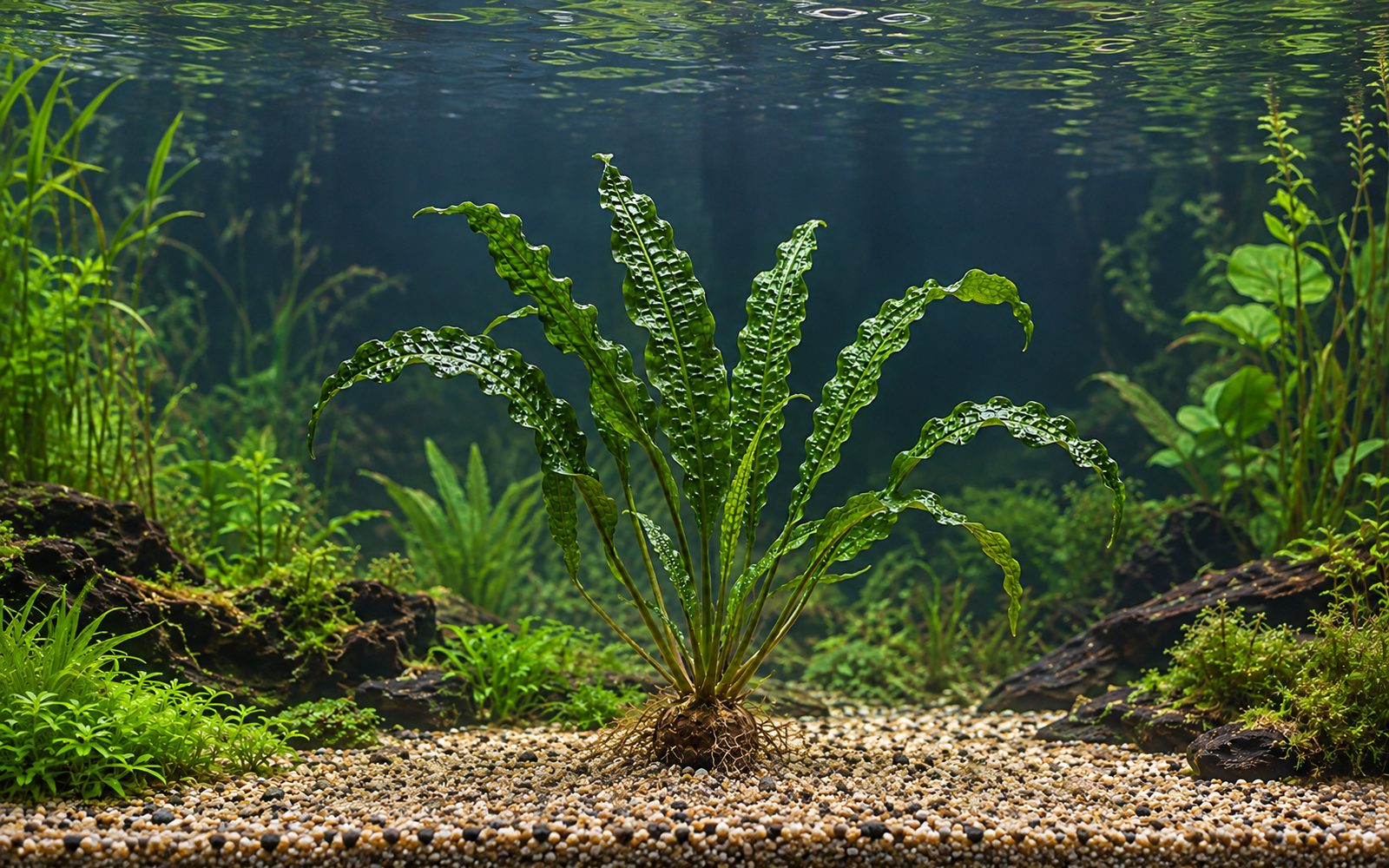
Aponogeton boivinianus is a large species that grows from a tuber and comes from rivers in northern Madagascar. The surface of its long, dark green leaves has a distinctly puckered, crinkled texture, and the edges are wavy. In the aquarium it can grow to 40–60 cm. Like other Madagascan aponogetons, after a few months of growth it may shed its leaves and go dormant.
Planting and Placement
Bury the tuber lightly so that its top stays at the substrate surface. Plant it in the background or alone as a focal plant in aquariums of at least 150 liters. A root tab is essential.
Care and Fertilization
- Light: Medium.
- CO₂: Not required, but it speeds up growth.
- Fertilizer: A root tab once a month.
- Dormancy: When the leaves fall, do not pull out the tuber; it will sprout again within a few weeks. If needed, you can rest the tuber in cooler water (20–22°C).
Propagation
This section has not been written yet. How is it propagated?
Be the first to write it
Common Problems
This section has not been written yet. Problems such as melting, yellowing and algae, and how to fix them.
Be the first to write it
Hobbyist notes
Things you won't find in books, learned by trial and error. The most helpful ones are on top.
No notes yet. If you have experience with this species, leave the first note.
Was this page helpful?
Change history and contributors
- Page created · October 16, 2026