
Water parameters
Overview
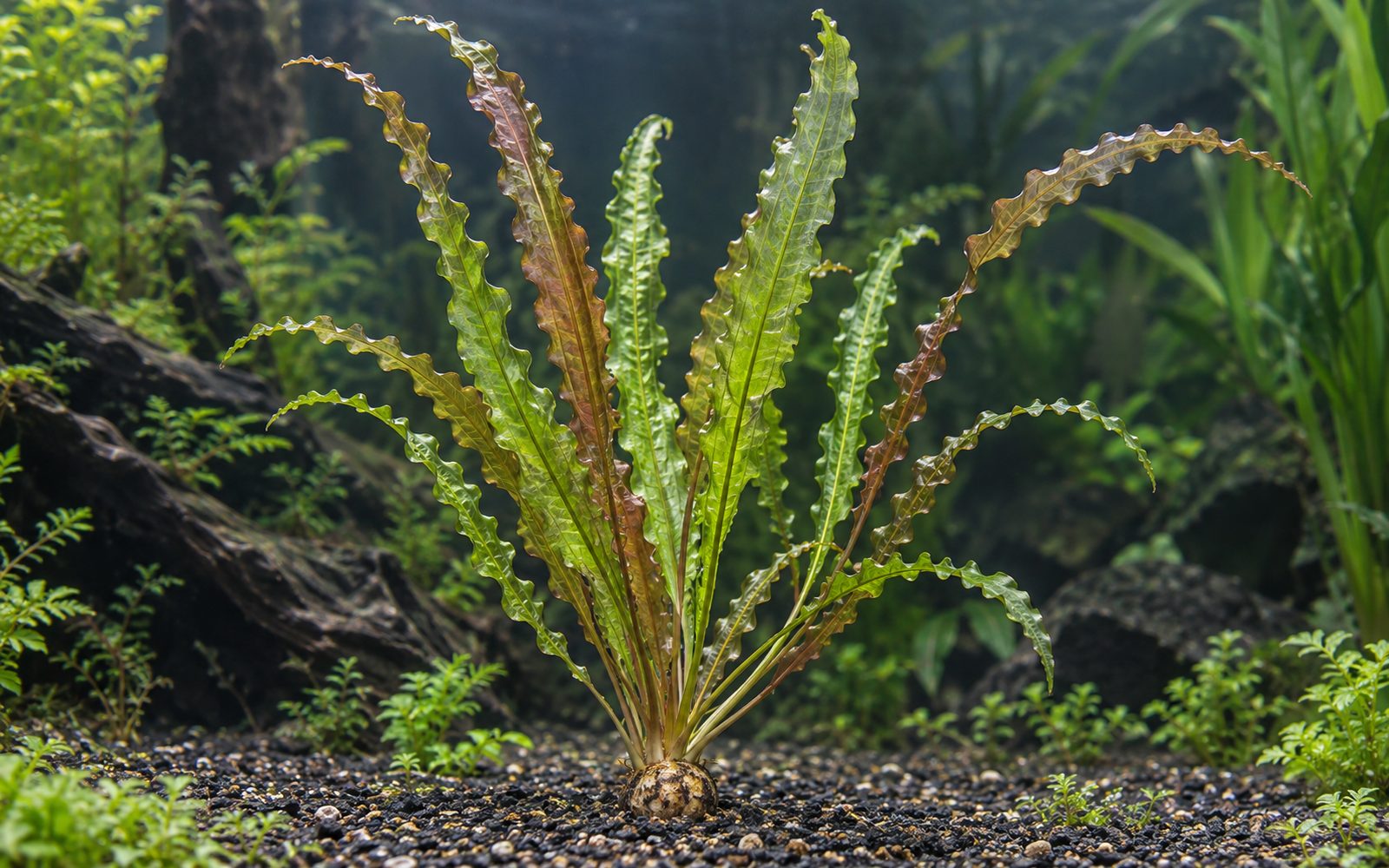
Aponogeton crispus is a plant that grows from a tuber (bulb) and comes from the still and slow-flowing waters of Sri Lanka. The edges of its long, narrow leaves are densely and distinctly wavy; the color can range from green to reddish brown. Under suitable conditions it reaches 30–50 cm within a few weeks.
A large share of the bulbs sold in dry packs as "aquarium bulbs" in supermarkets and pet stores are this species or its hybrids. Because it is cheap and gives quick results, it is a favorite among beginners. Under suitable conditions it also produces spike-shaped flower stalks that rise above the water.
Planting and Placement
- Bury the bulb lightly so that its top third stays above the substrate; a fully buried bulb can rot.
- You can soak dry bulbs in water for a day before planting; it can take 1–3 weeks for the first leaves to appear.
- Planting a few bulbs 10 cm apart in the background or in corners gives a full look.
Care and Fertilization
- Light: Medium.
- CO₂: Not required; with it the leaves grow larger.
- Fertilizer: A root tab next to the bulb once a month. In the first months the bulb grows on its own stored nutrients, then it needs nutrients from outside.
- Trimming: Cut old, yellowing leaves and leaves lying on the surface off at the base.
Propagation
For the flowers to be pollinated, the flower stalk must stay above the water; seeds from pollinated flowers can fall into the water and germinate. Propagation in a home aquarium is difficult and uncommon; for a new plant, a new bulb is usually bought.
Common Problems
- Leaves dropping: after growing for a few months, some plants go dormant. Do not pull up the bulb; left in place, it sprouts again after a few weeks or months.
- Bulb rot: a fully buried bulb, or a soft, foul-smelling bulb; remove the rotten bulb from the aquarium.
- New leaves getting smaller: the bulb's nutrients are depleted; add root tabs.
Hobbyist notes
Things you won't find in books, learned by trial and error. The most helpful ones are on top.
Change history and contributors
- Page created · October 16, 2026