
Water parameters
Overview
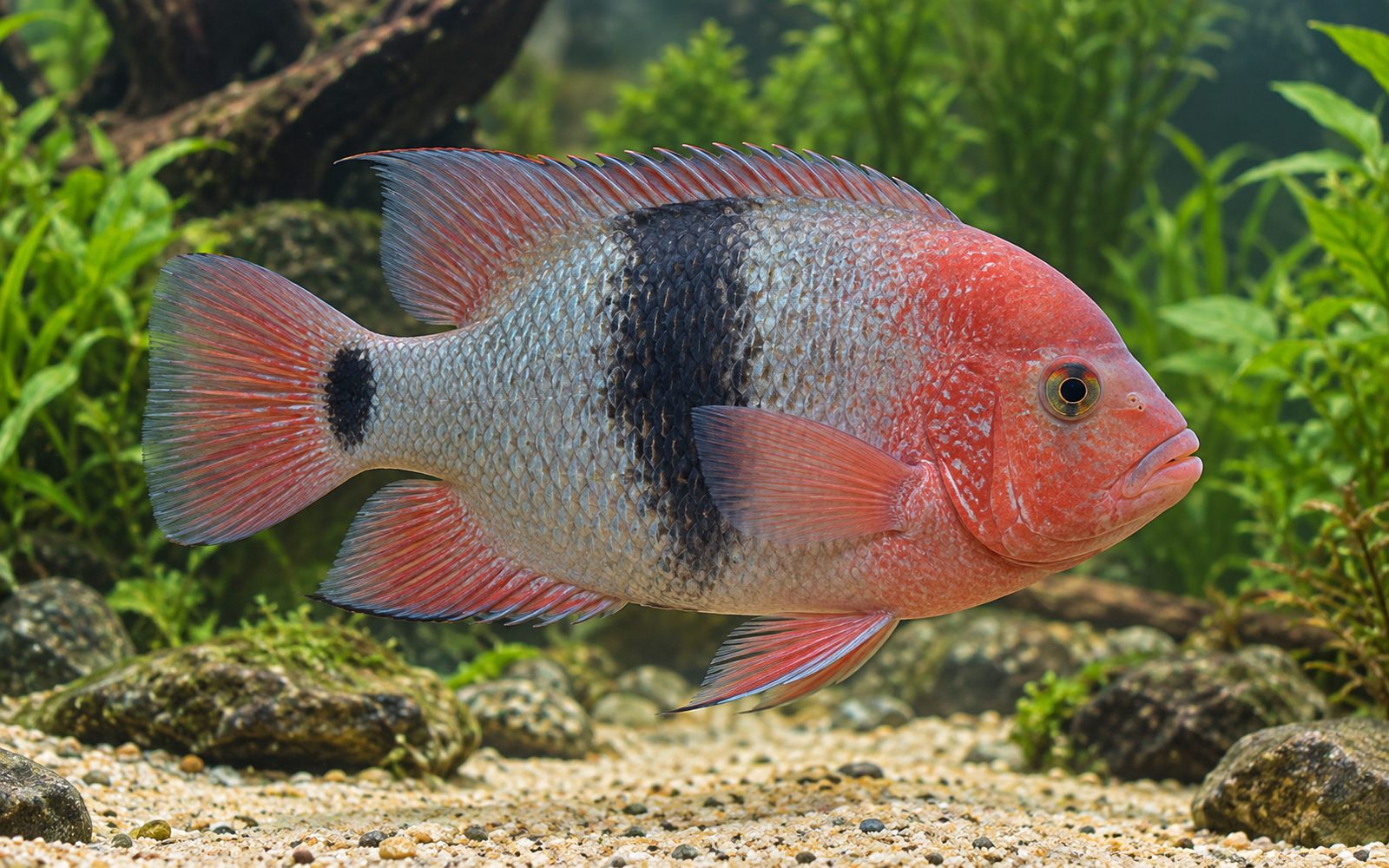
The blackbelt cichlid is a large species spread over a wide area of Central America's Atlantic slope. A thick black belt runs across the middle of its silver–gray or bluish body; the head, throat and fins are in red–pink tones. Males reach 30 cm and develop a nuchal hump with age. It is a hardy fish that can also enter slightly brackish waters; most of its food is plant matter and detritus.
Tank Setup
- At least 450 liters and 180 cm of length for a single adult or a pair.
- Large, sturdy rocks and roots; plants are eaten or uprooted.
- A powerful canister filter or sump; a 30–50% water change weekly.
- Moderately hard, alkaline water.
Diet
An omnivore leaning toward plant matter. Make granules containing spirulina or vegetables the staple; offer blanched peas, spinach and zucchini, and limit protein foods to a few times a week.
Behavior and Compatibility
Usually calm for its size, but it becomes tougher during breeding and toward its own kind. It may eat small fish that fit in its mouth.
Good companions: large cichlids of similar size (redhead cichlid, Texas cichlid), large plecos, silver dollars; all in a very large aquarium.
Avoid: small fish, shrimp, planted layouts, very aggressive predatory cichlids.
A short profile for this species
The Blackbelt Cichlid page has the basics, but the sections below have not been written yet. If you keep this species, write a section from your own experience; it will be published under your name after editor approval.
Tank mates
This list is calculated automatically from the species profile and grows as new species are added to the catalog. Try it in the planner for a definite answer.
Usually compatible
 Firemouth Cichlid
 Chocolate Cichlid
 Festivum
 Gymnogeophagus balzanii
 Pearl Cichlid
 Blood Parrot
 Redhead Cichlid
 Red Hump Eartheater
 Cryptocoryne Parva
 Gold Spot Pleco (L001)
Should not be kept together








Hobbyist notes
Things you won't find in books, learned by trial and error. The most helpful ones are on top.
Change history and contributors
- Page created · October 16, 2026