
Water parameters
Overview
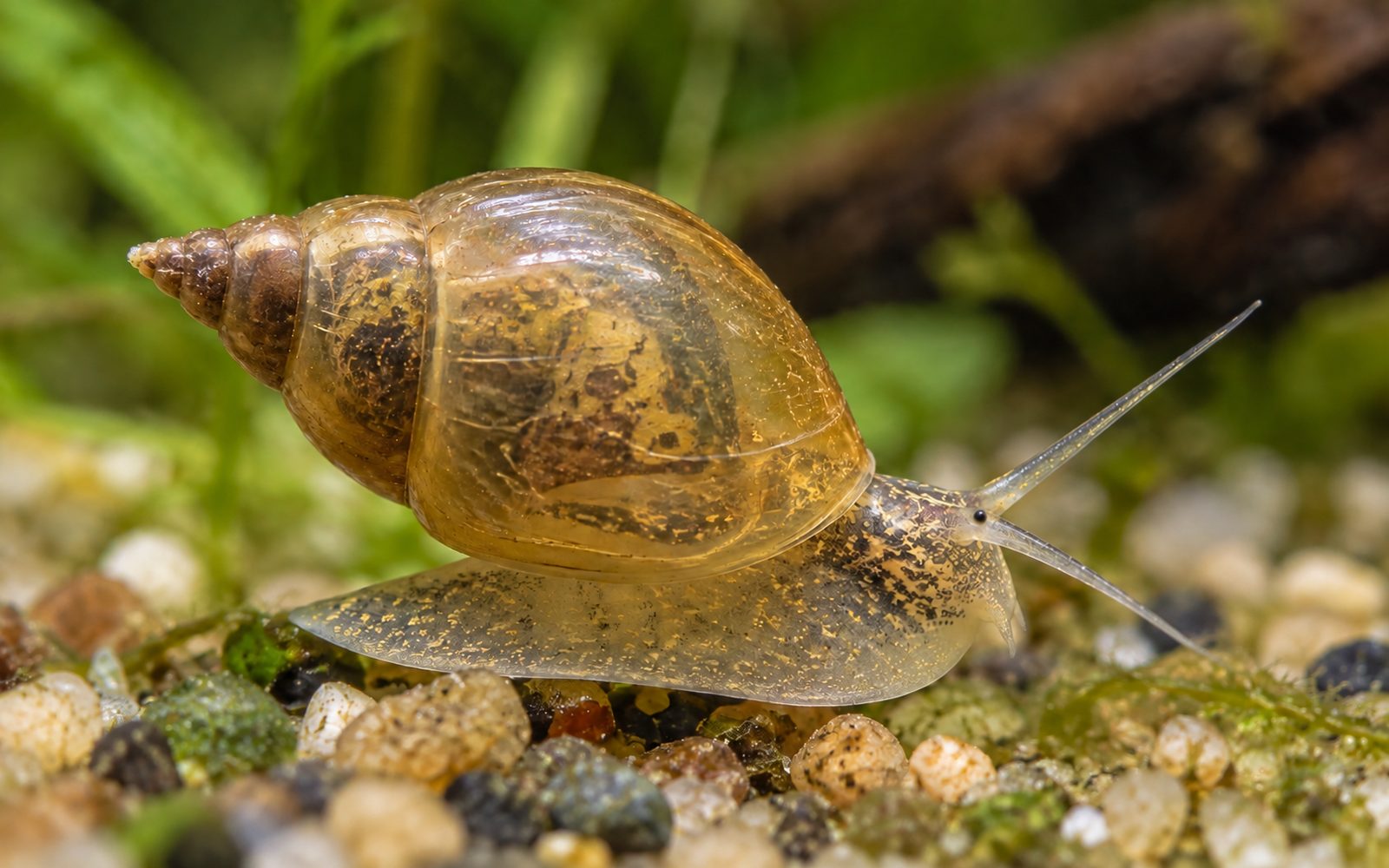
The bladder snail is the "uninvited guest" snail most often found in aquariums. It usually arrives as eggs on newly bought plants. Its shell is around 1 cm, thin, glossy and semi-transparent; when the shell is held with the tip pointing up, the opening is on the left. This left-coiled (sinistral) shape is the easiest way to tell it apart from similar-looking snails.
Whether it is a pest or a helper depends on the amount of food in the aquarium. A small number of bladder snails clean up leftover food, dead plant matter and biofilm. But in an overfed aquarium it can reach hundreds of individuals within a few weeks.
Natural Habitat
It is native to North America; it has been carried to almost every part of the world by the aquarium and plant trade and has escaped into the wild in many regions. It can live in still, vegetated, nutrient-rich waters and even in polluted waters.
Tank Setup
- Volume: it lives in tanks of any size; it can be present even in nano aquariums without causing problems.
- Water: it tolerates a wide range of values. In soft, acidic water the shell thins.
- Plant quarantine: if you do not want it, keep new plants in a separate container for a few days and check for eggs and snails, or use tissue-culture plants.
- Copper: lethal to snails.
Diet
Omnivorous. It eats food leftovers, biofilm, soft algae, dead plant leaves and carrion. There is no need to feed it separately; the excess food in the aquarium determines its population.
Behavior and Compatibility
Peaceful; it leaves fish, shrimp and healthy plants alone. It moves quickly; because it breathes with a lung it often comes to the surface, and sometimes it moves up and down in the water on a fine thread of mucus that it secretes.
Good companions: almost any peaceful community.
Avoid: medications and fertilizers containing copper. Snail-eating species (assassin snail, pea puffer, clown loach) wipe out bladder snails in a short time; if you want to reduce the population, this is an advantage.
Group and Colony Structure
It is hermaphroditic and can self-fertilize: a single individual is enough to start a colony. To control the population, reduce feeding, siphon out leftovers and remove in the morning the snails that gather on a vegetable slice placed in the evening. Chemical snail killers also kill shrimp; do not use them.
Breeding
It lays transparent, gelatinous, elongated egg clusters on the glass, plants and decor surfaces. The young hatch in 1–2 weeks depending on the temperature and reach breeding size within a few weeks.
Health and Common Problems
- Shell erosion: low pH and low calcium.
- Mass die-off: copper, ammonia or a sudden drop in oxygen; many dead snails foul the water quickly.
- Overpopulation: a sign of excess food.
- Species it is confused with: pond snails (Lymnaea) look similar but their shells coil to the right; tell them apart by which side the shell opening is on.
Sexing
Hermaphroditic; there is no distinction between males and females.
Tank mates
This list is calculated automatically from the species profile and grows as new species are added to the catalog. Try it in the planner for a definite answer.
Usually compatible









Hobbyist notes
Things you won't find in books, learned by trial and error. The most helpful ones are on top.
Change history and contributors
- Page created · October 16, 2026