
Water parameters
Overview
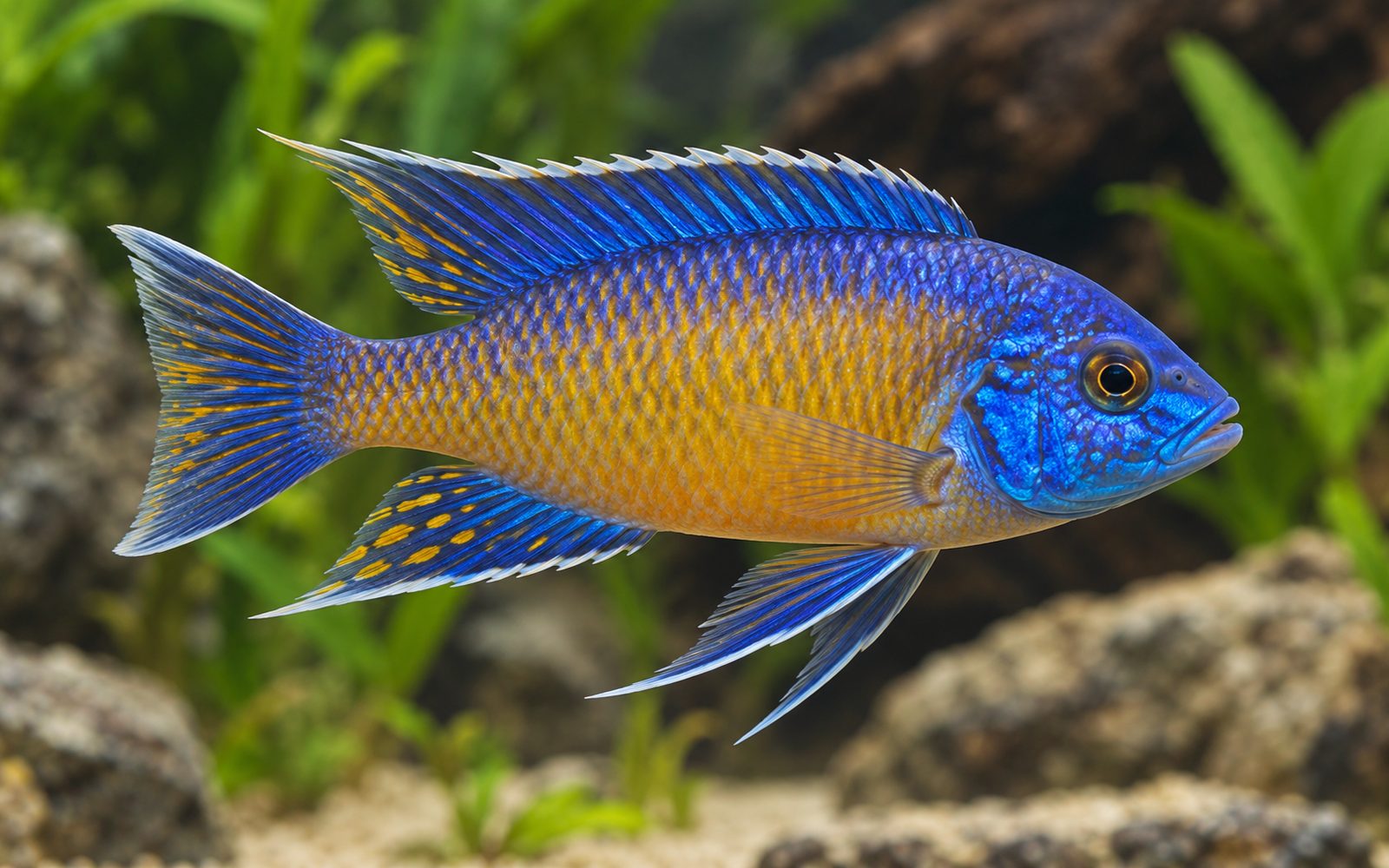
Cyathopharynx furcifer is a larger relative of Ophthalmotilapia and reaches 20 cm. In breeding season males shine in metallic blue, green or yellow tones depending on the local form; their pelvic fins are very long, thin streamers with yellow-spotted tips, and the tail is deeply forked. In the lake, males display to females by digging pit nests in the sand or on rock, several times their own body length in diameter. A very large aquarium and an uncrowded community are needed for these natural behaviors to be seen.
Tank Setup
- At least 500 liters and a length of 180 cm for one male and 3–5 females.
- A large open sandy area with flat-topped rocks at the edges; there should be plenty of open swimming space.
- pH 8–9, hard and stable water; a 25–30% water change every week, a strong filter.
- A lid is recommended; it darts off quickly when startled.
Diet
Omnivorous; in the wild it feeds on plankton and food on rock surfaces. Flakes or granules containing spirulina, plus frozen cyclops, brine shrimp and mysis, are suitable. Overly high-protein food can lead to bloat.
Behavior and Compatibility
Males are territorial toward each other around their nests; they are generally calm toward other species. The female broods the eggs in her mouth for about three weeks.
Good companions: Cyprichromis, Paracyprichromis, Xenotilapia species and calm, large Tanganyika species.
Avoid: aggressive species such as Tropheus, Petrochromis and mbuna, fin-nipping fish, large fish-eating cichlids, shrimp.
A short profile for this species
The Cyathopharynx furcifer page has the basics, but the sections below have not been written yet. If you keep this species, write a section from your own experience; it will be published under your name after editor approval.
Tank mates
This list is calculated automatically from the species profile and grows as new species are added to the catalog. Try it in the planner for a definite answer.
Usually compatible
 Yellow Regal Peacock
 Demasoni Cichlid
 Egyptian Mouthbrooder
 Pundamilia nyererei
 Pundamilia pundamilia
 Yellow Tail Acei
Anatolian Killifish
Eastern Happy
Red Shoulder Peacock
Yellow Tail Acei
Anatolian Killifish
Eastern Happy
Red Shoulder Peacock
 Fairy Cichlid
Should not be kept together





Hobbyist notes
Things you won't find in books, learned by trial and error. The most helpful ones are on top.
Change history and contributors
- Page created · October 16, 2026