
Water parameters
Overview
The spotted Congo puffer is a small freshwater puffer from the Lower Congo River. The dark brown spots on its light beige background give it a leopard-like look. It stays around 10 cm and does not need salt. It is rarely available in the trade; among African puffers it is one of the best suited to small aquariums.
Tank Setup
- At least 80 liters for a single individual.
- Sand or fine gravel substrate, rocks and roots; hiding places.
- 25–27°C, water close to neutral; gentle flow and good oxygenation.
- A powerful filter and 30% water changes every week.
Diet
Carnivorous. It is fed snails, frozen bloodworms, mysis and small shell-on shrimp. Snails and shelled foods are needed to wear down the teeth.
Behavior and Compatibility
Curious but territorial; it bites the fins of slow fish and hunts shrimp and snails.
Good companions: the safest option is to keep it alone.
Avoid: community fish, long-finned species, shrimp, snails, other puffers.
A short profile for this species
The Spotted Congo Puffer page has the basics, but the sections below have not been written yet. If you keep this species, write a section from your own experience; it will be published under your name after editor approval.
Tank mates
This list is calculated automatically from the species profile and grows as new species are added to the catalog. Try it in the planner for a definite answer.
Usually compatible
 Banded Jewel Cichlid
 Pearl Cichlid
 Threadfin Acara
 Convict Cichlid
 Cryptocoryne Parva
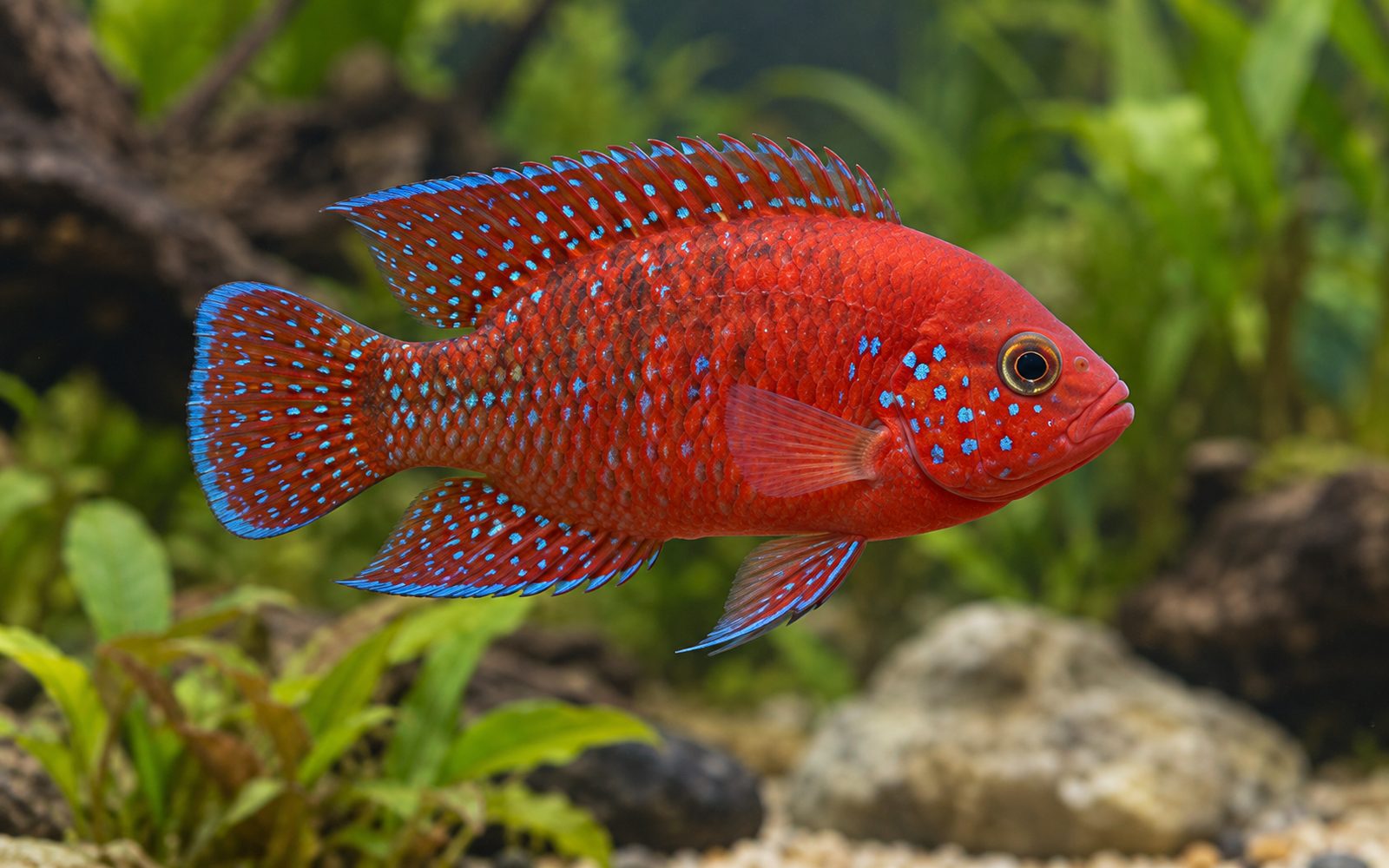 Lifalili Jewel Cichlid
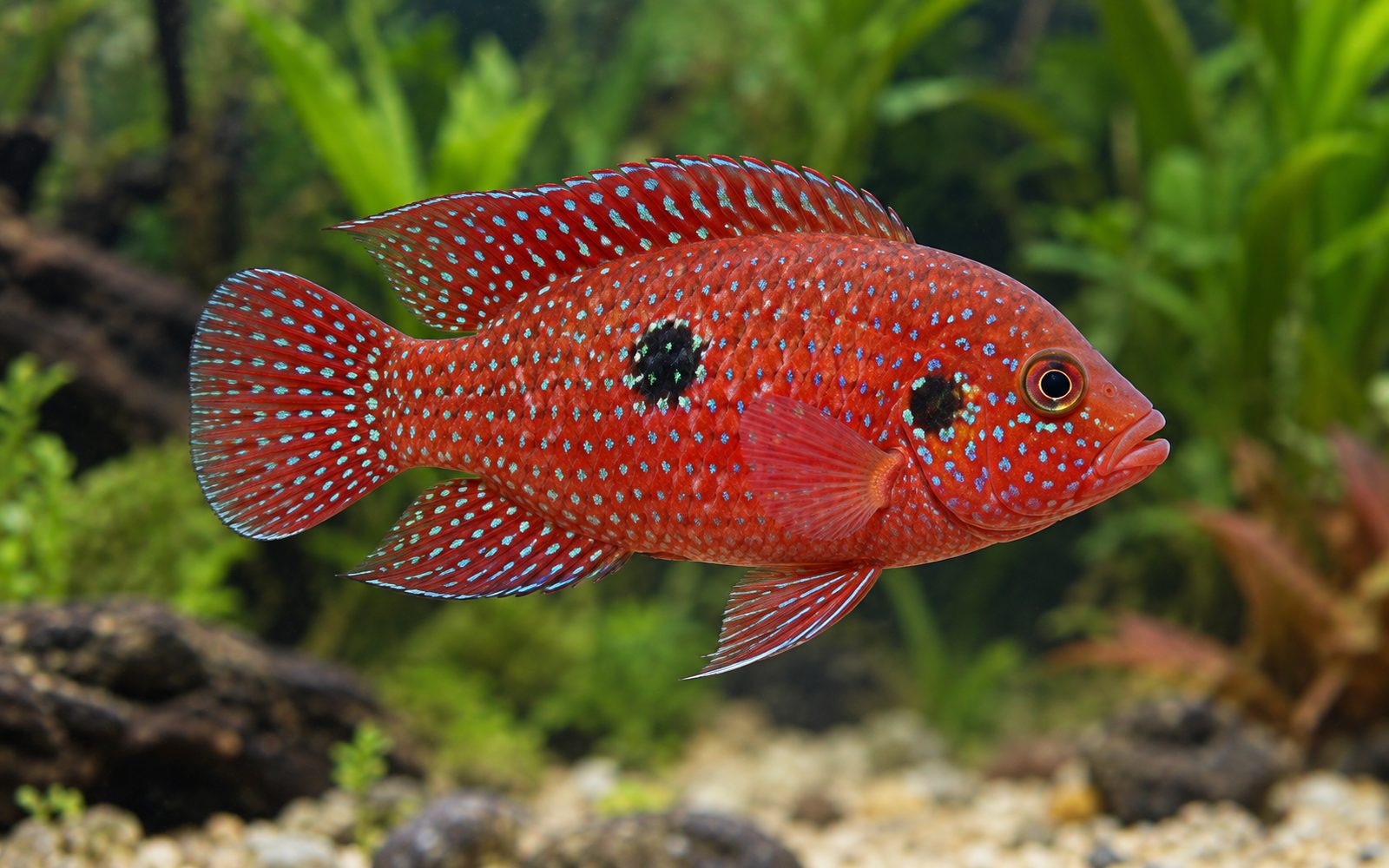 Jewel Cichlid
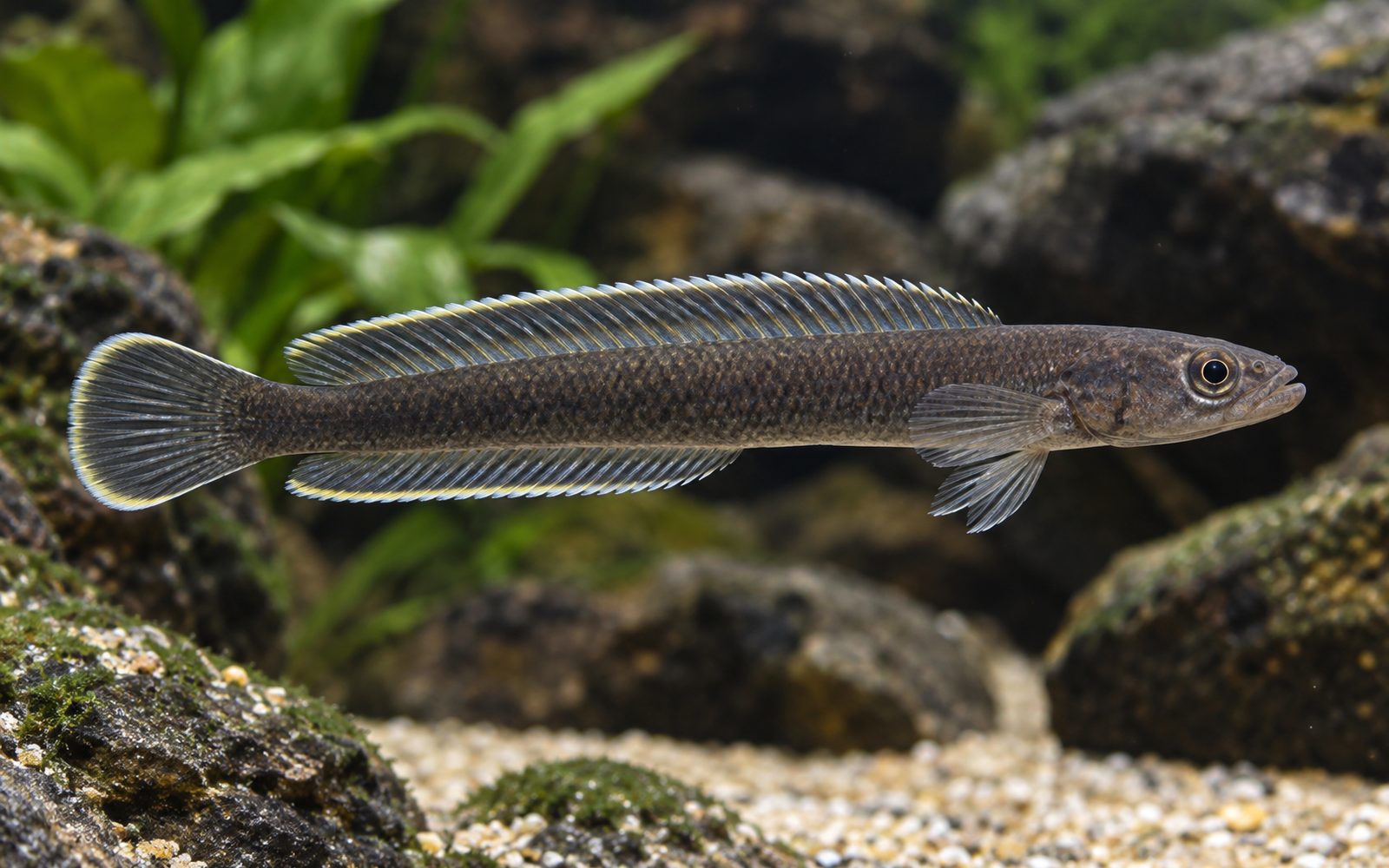 Teleogramma brichardi
Adonis Pleco
Teleogramma brichardi
Adonis Pleco
 Weeping Moss
Should not be kept together








Hobbyist notes
Things you won't find in books, learned by trial and error. The most helpful ones are on top.
Change history and contributors
- Page created · October 16, 2026