
Water parameters
Overview
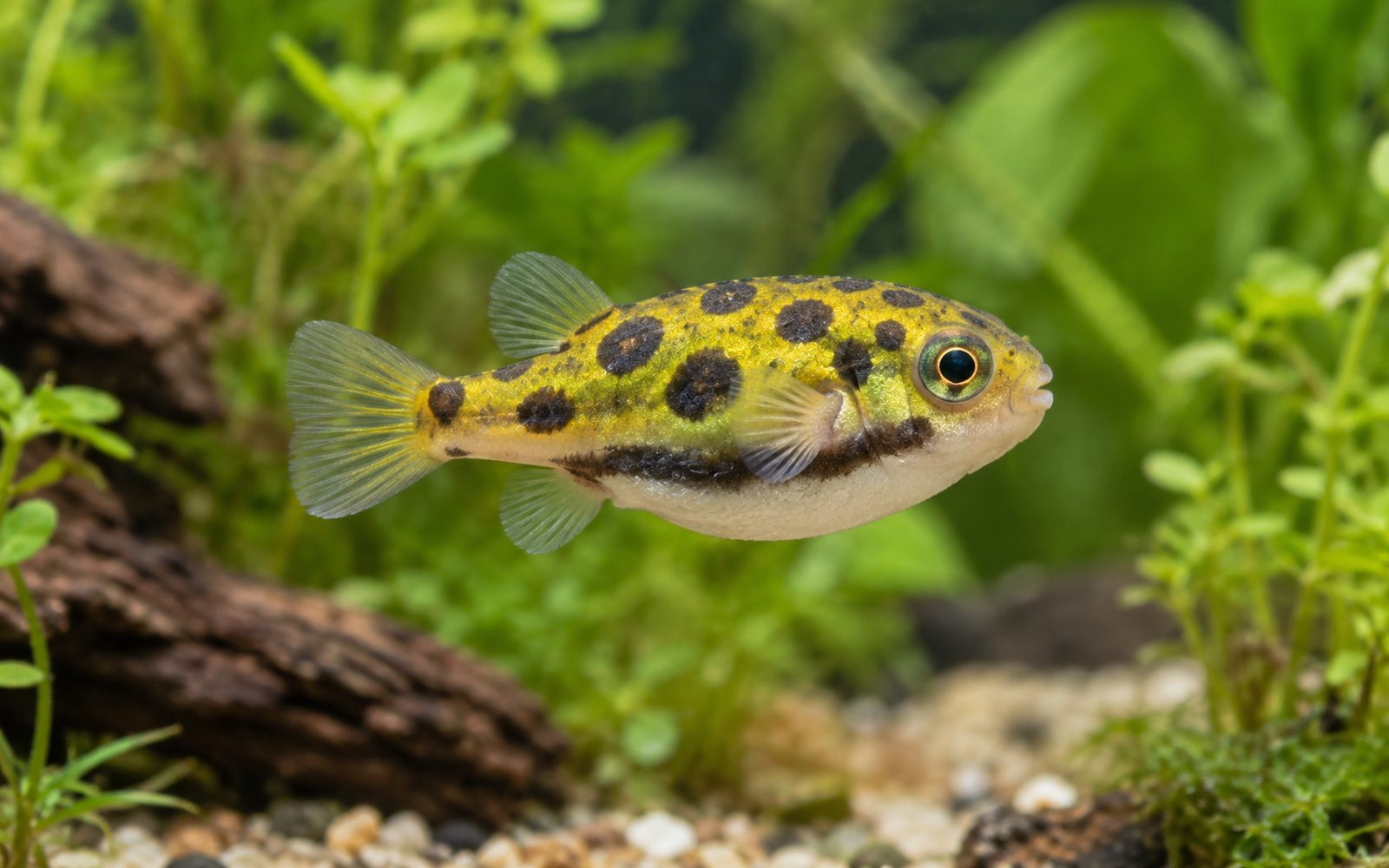
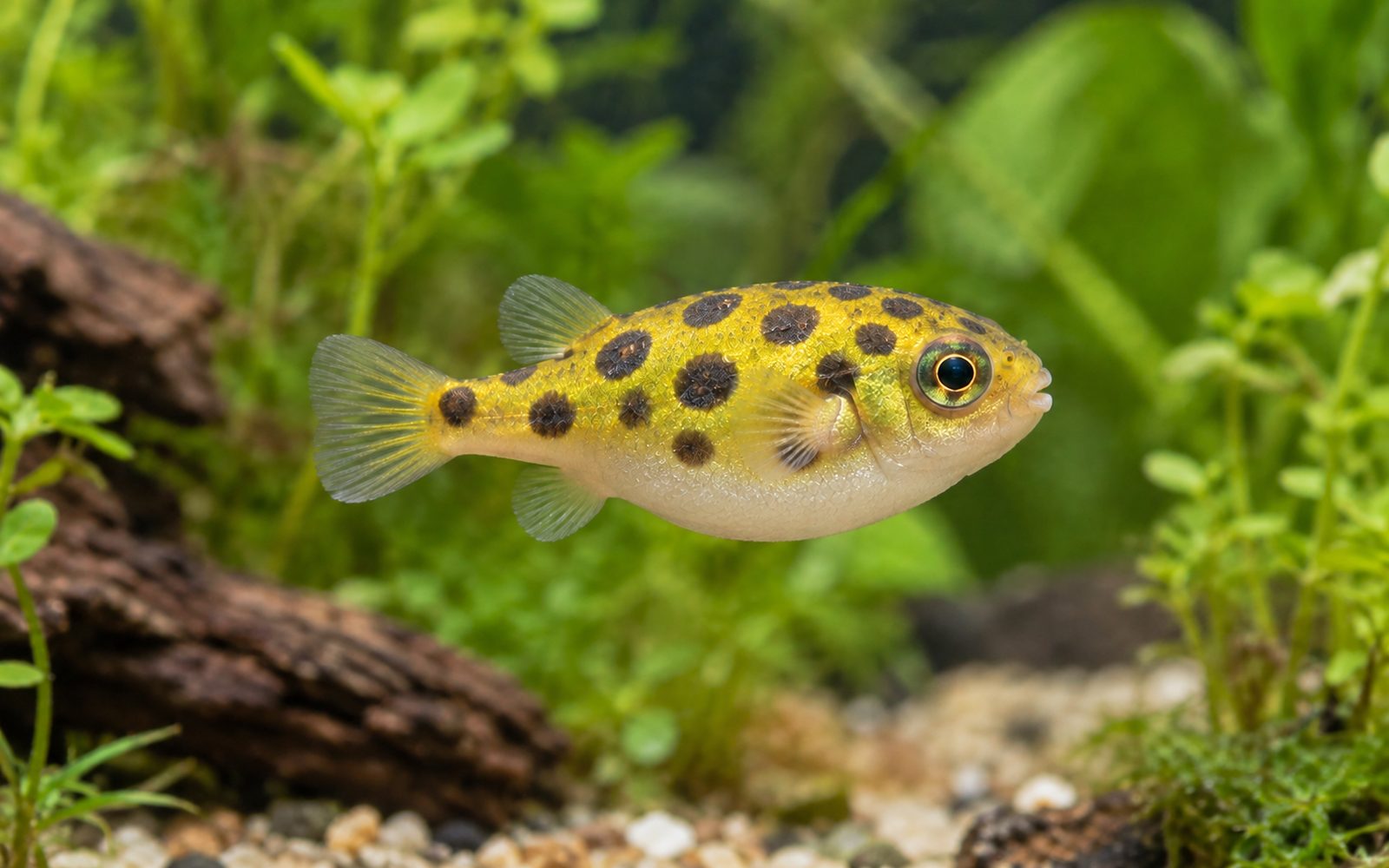
At 2.5–3 cm, the pea puffer is one of the smallest puffers in the world and lives entirely in fresh water (many "freshwater puffers" actually need brackish water). Its yellow-green body is covered in dark spots; it moves its eyes independently like a chameleon and inspects everything in the aquarium with curiosity.
This personality makes it very endearing, but its temperament is not that of a community fish: it is far more territorial and aggressive than its size would suggest.
Natural Habitat
It lives in slow-flowing, vegetated rivers and lakes in southwestern India. Its wild populations have declined because of overcollection; choose captive-bred fish.
Tank Setup
- Volume: 20 liters for a single fish, at least 40 liters for a small group (1 male, 2–3 females).
- Visual barriers: very dense plants and decor; reduce territorial fights by breaking up lines of sight.
- Water: 25–27°C, clean; sensitive to nitrate buildup. A strong filter with gentle flow.
Diet
Carnivorous and often refuses dry food. Frozen bloodworms, brine shrimp and cyclops; live small snails (important for wearing down its teeth and for natural behavior). Its teeth grow throughout its life; snail shells provide this wear.
Behavior and Compatibility
Curious, intelligent and territorial. It nips the fins of other fish and hunts shrimp and snails.
Good companions: it is best kept only with its own kind. Some hobbyists try very fast, bottom-dwelling species (otocinclus), but it is risky.
Avoid: almost all community fish, especially slow and long-finned ones; shrimp (they become food); snails (they become food, and are in fact added deliberately as food).
Group and Colony Structure
A harem setup is recommended: 1 male and 2–3 females. Two males fight constantly in a small aquarium. A single fish also lives comfortably; it does not get bored without its own kind. A larger group should only be tried in a very densely planted, large aquarium (80 liters or more).
Breeding
It breeds in a densely planted aquarium: the male chases the female, and the eggs are laid among moss and fine-leaved plants. The parents do not guard the eggs and may eat them. The fry are very small; they are fed infusoria and then newly hatched brine shrimp.
Health and Common Problems
- Internal parasites: very common in wild-caught fish; wasting and loss of appetite. Quarantine and parasite treatment are recommended.
- Overgrown teeth: in fish not given snails; it prevents feeding.
- Puffing up: stressing a puffer until it inflates is dangerous; if it inflates with air outside the aquarium it can be fatal. Keep it in water when moving it.
Sexing
Males have a dark lengthwise line on the belly, wrinkle-like lines behind the eyes, and yellower, brighter bodies. Females are rounder, have more regular spots and no belly line.
Tank mates
This list is calculated automatically from the species profile and grows as new species are added to the catalog. Try it in the planner for a definite answer.
Usually compatible
 Emerald Betta
 Buffalohead Cichlid
 Demasoni Cichlid
 Rainbow Cichlid
 Gymnogeophagus balzanii
 Threadfin Acara
 Blood Parrot
 Red Hump Eartheater
 Cryptocoryne Parva
Should not be kept together







Hobbyist notes
Things you won't find in books, learned by trial and error. The most helpful ones are on top.
Change history and contributors
- Page created · October 16, 2026