
Water parameters
Overview
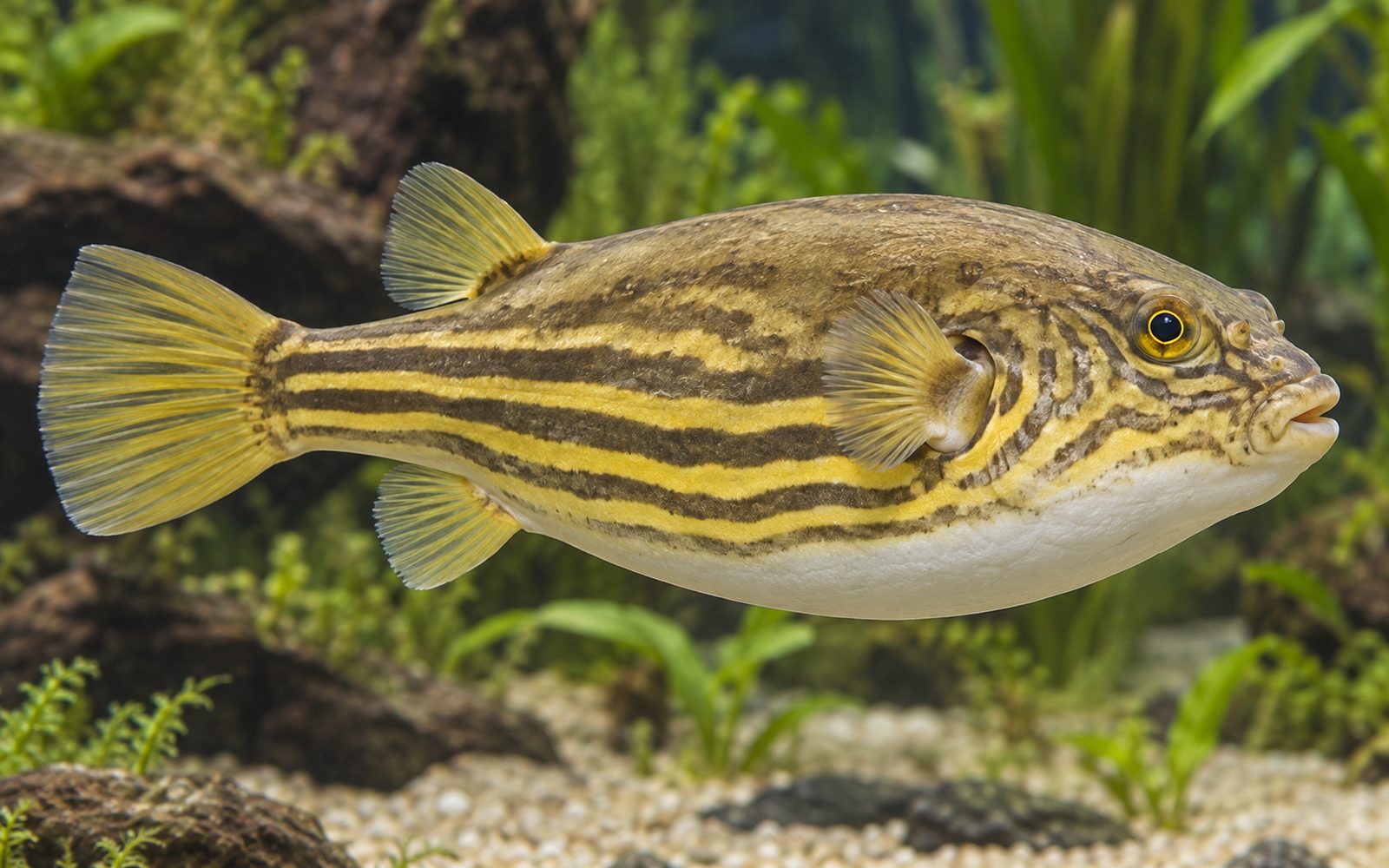
The fahaka is a large puffer living in fresh waters stretching from the Nile to West Africa. With its yellow and dark brown stripes running along its flanks, its big eyes and a personality that recognizes its owner "like a dog," it has a devoted following. It changes color depending on its mood; it darkens when stressed or restless.
However, it exceeds 40 cm, its beak is strong enough to injure a finger and it kills every living thing in the aquarium. The 5 cm juvenile in the store will need a large aquarium within a few years; it should not be bought without accepting this responsibility.
Natural Habitat
It lives in the rivers, lakes and vegetated banks of the Nile, Niger, Volta and Chad basins. In the wild it feeds by crushing snails, mussels and crustaceans with its powerful beak; this is why its teeth grow throughout its life, so that they are constantly worn down by hard foods.
Tank Setup
- Volume: at least 450 liters for an adult; 150–180 cm length and 60 cm width.
- Filter: very strong filtration (6–8 times the volume per hour) and a 40–50% water change weekly; large shelled foods pollute the water quickly.
- Water: moderately hard to hard, slightly alkaline water. No salt is needed.
- Decor: sparse and sturdy: large stones, roots. Protect the heater; it can break it by biting.
- Mind your hands: do not put your hand in front of the fish during maintenance; its bite can cause a deep wound.
Diet
Carnivorous. Hard-shelled foods such as snails, shell-on mussels and oysters, shell-on shrimp, crayfish and crabs are essential for wearing down the teeth. Vary with fish fillet and squid. Adults are fed every two to three days; it is prone to being overfed.
Behavior and Compatibility
Intelligent and interactive, but its aggression is extreme even among puffers.
Good companions: none; it must be kept alone.
Avoid: all fish (even large ones have their fins and eyes bitten), shrimp, snails, a second fahaka.
Group and Colony Structure
Strictly a single fish. Even juveniles injure each other; a large aquarium does not change this.
Breeding
Breeding in a home aquarium is so rare that it is practically unknown. Most fish sold are wild-caught.
Health and Common Problems
- Overgrown teeth: the most common problem; without shelled food the beak grows long and prevents eating, and trimming may be necessary.
- Water quality: when nitrate rises, appetite stops and blotches appear on the skin.
- Medication sensitivity: its scaleless skin is sensitive to copper.
Sexing
There is no reliable external way to tell the sexes apart.
Tank mates
This list is calculated automatically from the species profile and grows as new species are added to the catalog. Try it in the planner for a definite answer.
Usually compatible
 Banded Jewel Cichlid
 Spotted Tilapia
 Flowerhorn
 Jack Dempsey
 Jaguar Cichlid
 Red Devil Cichlid
 Red Terror Cichlid
 Cryptocoryne Parva
 Wolf Cichlid
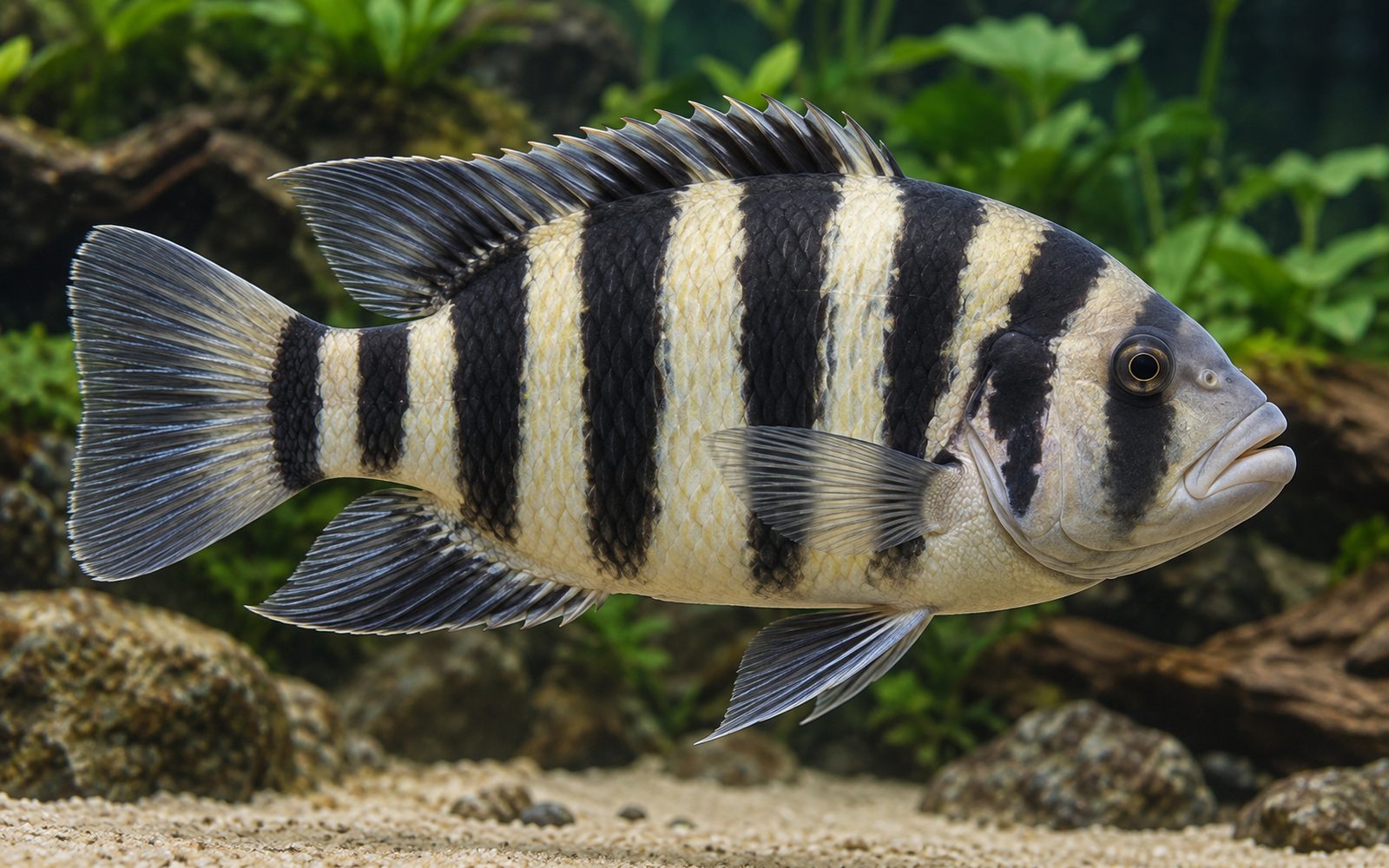 Zebra Tilapia
Should not be kept together








Hobbyist notes
Things you won't find in books, learned by trial and error. The most helpful ones are on top.
Change history and contributors
- Page created · October 16, 2026